
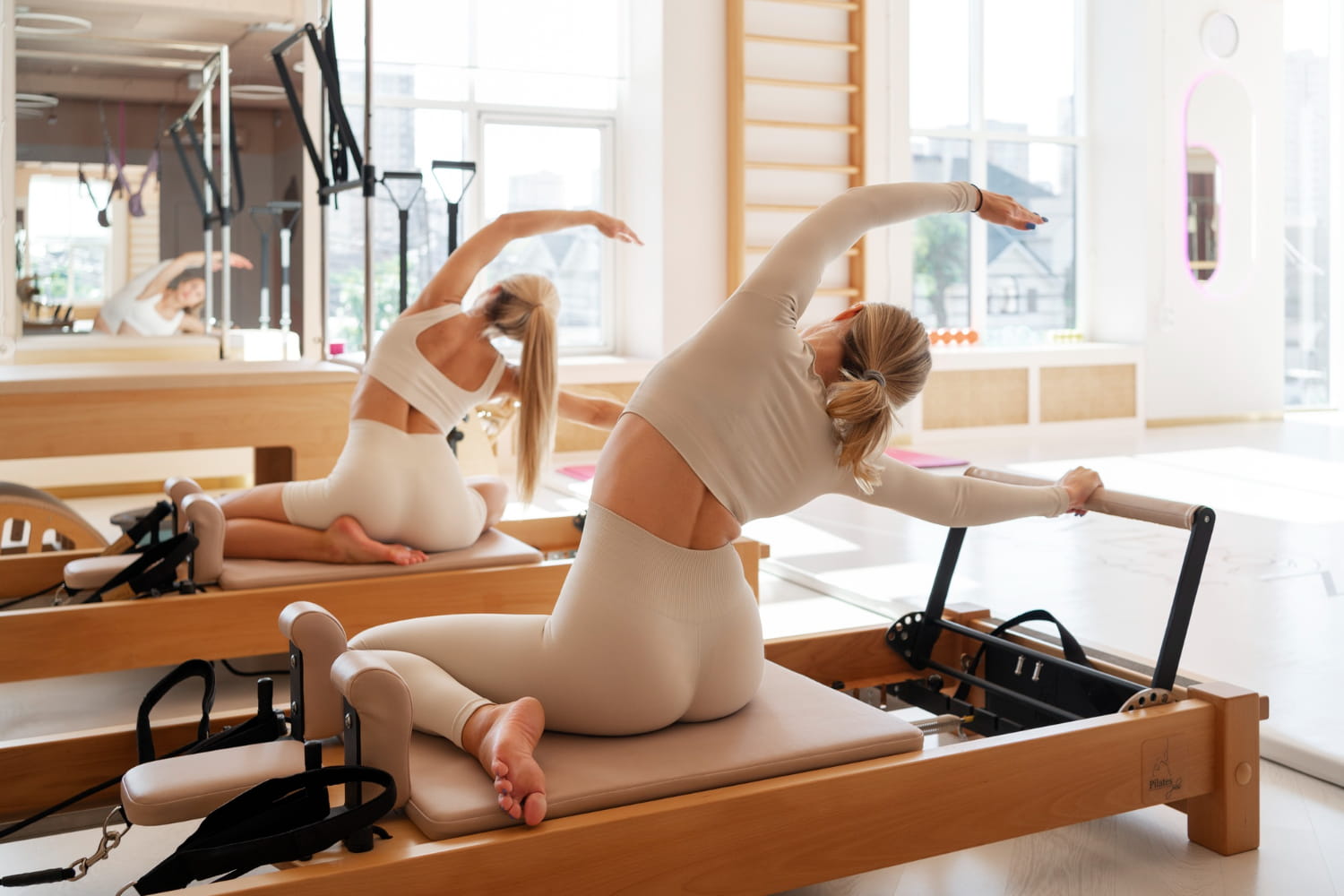
Pilates is today one of the most popular physical exercise systems in the world, but few people know the incredible facts about its origin and development. This unique training methodology has traveled from rehabilitation exercises in a prisoner-of-war camp to becoming the favorite activity of millions of people on all continents. Interesting facts about Pilates reveal not only the history of the system’s creation but also explain why this practice remains relevant for over a century. You might not have known that behind these smooth movements lie fascinating stories, scientific discoveries, and unexpected connections with other areas of life. This collection of facts will help you look at the exercise system that changed the approach to physical health of millions of people from a new perspective.
- The founder of Pilates, Joseph Pilates, was born in Germany in 1883 and suffered from asthma, rickets, and rheumatic fever in his childhood. These illnesses prompted him to study human body anatomy and develop his own system of physical exercises to strengthen his health. By the age of 14, he had improved his physical condition so much that he posed for anatomical charts. His personal story of overcoming weakness became the foundation for creating a system that helps people around the world.
- During World War I, Joseph Pilates was interned in Great Britain as an enemy alien. While staying in a camp on the Isle of Man, he began teaching other prisoners his exercise system to maintain physical fitness. It was precisely in these conditions of limited space that he developed the basic principles of his methodology, which did not require special equipment. Interestingly, during the 1918 flu epidemic, none of his students died, which he attributed to his training system.
- Pilates invented unique exercise equipment using springs from beds in the prisoner-of-war camp. He attached springs to the beds of wounded soldiers so they could perform rehabilitation exercises without getting up. This innovative idea became the prototype for modern “Cadillac” and “Reformer” equipment, which are used in Pilates studios around the world. Spring-based equipment remains a key element of classical Pilates to this day.
- The original name of the method was “Contrology,” which reflected Joseph Pilates’s philosophy of complete mind control over the body. He believed that his system was not just physical exercises but a coordination of body, mind, and spirit. The system received the name “Pilates” only after the founder’s death, when his students began popularizing the method under his surname. Joseph Pilates himself insisted on the term “Contrology” until the end of his life and wrote a book under that title in 1945.
- Pilates moved to New York in 1926 and opened his first studio at 939 Eighth Avenue, in the New York City Ballet building. The studio’s location next to the ballet school was not coincidental and determined the method’s future. Dancers began massively visiting the studio for rehabilitation after injuries and performance enhancement. Among his first clients were legendary choreographers George Balanchine and Martha Graham, who recommended Pilates to their dancers.
- The Pilates method is based on six fundamental principles that make it unique among other training systems. These are concentration, control, center, precision, breath, and flow of movement. Each exercise in the Pilates system must be performed while observing all these principles simultaneously. These principles distinguish Pilates from ordinary physical exercises and transform the workout into a meditative practice with complete mindfulness.
- Joseph Pilates developed over 500 different exercises during his lifetime, creating an extremely diverse training system. Of these exercises, 34 were designed to be performed on a mat without any equipment and form the basis of classical Pilates. The remaining exercises are performed on special equipment that he invented and improved over decades. Such diversity allows Pilates to be adapted for people of any age and physical condition.
- The concept of “powerhouse” or “center of power” is the heart of the Pilates method and includes the muscles of the abdomen, lower back, hips, and buttocks. Joseph Pilates believed that all energy and power of movements should come from this area of the body. Activating the center before each movement ensures spine stability and exercise effectiveness. Modern research has confirmed that strengthening deep core muscles indeed improves posture, reduces back pain, and increases overall body functionality.
- Pilates lived to 83 years old and maintained excellent physical condition until his death in 1967. He practiced his exercises daily and claimed that his method allows a 60-year-old person to feel like 30. Photographs of Joseph Pilates at age 80 demonstrate impressive musculature and flexibility. His personal example became the best advertisement for the effectiveness of the system he created.
- Joseph Pilates’s wife, Clara, played a critical role in developing the method, although she often remained in her husband’s shadow. She was a nurse and helped adapt exercises for people with various health conditions and injuries. After Joseph’s death, it was Clara who continued teaching the method and prepared the first generation of certified instructors. Her contribution to the development of the rehabilitation direction of Pilates cannot be overestimated.
- In 2000, a US federal court ruled that the word “Pilates” is a generic term and cannot be registered as a trademark. This decision was the result of a legal battle between various Pilates schools for the right to use this name. The court’s decision allowed the method to spread around the world without legal restrictions. Today, anyone can open a Pilates studio or call their classes by this name, which contributed to the mass popularization of the method.
- Scientific research has confirmed numerous benefits of regular Pilates practice for health and well-being. Studies have shown that Pilates effectively reduces chronic lower back pain, improves balance and coordination. Research has also revealed positive effects on mental health, including reduction of anxiety and depression symptoms. The method is recognized as effective for rehabilitation after injuries to the spine, joints, and muscles.
- Pilates is particularly popular among pregnant women because exercises can be adapted for each trimester. The method helps strengthen pelvic floor muscles, which is important for childbirth and postpartum recovery. Many obstetricians recommend Pilates as a safe form of physical activity during pregnancy. Women who practice Pilates during pregnancy often note easier childbirth and faster recovery after giving birth.
- The Pilates method is used by professional athletes from various sports to improve performance and prevent injuries. Football players, basketball players, golfers, and tennis players include Pilates in their training programs. Exercises help develop flexibility, core strength, and mental concentration necessary in any sport. Many NBA and NFL teams and football clubs have certified Pilates instructors on staff.
- Hollywood stars played a huge role in popularizing Pilates in the 1990s, making it a fashionable trend. Actresses and models began sharing their experience with Pilates classes in interviews and on television. This celebrity attention transformed Pilates from a little-known rehabilitation method into a desired fitness form for millions of people. Today, Pilates studios can be found in virtually every city in the world, from New York to Tokyo.
- Joseph Pilates created about a dozen different types of equipment for his system, each designed for specific purposes. The most famous apparatus include the Reformer, Cadillac, Wunda Chair, Ladder Barrel, and Spine Corrector. Each device uses a spring system to create resistance and support during exercises. This equipment allows performing exercises in various body positions and with different difficulty levels, making Pilates accessible to everyone.
- There are several different schools and styles of Pilates that developed from Joseph Pilates’s original method. Classical or authentic Pilates strictly adheres to the original sequence and form of exercises. Contemporary Pilates includes elements of physiotherapy, yoga, and other disciplines to expand the method. There are also specialized forms such as Stott Pilates, Peak Pilates, and others, each with its own philosophy and emphases.
- Breathing in Pilates has a specific technique known as “lateral” or “intercostal” breathing. Unlike abdominal breathing, Pilates emphasizes expanding the rib cage to the sides and back. This technique allows maintaining activation of abdominal muscles throughout the entire exercise. Proper breathing is coordinated with movements and is an integral part of each exercise, helping to oxygenate the muscles.
- Pilates can be effective for elderly people, helping maintain mobility and independence. Research shows that regular classes improve balance, which is critically important for fall prevention. Exercises help maintain bone density and muscle mass, which naturally decrease with age. Many people over 70 successfully practice Pilates, adapting exercises to their capabilities.
- Joseph Pilates was convinced that his method was ahead of its time and would be fully appreciated only in the future. He predicted that 50 years after his death, the world would recognize the value of his system. As it turned out, his forecast was remarkably accurate, as it was precisely in the 1990s-2000s that Pilates experienced an explosion of popularity. Today, more than 12 million people in the USA and millions around the world regularly practice Pilates, confirming the visionary nature of its creator.
Fascinating facts about Pilates demonstrate how one person’s personal struggle with illnesses transformed into a global movement for health and well-being. This exercise system has proven its effectiveness not only through time but also through scientific research that continues to confirm its benefits. Incredible facts from Pilates history remind us that true innovation often arises from necessity and personal experience. Today, Pilates continues to evolve, preserving the basic principles of its founder and helping people around the world discover the possibilities of their bodies.


