
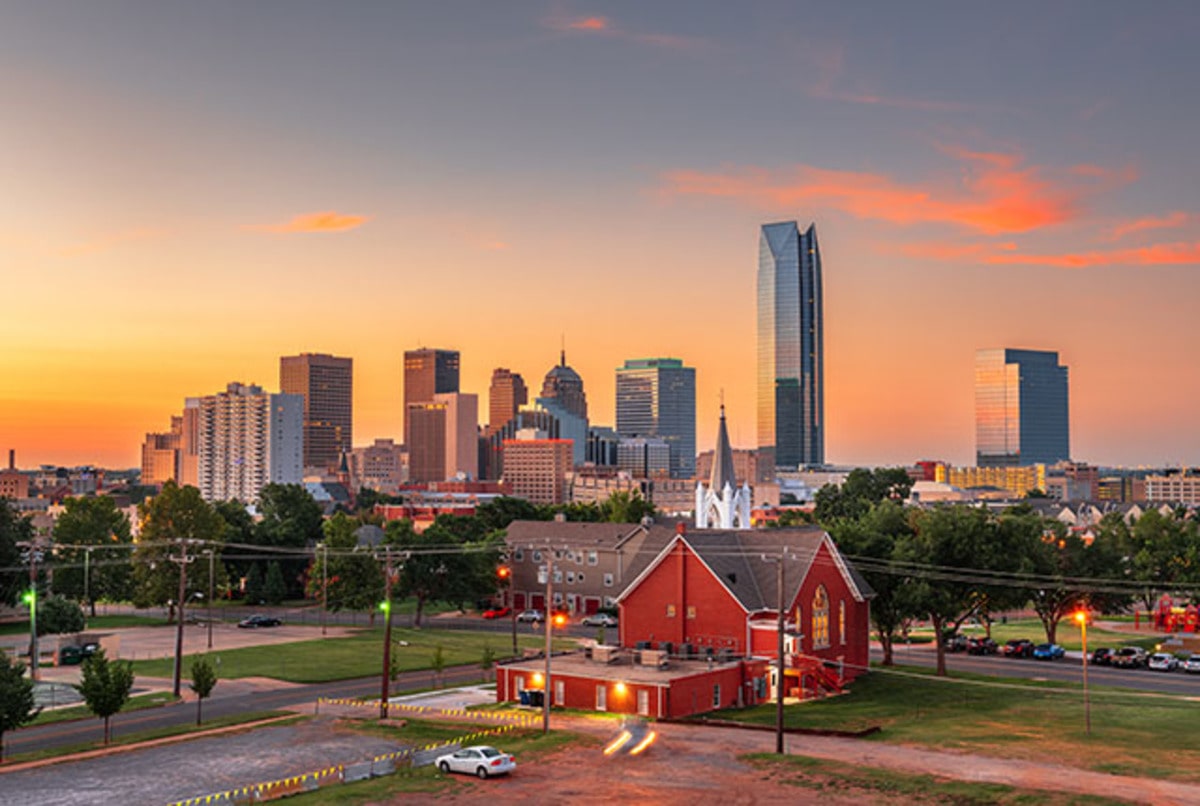
Oklahoma is a state that holds incredible stories and fascinating features you may not have known about. This is a place where Native American traditions, cowboy culture, and modern technology intertwine. From unique natural phenomena to amazing historical events, Oklahoma constantly surprises with its diversity. Every corner of this state tells its own unique story that deserves your attention. Let’s discover the most interesting facts that make Oklahoma truly special.
- The name Oklahoma comes from the Choctaw Native American tribe’s language and literally translates as “red people”. This word consists of two parts – “okla” (people) and “humma” (red), which reflects the state’s deep connection with Native American culture. Oklahoma is home to 39 federally recognized Native American tribes, making it one of the most culturally diverse states in the USA.
- Oklahoma City is the only state capital in the world that has the word “city” in its name. The city was founded literally in one day during the famous Land Run of 1889, when thousands of settlers simultaneously rushed to claim free land. Within just a few hours, a city with a population of over 10,000 people emerged on empty ground.
- The state is the world’s tornado capital, as it experiences the highest number of these natural phenomena per square kilometer in the world. Oklahoma is located in the heart of the so-called “Tornado Alley”, where warm moist air masses from the Gulf of Mexico meet cold air from Canada. On average, the state experiences about 62 tornadoes annually, forcing local residents to always be prepared for extreme weather conditions.
- Oklahoma has the highest concentration of Native American museums in the United States. Over 130 museums dedicated to the culture, history, and art of Native American tribes operate throughout the state. The National Cowboy & Western Heritage Museum in Oklahoma City is considered one of the best in the country and houses unique collections of artifacts.
- The city of Tulsa is home to the world’s largest statue called the “Golden Driller”, which symbolizes the state’s oil industry. The sculpture stands 23 meters tall and is a recognized symbol of the oil boom that transformed Oklahoma into one of the wealthiest states in the 1920s. During its heyday, Tulsa even earned the nickname “oil capital of the world”.
- Oklahoma is the birthplace of the world-famous Route 66, America’s most legendary road. The longest section of this historic highway passes through the state – approximately 644 kilometers. Many original diners, motels, and gas stations from the 1950s still operate along the route, preserving the authentic atmosphere of the era.
- The state owns the world’s largest man-made lake by shoreline length. Lake Eufaula has over 1,900 kilometers of shoreline, exceeding the Atlantic coastline of the USA. This reservoir was created in the 1960s and has become a favorite vacation spot for millions of visitors annually.
- Oklahoma is home to the deepest vertical karst cave in the USA – Goblin’s Cave. Its depth reaches 82 meters, and it attracts speleologists from around the world with its unique underground formations. The cave was discovered in the 1950s and remains an object of scientific research to this day.
- The world’s first parking meter was installed in Oklahoma City on July 16, 1935. Carlton Magee’s invention revolutionized urban planning and became the prototype for parking systems worldwide. Today, the original meter is kept in a museum as a historical relic.
- Oklahoma is the only state that produces iodized salt naturally. Salt deposits in the state contain natural iodine, making it unique in the entire world. This feature is related to ancient marine sediments that formed millions of years ago.
- The state is home to the world’s largest casino owned by a Native American tribe. WinStar World Casino occupies an area of over 51,000 square meters and attracts millions of visitors annually. Profits from the casino are directed towards developing reservations and social programs for Native Americans.
- Oklahoma became the 46th state of the USA on November 16, 1907, becoming one of the youngest states in the country. Before this, the territory had a unique status as “Indian Territory”, where Native Americans had a certain level of self-governance. The union of Indian Territory and Oklahoma Territory into one state became an important milestone in American history.
- The state capital Oklahoma City is located directly above an oil field. Even on the Capitol grounds, oil derricks are installed that still extract black gold. This makes Oklahoma City the only state capital where oil extraction is conducted directly beneath government buildings.
- The city of Ponca City is home to the world’s largest bronze statue. The “Pioneer Woman” monument, standing 5.2 meters tall, symbolizes women’s contribution to settling the American West. The statue was erected in 1930 and was the result of a national competition in which over 700 sculptors participated.
- Oklahoma has the largest population of American bison among all states. Over 20,000 of these magnificent animals are kept on the territory of reserves and private ranches. Bison population restoration programs, initiated in the 1970s, have transformed the state into the main center for preserving this symbol of the American West.
- The state has a unique geographical feature – three ecosystems converge here simultaneously. On Oklahoma’s territory, the Ozark mountain forests, Great Plains, and southeastern forest masses intertwine. Such diversity creates an extraordinarily biodiverse region with thousands of plant and animal species.
Oklahoma is much more than just a state on the map of America. Interesting facts about this region reveal it as a place where history comes alive at every step, and nature demonstrates its unparalleled power. From ancient Native American traditions to modern technological achievements, Oklahoma continues to write its incredible story. Now you know about the fascinating features of this state that make it a truly unique corner of the United States.


