
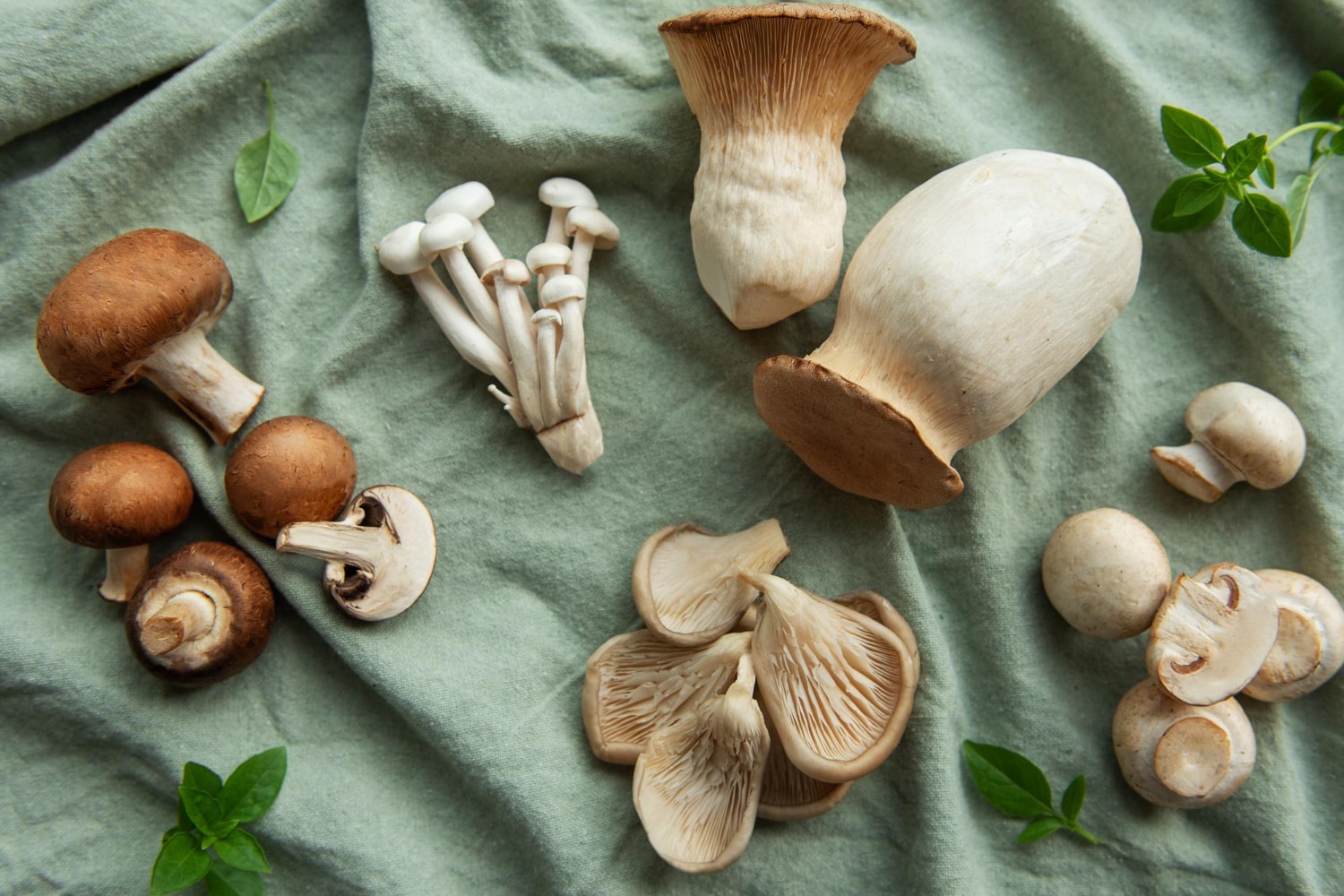
Mushrooms are among the most mysterious and amazing organisms on our planet, which occupy a unique place between the plant and animal worlds. These unusual creatures form their own kingdom of living organisms and play a critically important role in the functioning of Earth’s ecosystems, from decomposing organic matter to forming symbiotic connections with plants. Incredible facts about mushrooms reveal to us a world full of amazing adaptations, complex life cycles and unexpected possibilities that make the fungal kingdom a subject of constant scientific interest. From microscopic yeasts to gigantic underground networks extending for kilometers, mushrooms demonstrate incredible diversity of forms, sizes and ways of existence. Get ready to learn fascinating details about these amazing organisms, as you might not have known most of these striking features that make mushrooms a truly unique phenomenon of nature.
- Mushrooms are neither plants nor animals, but form their own separate kingdom of living organisms called Fungi. Unlike plants, mushrooms are not capable of photosynthesis and do not produce their own food from sunlight. Instead, they obtain nutrients by absorbing organic matter from the environment. Genetic research has shown that mushrooms are evolutionarily closer to animals than to plants.
- The largest living organism on Earth is the Armillaria ostoyae mushroom growing in the Malheur National Forest in Oregon. This honey fungus occupies an area of over 965 hectares and its age is estimated from 2400 to 8650 years. Most of the organism is underground in the form of a huge mycelium network. Above ground, only fruiting bodies appear, which we commonly call mushrooms.
- Mushrooms play a vitally important role in decomposing dead organic matter and recycling nutrients in ecosystems. Without mushrooms, forests would be overwhelmed with dead trees, leaves and other organic materials. Mushrooms produce powerful enzymes capable of breaking down complex organic compounds, including lignin in wood. This process is fundamental to the cycling of carbon and other elements in nature.
- Fungal mycelium forms enormous underground networks called the natural internet or wood wide web. These networks connect trees and other plants, allowing them to exchange nutrients and chemical signals. Research has shown that mother trees can transfer nutrients to their seedlings through mycelial networks. This symbiotic interaction between mushrooms and plants is called mycorrhiza.
- Some species of mushrooms are capable of glowing in the dark, producing bioluminescent light. Over 70 species of mushrooms demonstrate this phenomenon, including the night mushroom Mycena chlorophos. Bioluminescence can help mushrooms attract insects for spore dispersal. This fascinating phenomenon creates magical glowing in nighttime forests of tropical and temperate regions.
- Mushrooms have cell walls made of chitin, the same material that makes up the exoskeleton of insects and crustaceans. This fundamentally distinguishes them from plants, whose cell walls consist of cellulose. Chitin walls provide mushrooms with structural support and protection. This unique characteristic is one of many features that distinguish mushrooms into a separate kingdom.
- Some mushrooms can kill and eat nematodes, acting as predators of the microscopic world. These mushrooms form special traps in the form of rings or sticky outgrowths. When a nematode falls into a trap, the mushroom quickly penetrates its body and digests from within. This is an example of amazing adaptation to nitrogen-deficient environments.
- Mushrooms have been used by humanity for thousands of years to produce bread, beer, wine, cheese and other food products. Yeasts, which are single-celled fungi, are responsible for the fermentation process in bread baking and alcohol production. Penicillin, the first antibiotic, was discovered in the Penicillium fungus in 1928 by Alexander Fleming. This accidental discovery revolutionized medicine and saved millions of lives.
- There are over 5 million species of mushrooms on Earth, although only about 150,000 species have been described. This means that a huge portion of fungal diversity remains undiscovered and unstudied. New mushroom species are discovered annually in the most diverse habitats. From deep-sea ocean trenches to high-mountain ecosystems, mushrooms demonstrate incredible ability to adapt.
- Some mushrooms have psychoactive properties and have been used in shamanic and religious rituals for thousands of years. Psilocybin mushrooms contain compounds that affect perception and consciousness. Modern research is studying the potential therapeutic use of these mushrooms for treating depression and PTSD. However, most psychoactive mushrooms remain illegal in most countries of the world.
- Mushrooms can survive in extreme conditions, including high radiation. After the Chernobyl nuclear power plant accident, scientists discovered mushrooms growing inside the destroyed reactor. Some of these mushrooms use melanin to convert radiation into chemical energy, similar to how plants use chlorophyll for photosynthesis. This phenomenon opens possibilities for using mushrooms in space travel and cleaning radioactively contaminated territories.
- Truffles are among the most expensive food products in the world and can cost thousands of dollars per kilogram. These underground mushrooms grow in symbiosis with the roots of certain trees. Their unique aroma attracts animals that dig up and distribute truffle spores. Traditionally, specially trained dogs or pigs are used to search for truffles.
- Some mushrooms are capable of decomposing plastic and other artificial materials, which opens possibilities for bioremediation. The Pestalotiopsis microspora fungus can break down polyurethane even in anaerobic conditions. Researchers are studying the potential of mushrooms for cleaning landfills from plastic waste. This ability could become key in solving the global problem of plastic pollution.
- Mushrooms reproduce using spores, which are microscopic and can be carried by wind over enormous distances. One mushroom can produce billions of spores during its lifetime. Spores are extremely resistant and can survive in extreme conditions for years. Some spores even survive in space, withstanding intense ultraviolet radiation and vacuum.
- Carnivorous mushrooms can hunt worms and other invertebrates using chemical and mechanical traps. The Pleurotus ostreatus mushroom paralyzes nematodes using a toxin, then absorbs them. This allows mushrooms to obtain additional nitrogen in nutrient-poor environments. Such predatory behavior demonstrates unexpected complexity of the fungal way of life.
- Some species of mushrooms are bioindicators of environmental pollution, as they accumulate heavy metals and other toxins. Button mushrooms and other fungi can concentrate lead, cadmium and mercury from soil. This makes it dangerous to collect edible mushrooms near industrial zones or highways. At the same time, this property is used to monitor the ecological condition of territories.
- Cordyceps is a parasitic fungus that infects insects and controls their behavior. The infected insect climbs to a high point where the fungus grows through its body and releases spores. This zombie fungus has inspired numerous works of science fiction and video games. In nature, cordyceps plays an important role in regulating insect populations.
- Yeasts play a critical role in modern biotechnology and genetic research. Saccharomyces cerevisiae was one of the first eukaryotic organisms whose genome was completely sequenced. Yeasts are used to produce biofuels, pharmaceutical preparations and industrial enzymes. Their genetic simplicity and rapid reproduction make them an ideal model system.
- Mushrooms can form the fairy rings or witch circles we know in forests and meadows. These rings form when mycelium grows radially from a central point. Some fairy rings can exist for centuries and reach enormous sizes. In the folklore of many cultures, these rings were associated with supernatural phenomena and fairies.
- Ergot, a toxic fungus that infects grain crops, caused mass poisonings in medieval Europe. Consumption of infected grain led to hallucinations, gangrene and death. Some historians believe that ergot could have been the cause of some cases of witch hunts. Today, important pharmaceutical preparations are produced from ergot, including remedies for treating migraines.
- Mushrooms are capable of absorbing and metabolizing petroleum and other petroleum products, making them useful for cleaning spills. Mycelium can break down complex hydrocarbons into simpler compounds. This phenomenon is called mycoremediation and is increasingly used in environmental projects. Mushrooms offer a natural and effective solution for cleaning contaminated territories.
- Shiitake, maitake and other edible mushrooms contain compounds that can support the immune system and have anti-cancer properties. Polysaccharides in these mushrooms stimulate the activity of immune cells. Traditional Chinese and Japanese medicine has used medicinal mushrooms for thousands of years. Modern science continues to research the therapeutic potential of various mushroom species.
- Some mushrooms can change the behavior of their hosts to facilitate spore dispersal. Ophiocordyceps unilateralis forces ants to climb plants before death. Toxoplasma gondii, although technically not a fungus, demonstrates similar manipulative behavior. These examples of parasitism reveal complex evolutionary survival strategies.
These fascinating facts about mushrooms demonstrate the extraordinary complexity and importance of this kingdom for life on Earth. Each aspect of fungal biology reflects millions of years of evolution and adaptation to the most diverse conditions of existence. The incredible diversity of mushrooms and their ability to form symbiotic connections make them indispensable for the functioning of the planet’s ecosystems. The study of mushrooms continues to open new possibilities for medicine, biotechnology and solving environmental problems, reminding us of the limitless potential of nature and the importance of preserving biological diversity for future generations.


