
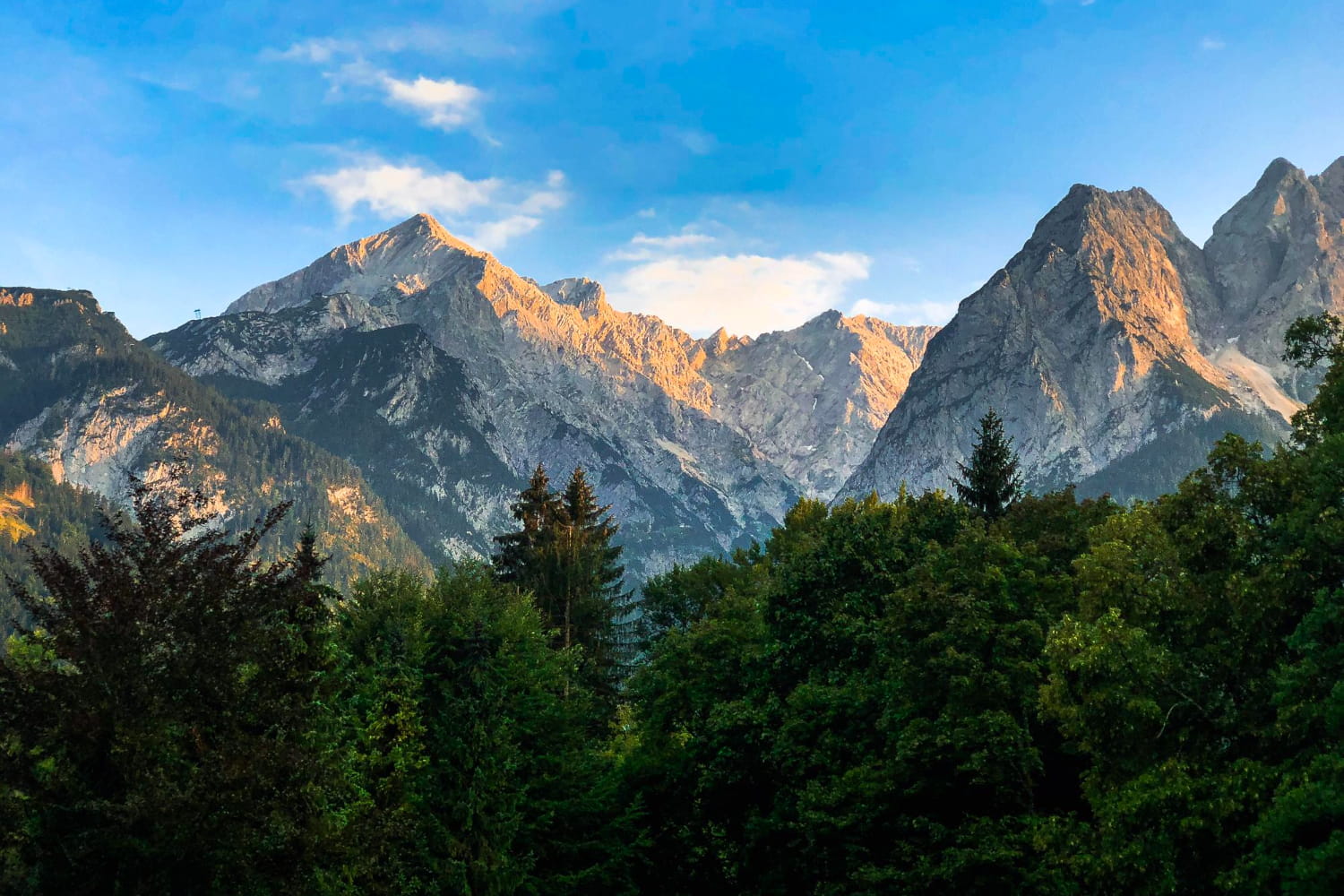
Mountains have captivated humanity throughout history with their majestic presence and mysterious allure, inspiring both awe and reverence through their seemingly inaccessible peaks. They stand not merely as natural giants but as living witnesses to geological epochs, climatic transformations, and the unfolding story of human civilization. Each mountain preserves a unique narrative shaped over millions of years by tectonic forces and the persistent work of natural elements. Prepare to discover incredible facts about these stone titans that you might not have known before. Embark on a journey into the fascinating world of Earth’s most magnificent natural formations.
- Mount Everest holds the title of Earth’s highest mountain above sea level, situated in the Himalayas along the border between Nepal and China. Its summit reaches eight thousand eight hundred forty eight meters, though this measurement constantly shifts due to ongoing tectonic activity. The peak moves northeastward at approximately four centimeters per year as the Indian and Eurasian plates continue their slow collision. Interestingly, when measured from base to summit, the tallest mountain on our planet is actually Mauna Kea, a volcano rising from the Pacific Ocean floor.
- Mauna Kea in Hawaii claims the distinction of being Earth’s tallest mountain when measured from its underwater base to its summit. This volcanic giant spans approximately ten thousand two hundred meters in total height, though only four thousand two hundred meters rise above the ocean surface. The majority of its mass remains hidden beneath Pacific waters, making it a true submarine colossus. Astronomers have established powerful observatories on its summit thanks to exceptional atmospheric clarity and minimal light pollution.
- The Himalayas form Earth’s highest mountain range and continue rising several millimeters each year through relentless geological forces. This upward movement results from the Indian plate colliding with the Eurasian plate at a rate of about five centimeters annually. These powerful tectonic interactions frequently trigger major earthquakes capable of reshaping the landscape dramatically. Geologically speaking, the Himalayas are remarkably young mountains having formed only fifty million years ago.
- The Andes constitute the planet’s longest continental mountain range, stretching over seven thousand kilometers along South America’s western coastline. This immense chain traverses seven nations including Venezuela, Colombia, Ecuador, Peru, Bolivia, Chile, and Argentina. The range contains Aconcagua, the highest peak in the Western Hemisphere, soaring to six thousand nine hundred sixty one meters. More than one hundred active volcanoes dot this region, establishing it as one of Earth’s most dynamic volcanic zones.
- Mount Kilimanjaro in Tanzania stands as Africa’s highest point with an elevation of five thousand eight hundred ninety five meters. Remarkably, this dormant stratovolcano sits just three degrees south of the equator yet maintains snow and ice caps that have persisted for centuries. Climate change is accelerating glacial retreat on its slopes, with scientists predicting complete ice disappearance within coming decades. Kilimanjaro has remained volcanically inactive for over two hundred thousand years.
- Glaciers serve as powerful geological sculptors that shape mountain landscapes over millennia through persistent movement. These massive ice rivers carve deep U-shaped valleys and create dramatic terrain features as they advance and retreat under their own weight. During the last ice age, glaciers covered vast territories across North America and Europe, leaving behind countless lakes and fjords as they melted. Today most of the world’s glaciers are retreating due to global warming, threatening water supplies for millions who depend on seasonal meltwater.
- The Alps represent Europe’s most iconic mountain system, extending more than twelve hundred kilometers across eight countries. These mountains emerged approximately forty million years ago when the African and Eurasian tectonic plates collided. Mont Blanc rises as the continent’s highest peak at four thousand eight hundred forty eight meters within this range. The Alps function as Europe’s water tower since major rivers including the Rhine and Rhône originate from its snowfields and glaciers.
- Mountain ecosystems rank among Earth’s most biodiverse yet vulnerable environments due to their vertical complexity. Climate conditions transform dramatically with elevation gain, creating specialized habitats for unique plant and animal species. Many mountain-dwelling organisms survive only within narrow altitudinal bands, making them exceptionally susceptible to climate shifts. The snow leopard exemplifies high-altitude adaptation with its thick fur coat and broad paws designed for navigating steep snowy terrain in the Himalayas.
- Volcanic mountains form through accumulation of lava, ash, and volcanic debris around openings in Earth’s crust. Some of our planet’s most distinctive peaks including Japan’s Mount Fuji and Africa’s Kilimanjaro are either dormant or active volcanoes. Volcanic activity occasionally creates entirely new landmasses as demonstrated by Surtsey Island emerging off Iceland’s coast during 1963 eruptions. Ojos del Salado on the Chile-Argentina border holds the record as Earth’s highest active volcano at six thousand eight hundred ninety three meters.
- Mountain ranges significantly influence regional climate patterns through the rain shadow effect. When moisture-laden air masses encounter mountain barriers, they rise, cool, and release precipitation on windward slopes. The leeward side receives dramatically less rainfall as descending air warms and dries, often creating desert conditions. This phenomenon explains why the Columbia Desert exists east of North America’s Cascade Range while western slopes receive abundant precipitation.
- The MacDonnell Ranges in central Australia contain Earth’s oldest mountains with ages exceeding eight hundred million years. These ancient formations once rivaled the Himalayas in height before erosion gradually wore their peaks down over countless millennia. North America’s Appalachian Mountains formed approximately four hundred sixty million years ago making them considerably older than the Rocky Mountains which emerged only eighty million years ago. These age differences dramatically affect each range’s current topography and ecological characteristics.
- Mountain rocks preserve Earth’s geological history through embedded evidence of ancient oceans, climates, and life forms. Fossilized marine creatures discovered near Everest’s summit confirm this region once formed part of the Tethys Ocean floor millions of years ago. Geologists carefully study rock strata in mountains to reconstruct tectonic movements and past climate conditions. Each meter of exposed mountain rock potentially contains information spanning millions of years of planetary evolution.
- High-altitude life demands remarkable physiological adaptations to survive thin air and extreme cold. Indigenous populations in Tibet and the Andes have developed unique genetic traits enhancing oxygen utilization in low-pressure environments. Tibetans possess a special EPAS1 gene mutation allowing more efficient oxygen processing in rarefied atmospheres. Alpine plants often produce protective pigments shielding them from intense ultraviolet radiation at elevation.
- Alpine meadows represent distinctive ecosystems existing above treeline yet below permanent snowfields. These zones feature brief growing seasons and diverse communities of low-growing plants specially adapted to harsh mountain conditions. Summer transforms these areas into vibrant floral tapestries attracting numerous pollinating insects essential for reproduction. Medicinal plants including arnica and edelweiss thrive exclusively in these high-elevation environments.
- Ascending Earth’s highest peaks presents serious health risks due to oxygen deprivation and extreme weather conditions. Altitude sickness can manifest at elevations above twenty five hundred meters with symptoms including headaches, nausea, and breathing difficulties. Everest’s notorious Death Zone above eight thousand meters represents an environment where human physiology cannot acclimatize and bodily functions progressively deteriorate. Despite these dangers thousands of climbers attempt eight-thousanders annually seeking the ultimate mountaineering challenge.
- Mountain ranges frequently serve as natural boundaries between nations and continents profoundly shaping human history. The Himalayas isolated Tibet and Nepal from broader Asian influences for centuries helping preserve their distinctive cultural identities. The Alps provided crucial defensive barriers throughout European history protecting territories from invasion during Roman times and beyond. Many modern national borders including those of Switzerland and Nepal follow mountain ridge lines established by nature.
- Mountains generate unique meteorological phenomena including föhn winds warm dry gusts descending rapidly down leeward slopes. These winds can raise temperatures dramatically by dozens of degrees within hours creating sudden weather shifts. Mountain waves form when air flows across ridges producing oscillating patterns in the atmosphere that glider pilots harness to reach extraordinary altitudes without engine power. These atmospheric dynamics significantly impact local weather forecasting and aviation safety.
- Numerous mountains hold sacred status across diverse cultures and religious traditions worldwide. Mount Kailash in Tibet represents the most revered peak for Buddhists and Hindus who consider it the abode of deities. Japanese culture venerates Mount Fuji as a national symbol and enduring source of artistic inspiration spanning centuries. Ancient Greeks believed Mount Olympus housed their twelve principal gods in celestial palaces. Pilgrims continue journeying to these spiritual mountains seeking enlightenment and connection with the divine.
- Mountain rocks provide essential mineral resources including gold, silver, copper, and precious gemstones vital to human civilization. Russia’s Ural Mountains boast remarkable deposits of amethyst, topaz, and malachite attracting miners for generations. The Andes contain some of Earth’s largest copper reserves particularly concentrated in Chile and Peru. Unfortunately mining operations frequently cause severe environmental damage and disrupt fragile mountain ecosystems through deforestation and chemical contamination.
- Climate change impacts mountain regions more intensely than many other environments with temperatures rising faster than the global average. Glacier retreat threatens water security for millions relying on meltwater for agriculture and drinking supplies especially in Asia’s major river basins. Himalayan glacial lake outburst floods pose increasing dangers to downstream communities as ice dams weaken. Scientists develop sophisticated models to predict how warming temperatures will transform mountain biodiversity and hydrological systems in coming decades.
These captivating facts merely begin to reveal the grandeur and complexity of Earth’s mountain systems. Incredible facts about mountains remind us of our planet’s dynamic nature and its capacity to craft extraordinary landscapes across geological time. We hope this collection has expanded your appreciation for these stone giants that shape climate, harbor biodiversity, and inspire the human spirit. Mountains continue to stand as timeless monuments inviting exploration and reflection on our place within nature’s magnificent tapestry.


