
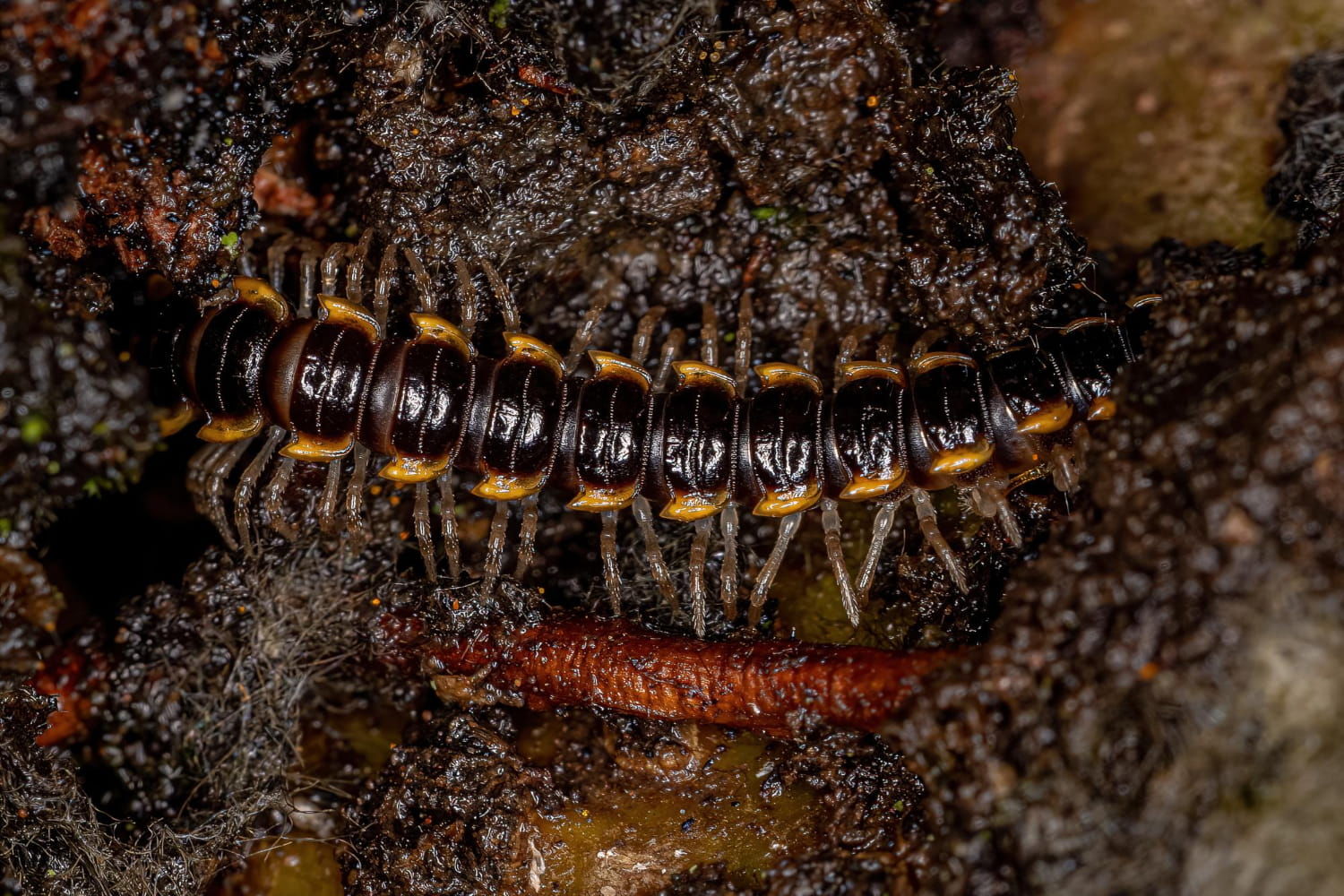
Centipedes—these mysterious creatures with elongated bodies and numerous legs—evoke a mixture of fear and fascination with their unusual appearance. Inhabiting dark corners of our world from tropical rainforests to household basements, they remain one of the oldest groups of terrestrial animals on Earth. Behind their distinctive exterior lies a true evolutionary masterpiece equipped with unique adaptations for hunting and survival. Today we will uncover incredible facts about centipedes that will transform your perception of these inconspicuous inhabitants of our planet. You might not have known how remarkably complex and sophisticated these ancient beings truly are.
- Centipedes belong to the class Chilopoda yet possess far fewer legs than their name might suggest at first glance. The number of legs varies among species from thirty to over one hundred seventy but always occurs in even numbers corresponding to body segments. Interestingly no centipede actually has exactly one hundred legs despite the common name implying otherwise. Each body segment bears only a single pair of legs unlike millipedes which carry two pairs per segment.
- The foremost pair of legs in centipedes has evolved into venomous claws called forcipules used primarily for capturing prey. These specialized appendages connect directly to venom glands enabling centipedes to paralyze animals significantly larger than themselves. During an attack venom injects through hollow claws straight into the victim’s body making centipedes highly effective predators. While bites from large species can be painful to humans they rarely pose serious medical threats.
- Centipedes rank among the earliest animals to colonize land appearing during the Silurian period more than four hundred million years ago. Their ancestors evolved from marine arthropods becoming pioneers of terrestrial ecosystems long before insects or vertebrates emerged. Fossil evidence reveals that certain prehistoric centipede species exceeded one meter in length. Modern varieties are considerably smaller due to atmospheric changes and the emergence of new predators over geological time.
- The largest living centipede is the Amazonian giant centipede found in South American rainforests and Caribbean islands. This formidable predator reaches lengths beyond thirty centimeters with coloration ranging from reddish brown to dark mahogany. It hunts insects spiders lizards and even small rodents with remarkable efficiency. Its venom proves potent enough to immobilize mammals as large as mice within moments.
- Centipedes possess an exceptionally developed tactile system thanks to elongated antennae that sometimes exceed their entire body length. These sensory organs constantly sweep forward during movement probing the environment for potential prey or threats. Since centipedes have poor vision or are completely blind their antennae serve as primary tools for navigating the world. Some subterranean species feature extraordinarily long antennae for orientation in absolute darkness.
- Most centipedes lead nocturnal lifestyles avoiding sunlight and emerging to hunt exclusively after dusk. By day they conceal themselves beneath stones within decaying wood in soil crevices or other dark humid locations. This behavior prevents desiccation as their exoskeleton provides insufficient protection against moisture loss. Nighttime activity also reduces encounters with diurnal predators that might otherwise threaten them.
- Centipedes breathe through a tracheal system consisting of air filled tubes penetrating their entire body to deliver oxygen directly to tissues. Each body segment contains spiracles small openings allowing air entry into this respiratory network. This breathing mechanism imposes size limitations since oxygen diffusion becomes less efficient as body dimensions increase. Consequently modern centipedes remain much smaller than their prehistoric ancestors who thrived in oxygen rich ancient atmospheres.
- Female centipedes display extraordinary parental care uncommon among invertebrates. After laying eggs in secure locations mothers remain with the clutch licking them to prevent fungal growth and deter predators. In some species the mother abstains from feeding throughout the entire incubation period which may last several weeks. Newly hatched juveniles often stay under maternal protection for a short time after emergence.
- Centipedes function exclusively as carnivores feeding on other invertebrates including insects spiders snails and occasionally other centipedes. They hunt actively pursuing prey using speed and sensitive antennae to detect movement. Larger species can overpower animals considerably bigger than themselves thanks to potent venom. This predatory behavior benefits humans by naturally controlling populations of pest insects.
- Centipedes possess the ability to regenerate lost legs although this process requires considerable time and occurs only during molting cycles. After leg loss the creature continues moving albeit with reduced speed and agility. New legs gradually regrow over several molting stages progressively achieving normal size and functionality. This adaptation significantly enhances survival chances following predator attacks.
- Centipede movement speed is remarkably high relative to their body size enabling efficient prey pursuit and danger avoidance. Certain species can cover distances tens of times their body length within a single second. This agility results from synchronized motion of numerous legs creating a fluid wave like gait. Such rapid movement often triggers instinctive fear responses during unexpected human encounters.
- Centipedes lack bioluminescent capabilities unlike some other invertebrates yet certain tropical species display vivid contrasting coloration. This bright patterning serves as a warning signal to potential predators indicating the presence of venom within the organism. Striking orange or red markings against dark body backgrounds communicate danger effectively. This adaptation known as aposematism appears widely among venomous animal species.
- Centipedes cannot survive in low humidity environments because their exoskeleton fails to prevent adequate moisture retention. They consistently seek damp habitats such as basements forest floors or water body margins for residence. In dry conditions centipedes may perish from dehydration within just a few hours. This vulnerability explains their frequent appearances indoors following rainfall or during humid seasons.
- Centipede lifespans substantially exceed those of most insects potentially reaching five to six years under favorable conditions. This longevity relates to slow metabolic rates and capacity for dormancy during unfavorable environmental periods. Sexual maturity typically develops only after several years post hatching. Extended lifespans enable multiple reproductive cycles throughout an individual’s lifetime.
- Centipedes are solitary creatures living independently and interacting with others of their own or different species solely for hunting or reproduction. Encounters between two centipedes often trigger aggressive behavior especially when size disparity exists. Larger individuals may perceive smaller ones as potential prey leading to predatory attacks. Consequently centipedes naturally maintain spatial separation in wild habitats.
- Centipedes maintain a simple yet efficient circulatory system where blood lacks hemoglobin resulting in pale yellow or transparent coloration. Instead of hemoglobin they utilize hemocyanin containing copper rather than iron for oxygen transport. This compound imparts a bluish tint to blood only when oxygenated. Their circulatory system remains open allowing blood to flow freely within body cavities.
- Centipedes lack ears yet detect vibrations exceptionally well through specialized receptors located on legs and antennae. This sensitivity enables them to sense approaching predators or prey movement even in complete darkness. Vibrations transmit through soil or surfaces where centipedes reside. Such perception mechanisms prove critically important for survival given their limited visual capabilities.
These fascinating facts only partially reveal the intricate world of centipedes these ancient planetary residents. Incredible discoveries about these creatures remind us that even the smallest animals can possess remarkably complex biology and behavior. Studying centipedes deepens our understanding of evolutionary adaptations required for terrestrial existence. Respect for these unassuming predators encourages appreciation of biodiversity even within nature’s most shadowy recesses.


