
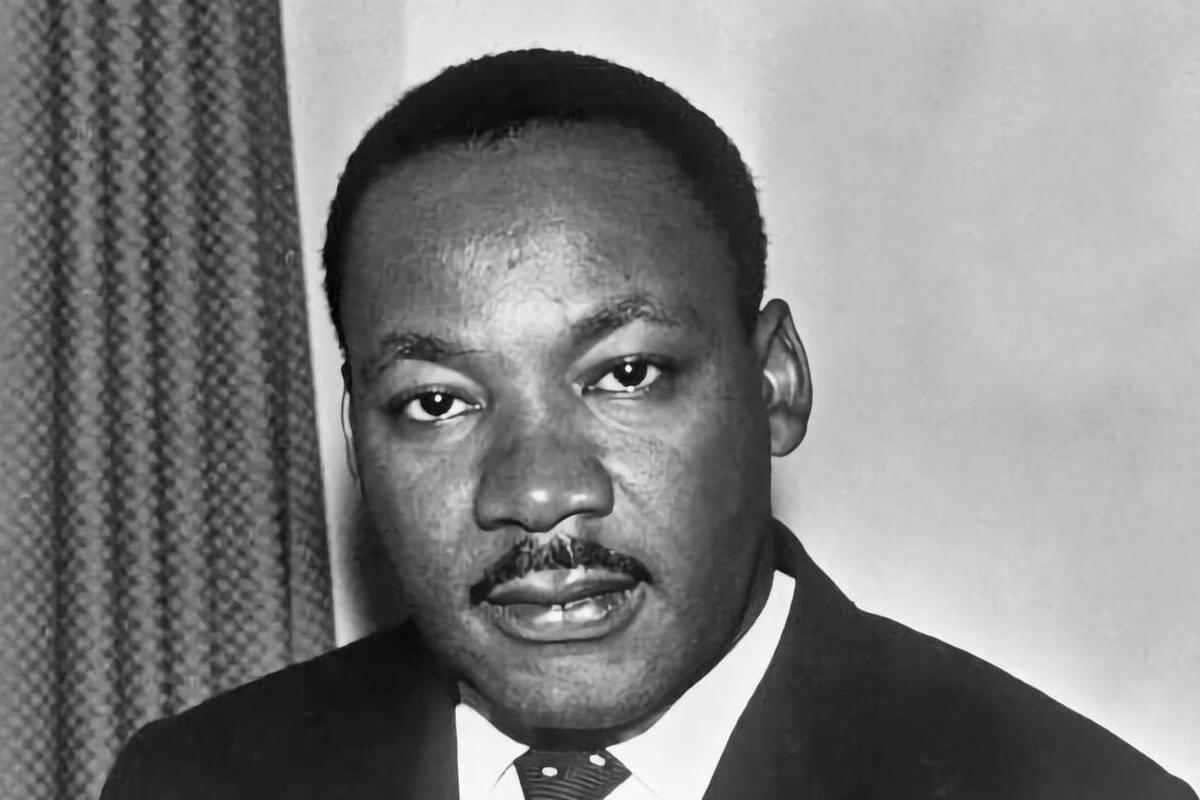
Martin Luther King Jr. remains one of the most influential figures of the 20th century, whose name is forever inscribed in the history of the struggle for civil rights. His speeches inspired millions of people around the world, and his peaceful methods of protest changed the face of America. However, behind the image of the great orator and fighter for justice lies a multitude of fascinating facts that you may not have known. From unusual details of his personal life to little-known episodes of his public activity, every aspect of King’s biography reveals new facets of his personality. These incredible facts will help you better understand the man who became a symbol of peaceful resistance and equality.
- Martin Luther King’s real name was Michael King Jr., and he was born under this name on January 15, 1929, in Atlanta, Georgia. His father, Michael King Sr., was a Baptist pastor who visited Germany in 1934 and was inspired by the figure of Martin Luther, the German theologian and initiator of the Reformation. After returning home, his father decided to change both his own name and his five-year-old son’s name in honor of the great reformer. This name change symbolically foreshadowed King’s future role as a reformer of American society.
- King was an extraordinarily gifted child and skipped the ninth and twelfth grades of school, entering Morehouse College in Atlanta at the age of just fifteen. This was a prestigious college for African Americans, where many future leaders of the civil rights movement studied. In college, King initially did not plan to follow in his father’s footsteps and become a minister, instead considering a career as a doctor or lawyer. However, under the influence of college president Benjamin Mays, who became his mentor, King ultimately chose theology and received a bachelor’s degree in sociology in 1948.
- While studying at Crozer Theological Seminary in Pennsylvania, King became acquainted with Mahatma Gandhi’s philosophy of nonviolent resistance, which became the foundation of his subsequent activity. Until that moment, King had even considered the possibility of carrying a weapon for self-defense, since his family had repeatedly received threats. However, studying Gandhi’s principles radically changed his worldview and convinced him that nonviolent resistance is the most powerful weapon in the fight for justice. At the seminary, King graduated as the top student of his class and received a scholarship to continue his education.
- King received his doctorate in systematic theology from Boston University in 1955, becoming one of the most educated leaders of the civil rights movement. His dissertation was devoted to comparing the concepts of God in the philosophy of Paul Tillich and Henry Nelson Wieman. During his studies in Boston, he met his future wife Coretta Scott, who was studying voice at the New England Conservatory. Their acquaintance came about thanks to a mutual friend, and King called Coretta, telling her that she possessed all four qualities he was looking for in a wife: character, intelligence, personality, and beauty.
- The first major protest that King led was the Montgomery bus boycott of 1955-1956, which lasted 381 days and ended with the abolition of segregation in the city’s public transportation. This protest began after Rosa Parks refused to give up her seat to a white passenger on a bus and was arrested. King was only 26 years old at the time and had just become pastor of Dexter Avenue Baptist Church in Montgomery. The success of the boycott made King a nationally known figure and demonstrated the effectiveness of nonviolent resistance as a tool for social change.
- During the Montgomery boycott, King’s house was bombed when his wife and infant daughter were inside. Fortunately, no one was hurt, but this incident could have had tragic consequences. When an angry crowd of African Americans gathered at the destroyed house, ready for a violent response, King came out and calmed the people, calling on them to adhere to the principles of nonviolence. His composure and faith in peaceful methods at this critical moment strengthened his authority as a leader and demonstrated his unwavering commitment to the philosophy of nonviolent resistance even under threat to his own life.
- King visited India in 1959 to study more deeply the legacy of Gandhi and his methods of nonviolent resistance, and this trip had a profound impact on him. He spent a month in the country, meeting with Gandhi’s followers and studying the practical application of the philosophy of nonviolence. During the visit, King was struck by the level of poverty in India, but also inspired by how the Indian people managed to achieve independence without armed struggle. After returning, he became even more convinced of the correctness of the chosen path and began to more actively apply the tactics of nonviolent resistance in the American civil rights movement.
- The famous “I Have a Dream” speech was delivered on August 28, 1963, during the March on Washington for Jobs and Freedom, and was heard by more than 250 thousand people. Interestingly, the most famous part of the speech, which begins with the words “I have a dream,” was not included in the prepared text. Gospel singer Mahalia Jackson, who was standing nearby, exclaimed “Tell them about the dream, Martin!”, and King set aside his notes and began to improvise. This improvised part became the most quoted fragment of the speech and one of the most famous moments in American history.
- In 1964, at the age of 35, King became the youngest Nobel Peace Prize laureate at that time, receiving this award for nonviolent struggle against racial discrimination. He donated the entire prize amount of 54 thousand dollars to support the civil rights movement, dividing the money among various organizations. During the award ceremony in Oslo, King emphasized that this prize belongs not only to him personally, but to the entire civil rights movement and millions of people who fought for equality. Receiving the Nobel Prize significantly increased King’s international authority and attracted world attention to the struggle of African Americans for their rights.
- The FBI under the direction of J. Edgar Hoover conducted intensive surveillance of King, considering him a threat to national security due to possible ties with communists. The Bureau wiretapped his phones, planted provocative letters, and even sent King anonymous letters with threats and compromising materials, trying to push him to suicide. A year before King’s death, the FBI even sent his wife a recording with compromising conversations, trying to destroy his marriage. Hoover publicly called King “the biggest liar in the country” and made significant efforts to discredit the leader of the civil rights movement.
- King was arrested 29 times on various charges, including violating segregation laws, speeding, and participating in nonviolent protests. One of the most famous arrests occurred in Birmingham, Alabama, in 1963, when King spent eight days in jail. It was there that he wrote his famous “Letter from Birmingham Jail,” addressing white clergymen who criticized his methods. In this letter, King explained the moral necessity of civil disobedience to unjust laws and defended the right to nonviolent protest against racial injustice.
- The day before his assassination, King delivered a prophetic speech “I’ve Been to the Mountaintop” at Mason Temple Church in Memphis, Tennessee. In this speech, he spoke about threats to his life and expressed a premonition of his own death, saying that he had seen the “promised land” and might not get there with his people. The next day, April 4, 1968, he was shot on the balcony of the Lorraine Motel, where he had come to support a strike by sanitation workers. His assassin James Earl Ray was arrested and convicted, although some conspiracy theories still question the official version of events.
- King came to Memphis to support a strike by African American sanitation workers who were fighting for better working conditions and decent pay. These workers carried signs reading “I Am a Man,” which became a symbol of their struggle for recognition of human dignity. King saw this strike as part of a broader struggle for economic justice, which was becoming increasingly important in his work in recent years. His presence in Memphis demonstrated that he was expanding his focus from exclusively racial issues to broader problems of poverty and economic injustice that affected people of all races.
- In the last years of his life, King increasingly spoke out against the Vietnam War, which led to criticism from some of his former supporters and government officials. In his 1967 speech “Beyond Vietnam” at Riverside Church in New York, he called the American government “the greatest purveyor of violence in the world.” King saw a connection between the Vietnam War and poverty in America, arguing that resources spent on war could be used to fight poverty. His anti-war stance cost him the support of many moderate allies and even some civil rights movement leaders.
- King was planning to organize the Poor People’s Campaign, which was supposed to unite poor people of all races to fight for economic justice, when he was killed. This campaign was to include a massive march on Washington and the creation of a “Resurrection City” on the National Mall, where thousands of people planned to set up camp and remain there until Congress took action to fight poverty. The plan envisioned building wooden barracks and conducting nonviolent acts of civil disobedience. After King’s death, his associates continued to implement this plan, and the Poor People’s Campaign took place in the summer of 1968, although without his leadership it did not achieve the expected impact.
- Martin Luther King’s birthday became a federal holiday in the United States only in 1986, almost eighteen years after his death, after a long campaign and political struggle. President Ronald Reagan signed the law creating this holiday in 1983, but it began to be officially observed several years later. King became the second person in U.S. history whose birthday is celebrated as a national holiday, after George Washington. However, not all states immediately adopted this holiday, and the last state, Arizona, officially recognized it only in 2000 after economic pressure and boycott threats.
- King had four children with his wife Coretta Scott King, and all of them continued their father’s work in various ways, dedicating their lives to the struggle for civil rights. His eldest daughter Yolanda became an actress and activist, son Martin Luther King III became a leader of the civil rights movement, Dexter Scott King headed the Martin Luther King Jr. Center for Nonviolent Social Change, and youngest daughter Bernice became a minister and lawyer. Coretta Scott King actively worked to preserve her husband’s legacy after his death, founding the King Center in Atlanta and organizing many memorial events.
- King was a talented orator with a unique speech style that combined biblical allusions, rhetorical devices, and emotional power, which made his performances extremely persuasive. He used a technique called “preaching style,” characteristic of the African American church tradition, where the rhythm and cadence of words are almost as important as their content. His ability to build speeches according to the principle of climax, gradually rising to an emotional peak, always kept the audience in suspense. Many of his most famous phrases, such as “let freedom ring” and “not be judged by the color of their skin but by the content of their character,” have become catchphrases of American culture.
These fascinating facts about Martin Luther King reveal the complex and multifaceted personality of a man who forever changed the course of history. From a gifted student to a leader of national scale, from pastor of a small church to Nobel laureate, his path was filled with challenges, sacrifices, and unwavering faith in justice. King’s legacy extends far beyond his most famous speeches and marches, encompassing a deep philosophical and moral foundation that continues to inspire millions of people around the world. These incredible facts remind us that behind the icon of civil rights stood a living person with extraordinary courage, intellect, and devotion to the ideals of equality and brotherhood.


