
Marseille, the second largest city in France, is one of the oldest cities in Europe, with a rich history stretching back to ancient times. Located on the shores of the Mediterranean Sea, this port giant uniquely combines Gallic traditions, Mediterranean warmth, and a distinctive cosmopolitan spirit. From the ancient harbor of Vieux-Port to the modern Museum of European and Mediterranean Civilisations MuCEM, Marseille offers visitors an unforgettable experience difficult to find in other European capitals. We invite you to discover incredible facts about Marseille, many of which you might not have known until now.
- Marseille was founded by Greeks from Phocaea in six hundred forty one BCE under the name Massalia, making it the oldest city in France. This settlement became an important trading center between Greeks and local Celtic tribes inhabiting the region. It was precisely through Marseille that viticulture and winemaking arrived on the territory of modern France, eventually transforming the country into a world leader in this industry.
- Marseille’s Vieux-Port harbor is the oldest continuously operating port in Europe, functioning for more than two thousand six hundred years. This historic harbor is surrounded by ancient buildings and churches, creating a unique atmosphere where antiquity meets modernity. Today Vieux-Port has transformed into a popular tourist destination, where visitors can taste the famous Marseille fish stew bouillabaisse in traditional restaurants located right on the waterfront.
- Marseille is the largest port in France and one of the most important maritime hubs of the Mediterranean, processing more than one hundred million tons of cargo annually. The port stretches for more than sixty kilometers along the coastline and occupies an area larger than some European cities. This gigantic port complex includes container terminals, fuel depots, and specialized docks for cruise ships that welcome millions of tourists each year.
- Marseille is home to Europe’s largest open air fish market, La Turbie, located in the old harbor of Vieux-Port. This colorful market operates daily from early morning, offering the freshest catch from local fishermen, including rare fish species characteristic exclusively of the Mediterranean Sea. It is precisely here that the city’s chefs purchase ingredients for preparing the legendary bouillabaisse, considered the culinary business card of the city.
- Marseille is the most multicultural city in France, where more than one hundred eighty different ethnic groups reside, creating a unique cultural melting pot. Nearly forty percent of the city’s population has immigrant origins, making Marseille a true crucible of cultures. This diversity is reflected in cuisine, music, architecture, and everyday life, fostering an atmosphere of tolerance and openness.
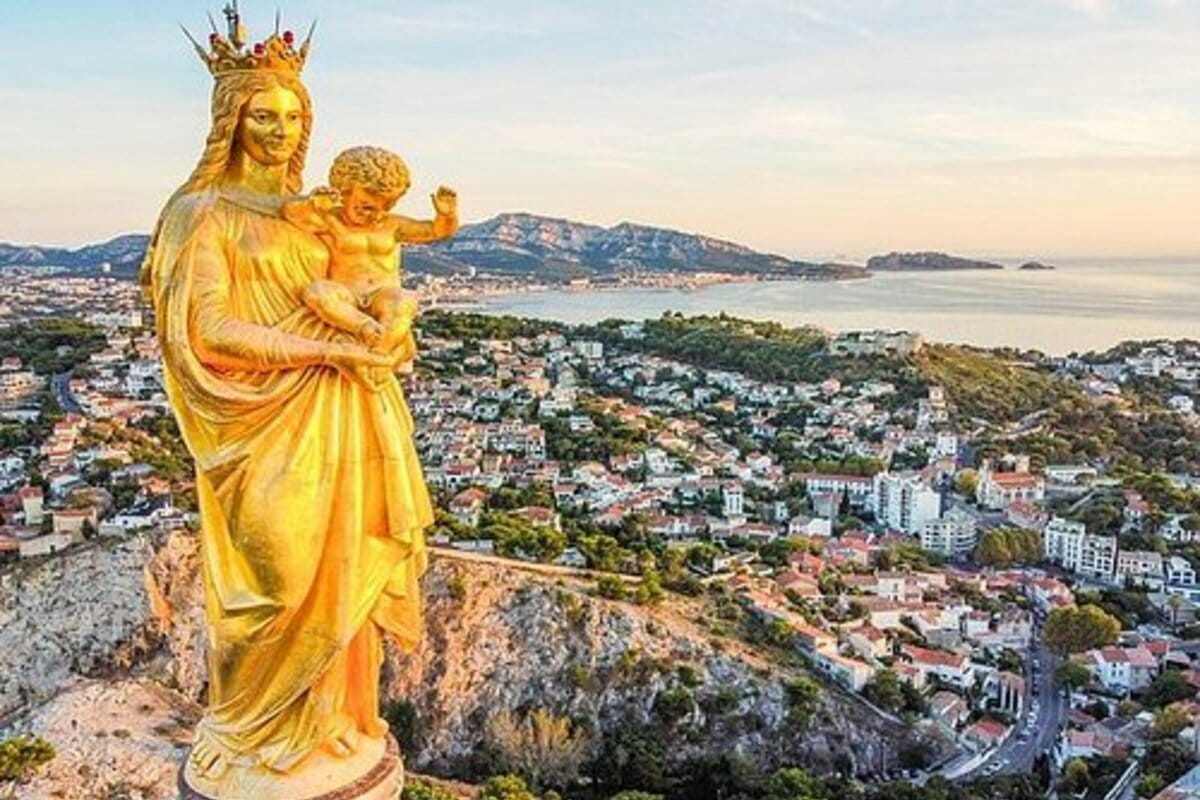
- The hill of Notre Dame de la Garde dominates the city from a height of one hundred sixty meters above sea level and serves as Marseille’s main panoramic viewpoint. At the summit stands an impressive nineteenth century basilica, renowned for its gilded mosaics and the statue of the Virgin Mary rising above the dome. From this vantage point breathtaking views unfold across the city, the port, the Frioul archipelago, and even the Alps on clear days.
- Marseille is the only city in France where the tradition of producing authentic Marseille soap according to the classic olive oil recipe has been preserved. Genuine Marseille soap must contain no less than seventy two percent olive oil and be manufactured without synthetic additives or perfumes. Only a few workshops in the Old Town maintain the original technology passed down from generation to generation.
- The Frioul archipelago, located just a few kilometers from Marseille’s coastline, consists of four islands, the most famous being the island of If. It was on this island that the fortress prison was built, which became the setting for Alexandre Dumas’ novel The Count of Monte Cristo. Today If is a popular tourist attraction, where hundreds of visitors travel daily to see the legendary prison with their own eyes.
- Marseille is considered the European capital of water sports thanks to ideal conditions for sailing, diving, and other maritime activities. The city regularly hosts international regattas, including stages of the America’s Cup sailing competition. Along the coastline more than thirty yacht clubs and maritime stations are situated, offering everyone the opportunity to try various water sports.
- Marseille houses France’s largest museum of African and Oceanic art, the Museum of African and Oceanian Arts, founded in the nineteenth century. The museum’s collection comprises more than two hundred thousand exhibits, including rare masks, statuettes, and ritual objects from various regions of Africa and Oceania. Many exhibits were collected during colonial expeditions and represent significant historical and cultural value.
- Marseille is the birthplace of the legendary French national anthem La Marseillaise, composed in seventeen ninety two by Captain Claude Joseph Rouget de Lisle. The song received its name precisely thanks to volunteers from Marseille, who were the first to perform it during marches to Paris during the French Revolution. Today a monument commemorating this historic event stands on the square in front of Marseille’s opera house.
- Marseille enjoys a unique climate, with more than three thousand hours of sunshine annually, making it one of the sunniest cities in Europe. The average winter temperature rarely drops below eight degrees Celsius, while summer temperatures hover around twenty eight degrees. This favorable climate promotes tourism and makes Marseille a popular year round vacation destination.
- Marseille is home to France’s oldest botanical garden, founded as early as eighteen hundred three on the grounds of a former Carthusian monastery. The garden covers an area of more than eight hectares and contains over three thousand plant species from around the world, including rare Mediterranean and tropical varieties. Particularly impressive is the collection of cacti and succulents, which ranks among the most comprehensive in Europe.
- Marseille served as the European Capital of Culture in two thousand thirteen, which spurred extensive urban reconstruction and the construction of new cultural facilities. Among the most significant projects was the creation of the La Friche complex, including the modern Museum of European and Mediterranean Civilisations MuCEM and the Silo performing arts center. These developments radically transformed the city’s image, converting it from an industrial port into a contemporary cultural hub.
- Marseille is the only city in France where the tradition of daily fish auctions continues, dating back to the time of the Roman Empire. Each morning fishermen bring their fresh catch to a special building, where restaurant representatives and retail merchants bid on the best batches. This thousand year old tradition remains alive today, demonstrating the city’s deep connection to the sea.
- Marseille boasts the greatest number of beaches among all French cities not classified as resorts, with more than ten beaches stretching over seven kilometers. Among them are both urban beaches with developed infrastructure and wild coves surrounded by cliffs, accessible only on foot or by boat. The most popular is Prado Beach, located in the southern part of the city, offering views of the Frioul archipelago.
- Marseille houses the oldest functioning mosque in Western Europe, built in nineteen twenty six at the initiative of Muslim soldiers who fought for France during the First World War. This mosque has become a symbol of religious tolerance and cultural diversity in the city. The building’s architecture combines traditional Islamic elements with Provençal construction traditions, creating a unique synthesis of styles.
- Marseille is the birthplace of the famous French card game tarot, which emerged in the city during the fifteenth century. It was in Marseille that the classic Marseille tarot deck was developed, which became the foundation for many modern versions of this game. This deck is distinguished by its simple yet expressive iconography and continues to be used both for entertainment and for fortune telling.
Fascinating facts about Marseille convincingly demonstrate how multifaceted and unique this city is, blending ancient history with contemporary cosmopolitan spirit. From its antique roots to modern cultural initiatives Marseille remains one of the most captivating destinations along the Mediterranean coast. We hope this collection of interesting facts inspires you to discover this vibrant port city with its distinctive character and warm hospitality.


