
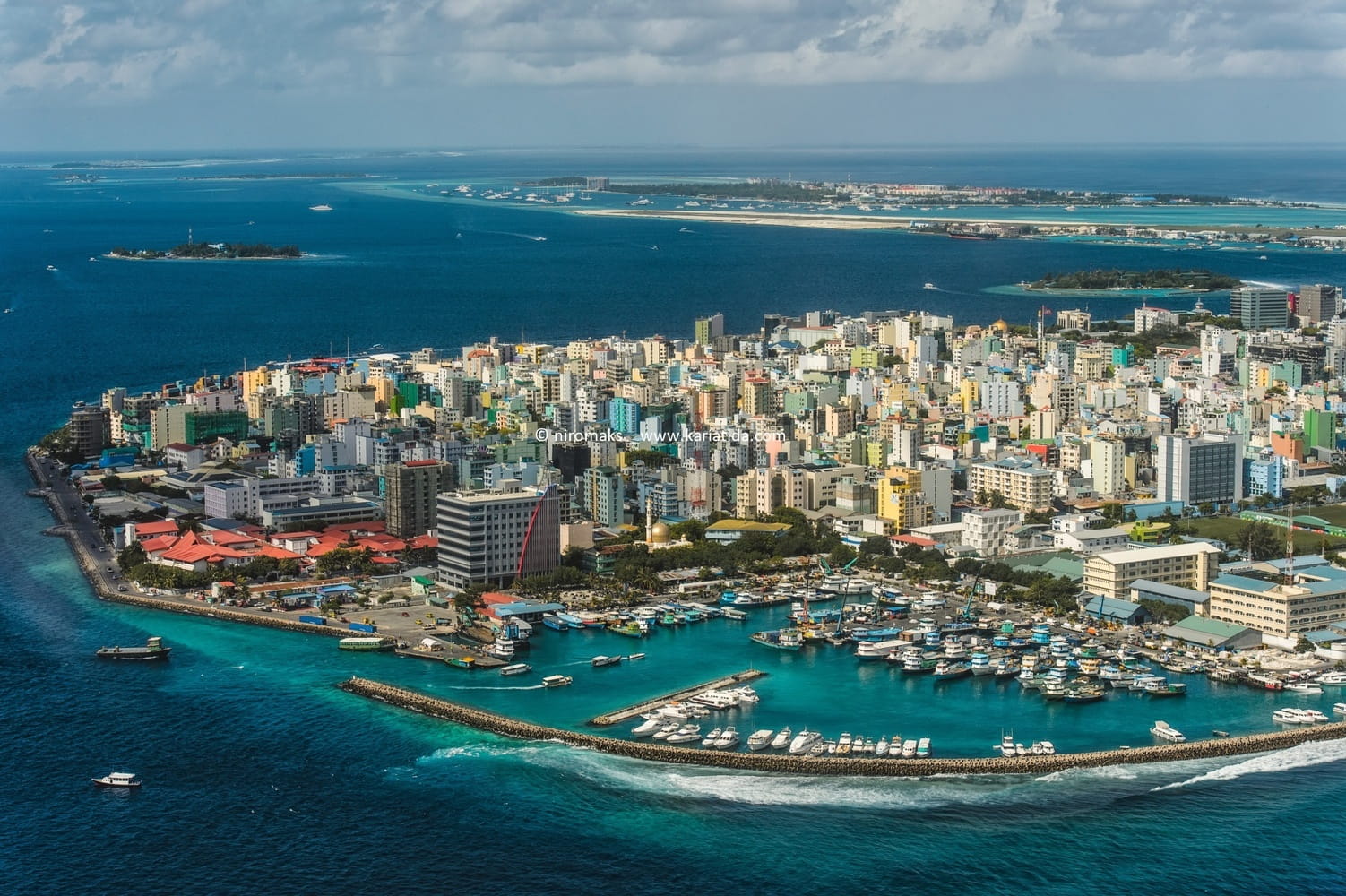
Malé is far more than just the capital of the Maldives—it is a genuine pearl of the Indian Ocean nestled on a tiny coral island spanning less than six square kilometers. This remarkably compact city ranks among the most densely populated urban areas on Earth where hundreds of thousands of residents live within walking distance of each other across an area that can be traversed on foot in under thirty minutes. Amazing facts about Malé reveal a unique fusion of Islamic traditions tropical landscapes and modern infrastructure compressed into extraordinarily limited space. You might not know that this city was almost entirely rebuilt following the devastating 2004 tsunami becoming a powerful symbol of resilience and adaptation for a vulnerable island nation. Fascinating facts about Malé illuminate how a minuscule island transformed into the political economic and cultural heart of an entire tropical archipelago.
- Malé occupies an island measuring merely five point eight square kilometers making it one of the smallest capital cities in the world by land area. Despite its miniature dimensions the city serves as home to more than two hundred thousand permanent residents with daytime population swelling to four hundred thousand as workers commute from neighboring islands. Streets in Malé are exceptionally narrow with many completely unsuitable for automobile traffic forcing residents to travel primarily on foot or by motorcycle. This extraordinary density creates a distinctive urban atmosphere where every square meter carries strategic importance for the city’s continued development and survival.
- The city is entirely encircled by an artificial coral barrier constructed to shield it from destructive ocean waves and tropical storms. This protective wall was originally built in the nineteenth century and has undergone multiple reconstructions to enhance resilience against rising sea levels and climate change impacts. The barrier performs a dual function protecting the shoreline from erosion while simultaneously creating a calm harbor for fishing dhonis and tourist vessels. Engineers continuously reinforce this structure as sea level rise threatens the very existence of this low lying capital situated barely above ocean level.
- Malé enforces a unique regulation prohibiting public consumption of alcoholic beverages by local residents since the Maldives officially maintains its status as an Islamic nation. Alcohol remains permitted exclusively at tourist resorts located on separate islands operating under special government licenses. This rule is strictly enforced with violations potentially resulting in substantial fines or deportation for foreign visitors. Instead locals enjoy traditional beverages crafted from coconut sap and aromatic spices which form an integral component of authentic Maldivian cultural identity and daily life.
- Malé stands as the only location across the entire Maldivian archipelago where construction of multi story buildings receives official approval giving its skyline a distinctive character unlike any other island settlement. The city’s tallest structure Hukuru Miskiy reaches thirteen stories and ranks among the nation’s most prominent architectural landmarks. Constrained by extreme land scarcity architects must build vertically rather than horizontally creating an unusual urban landscape for a tropical island environment. These compact high rises typically combine residential apartments commercial spaces and government offices maximizing utility of every available land parcel.
- The old market of Malé astonishes visitors with its extraordinary diversity of seafood delivered daily from every corner of the scattered archipelago. Here one can witness freshly caught yellowfin tuna larger than an adult human alongside shrimp of various sizes and exotic fish species found exclusively in Indian Ocean waters. Fish auctions commence before dawn as fishermen unload their catches onto wooden jetties surrounded by vibrantly painted traditional boats. This marketplace functions not merely as an economic hub but also as a vital social space where residents exchange news and coordinate their daily activities.
- The city possesses absolutely no natural sources of fresh water relying entirely on desalination plants that convert seawater into potable supply. These facilities operate continuously twenty four hours daily providing water for drinking cooking and essential household needs across the entire urban population. Every residence features specialized storage tanks to maintain water reserves during system maintenance or unexpected technical failures. This complete technological dependence renders Malé vulnerable to infrastructure disruptions compelling authorities to constantly upgrade and diversify the water supply network.
- Malé maintains a distinctive transportation system where primary mobility occurs through walking motorcycles and miniature electric vehicles. Automobile roads remain limited to just a few main thoroughfares with remaining pathways too narrow even for motorbikes requiring pedestrian navigation. An extensive network of speedboats connects the capital with surrounding islands operating on fifteen minute intervals throughout daylight hours. This maritime transit system has transformed Malé into the archipelago’s central transportation hub linking more than one thousand individual islands into a functional national network.
- The sole international airport serving the Maldives Velana International Airport occupies an artificial island constructed adjacent to Malé’s shoreline. Passengers reach the airport via scheduled ferry services or across the Sinamalé Bridge opened in 2019 providing direct road access for the first time in the nation’s history. The facility handles over four million passengers annually establishing itself as the region’s critical aviation gateway for tourism and international connectivity. Runway limitations place the landing strip mere meters from ocean waters creating dramatic takeoff and landing experiences with panoramic ocean views.
- The Maldivian National Museum located in Malé preserves a remarkable collection of artifacts documenting the archipelago’s rich history from its Buddhist period through Islamic conversion in the twelfth century. Among its most significant exhibits stands the coral stone throne of the last Buddhist king alongside hand written Qurans inscribed on banana leaves using traditional methods. The museum also safeguards historic fishing equipment and scale models of ancient Maldivian sailing vessels that once navigated trade routes between India and East Africa. This repository serves as the nation’s sole comprehensive guardian of cultural heritage concentrated on a single minuscule island.
- Malé functions as the educational center for the entire nation hosting the country’s finest schools and the Islamic University of the Maldives. Students travel from every inhabited island seeking higher education opportunities unavailable on their remote home communities. The university specializes in Islamic studies marine biology and tourism management aligning academic programs with the nation’s economic priorities and environmental context. This concentration of educational resources makes Malé a powerful magnet attracting ambitious youth from across the scattered archipelago pursuing quality academic advancement.
- The city operates a unique waste management system necessitated by the complete absence of space for conventional landfills on the tiny island. All solid household waste undergoes collection and transportation to Thilafushi a dedicated artificial island located several kilometers from Malé. Modern recycling facilities on Thilafushi process portions of this waste stream converting materials into reusable resources while remaining refuse contributes to artificial land reclamation projects. This innovative approach proves critically essential in a nation where every square meter of dry land holds extraordinary value and strategic importance.
- The Hukuru Miskiy mosque constructed in the sixteenth century represents the oldest continuously operating mosque in the Maldives featuring remarkable architecture crafted entirely from intricately carved coral stone. Its walls display elaborate patterns sculpted directly into the coral by master artisans creating a unique artistic tradition found nowhere else in world architecture. An ancient cemetery surrounds the mosque containing graves of significant historical figures including former sultans and religious scholars who shaped the nation’s development. This sacred structure serves simultaneously as a functioning religious center and a living testament to Maldivian artistic achievement spanning centuries.
- Malé exhibits the highest urbanization rate in the country with over ninety percent of its population residing in multi story residential buildings. This extreme concentration fosters a distinctive social dynamic where neighbors maintain close physical proximity and shared public spaces play vital roles in community interaction. Parks and recreational areas remain scarce yet residents actively utilize the waterfront promenade for evening strolls and social gatherings. Such population density cultivates a culture of mutual assistance and communal solidarity essential for comfortable coexistence within severely constrained spatial conditions.
- The city maintains strict prohibition against public demonstrations and political rallies rendering Malé one of the most politically controlled capital cities globally. This policy emerged to preserve stability across a geographically fragmented nation comprising dispersed islands requiring centralized governance coordination. Despite these restrictions citizens actively participate in political processes through democratic elections and legally recognized civic organizations operating within established frameworks. This delicate balance between governmental oversight and participatory democracy constitutes a fundamental pillar supporting national stability across the scattered island chain.
- Malé serves as the culinary capital of the Maldives where traditional recipes blend harmoniously with influences from Indian Arabic and East African cooking traditions. Fish particularly tuna forms the foundation of local cuisine prepared through diverse methods including smoking drying and simmering in coconut milk. Popular dishes include mas huni a breakfast combination of shredded smoked tuna mixed with coconut onions and chili alongside garudhiya a clear fish broth traditionally consumed with rice and lime. Street food culture thrives through small stalls offering grilled fish with rice and tropical fruits representing everyday nourishment for local residents.
Fascinating facts about Malé demonstrate that geographical scale bears no necessary relationship to cultural significance or national importance. This extraordinary city exemplifies how human ingenuity and communal determination can create thriving urban centers even within nature’s most spatially constrained environments. Malé reminds the world that true greatness often manifests not through expansive territory but through adaptive capacity resilience and the ability to build vibrant society against considerable odds. Every corner of this minute island tells a story of human perseverance transforming limited resources into a dynamic capital that anchors an entire oceanic nation.


