
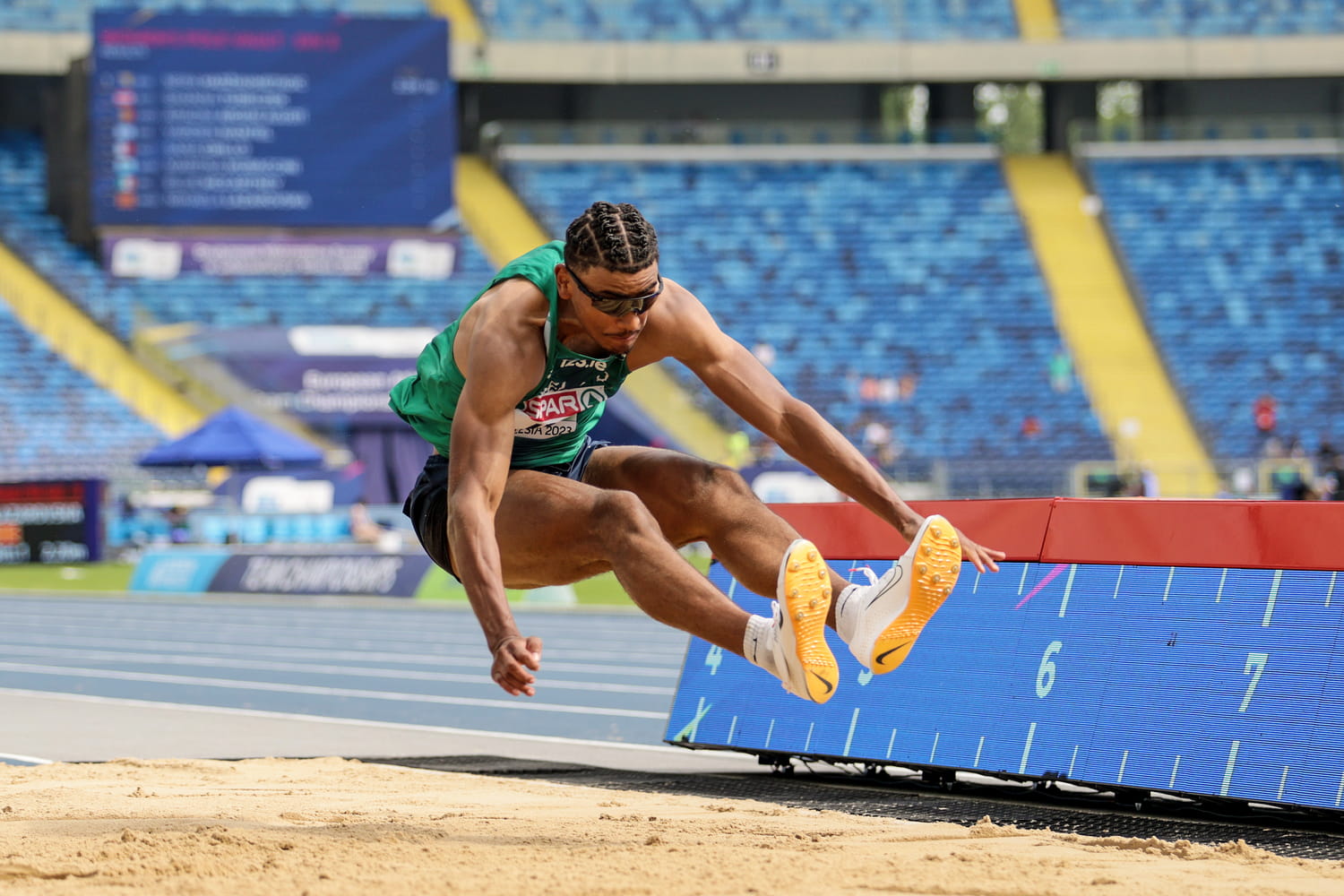
The long jump is often perceived as a simple track and field discipline that requires only leg strength. In reality this sport combines complex technique speed and incredible body movement coordination. Many people do not even imagine what a rich history lies behind these competitions on Olympic arenas. In this article we will examine fascinating facts that will reveal the secrets of this dynamic discipline. You might not know how influential the details of athlete preparation are for such a trial.
- This discipline was part of the ancient Olympic Games as early as seven hundred and eight BC. The ancient Greeks considered the long jump one of the most important tests for warriors and athletes. At that time athletes performed jumps to the sound of music which helped them maintain the rhythm of their run-up. This testifies to the deep historical roots of modern track and field competitions.
- In ancient times jumpers used special weights called halteres to increase flight distance. These objects were made of stone or metal and the athlete held them in their hands during the jump. It was believed that they helped maintain balance and add inertia to the body in the air. Modern rules prohibit the use of any additional devices for assistance.
- The world record among men was set by Mike Powell in nineteen ninety-one at the World Championships. He jumped eight meters and ninety-five centimeters and this result has stood for more than three decades. Many modern athletes try to beat this achievement but so far without success. This makes it one of the oldest records in modern track and field history.
- The legendary jump by Bob Beamon at the nineteen sixty-eight Olympics is considered one of the greatest moments in sports. He improved the previous record by fifty-five centimeters at once which was an incredible leap in progress. This result lasted twenty-three years until it was surpassed by Mike Powell. Physicists still study the biomechanics of that specific performance to understand the limits of human capabilities.
- Competition rules strictly limit the allowable wind speed that can assist an athlete during a jump. If the tailwind exceeds two meters per second the result is not considered an official record. This is necessary so that all athletes compete in equal conditions regardless of the weather. Judges use special anemometers to measure the speed of the air flow on the runway.
- The run-up length for the long jump usually ranges from forty to fifty meters for professional athletes. Athletes independently choose the distance from which they begin to gain maximum speed before takeoff. It is important to accurately calculate the number of steps so as not to cross the takeoff line during the jump. A mistake in the run-up can cost the athlete having the attempt counted as a failure.
- There are three main flight techniques in the air called the hitch-kick the hang and the sail. Each athlete chooses a style that best suits their physical data and movement coordination. The hitch-kick technique is considered the most complex but allows for better preparation of the legs for landing. Mastery in performing these elements often decides the fate of medals at major competitions.
- Women first participated in Olympic long jump competitions only in nineteen forty-eight. Before that moment this discipline was considered exclusively a male sport at the international level. Since then women’s jumps have become an integral part of track and field programs around the world. Records among women are constantly updated and show the high level of preparation of modern female athletes.
- The landing pit is filled with special sand that is previously sifted to remove stones and debris. The surface of the sand must be level so that the landing mark is clear for measuring the result. Judges carefully level the sand after each jump so that the next athlete has safe conditions. This ensures the safety of athletes and the accuracy of recording the flight distance.
- The takeoff line has a width of twenty centimeters and is made of white material for better visibility. A plasticine board is often placed in front of it to register the slightest touch by the toe of the shoe. If a mark remains on the plasticine it means the jump was performed with a rule violation. Such a system allows avoiding disputes between judges and athletes during competitions.
- Measurement of the result is carried out from the nearest mark left by the athlete’s body in the sand to the takeoff line. This means that if an athlete touches the sand with a hand behind the legs the result will be counted based on the hand. Therefore athletes try to extend their legs as far forward as possible during landing to avoid losing centimeters. Every centimeter can decide the fate of victory at high-level competitions.
- Special shoes for the long jump have spikes on the sole for better grip with the runway surface. The number and arrangement of spikes are regulated by the rules of the international federation of athletics for surface safety. Athletes often order individual shoe models that perfectly match their takeoff technique. The quality of the shoes directly affects the force of the push and the stability of the run-up.
- Carl Lewis is one of the most famous long jumpers in history who won four consecutive Olympic gold medals. His stability and technical mastery allowed him to remain a leader for many years. He also set world records that held for quite a long time until new champions appeared. His name is forever inscribed in the history of athletics as a symbol of perfection in this discipline.
- During a jump the center of gravity of the athlete’s body describes a parabolic trajectory that cannot be changed after leaving the ground. The task of the athlete is to make the most efficient use of this trajectory during flight. Proper body grouping allows extending the legs further before landing without losing balance. Physical laws act equally for everyone so technique plays a decisive role in the result.
- At indoor world championships conditions for jumps may differ from open stadiums due to the absence of wind. This often leads to results at winter tournaments being slightly lower than in summer. Athletes must adapt to the lack of air resistance and different lighting in the hall. Competition organizers create maximally comfortable conditions for achieving high results indoors.
- Psychological preparation of a jumper is no less important than the physical strength of leg and back muscles. An athlete must fully concentrate on every step of the run-up so as not to lose rhythm before takeoff. Any distracting factor can lead to a mistake and a failed attempt at important competitions. Coaches work on the mental resilience of athletes just as thoroughly as on their physical form.
- Modern athletic runways are made of special synthetic materials that provide optimal shock absorption. This helps protect athletes’ joints from excessive stress during a high-speed run-up. The color of the surface is usually red or blue for better contrast with the white takeoff line. The quality of the runway affects the acceleration speed and the overall result of the jump.
- In the last century athletes often used the sail jump technique which is now considered outdated for the top level. It was simpler to execute but did not allow achieving the same results as modern methods. The evolution of jump techniques occurred in parallel with the development of science about the biomechanics of the human body. Currently the coaching staff analyzes every movement of the athlete using video cameras and computer programs.
- The maximum speed of an athlete before takeoff can reach eleven meters per second in men. This requires incredible explosive power to convert horizontal speed into a vertical push. The combination of speed and strength is a key factor for success in the long jump for any champion. Without good speed in the run-up it is impossible to show a high result regardless of the flight technique.
- Some universities in the USA offer special scholarships for talented long jumpers who enroll in their educational institutions. This encourages young people to engage in this sport from an early age and strive for high achievements. The training system in colleges often becomes a springboard for entering major international arenas. Many Olympic champions began their careers precisely in American student leagues.
These incredible facts demonstrate how complex and multi-faceted this Olympic sport is for competition participants. You might not know that behind every record lie years of persistent work and the study of the physical laws of the body. We hope this information will inspire you to follow competitions with greater interest and understanding of the process. These fascinating facts open new facets of athletics for all sports lovers.


