
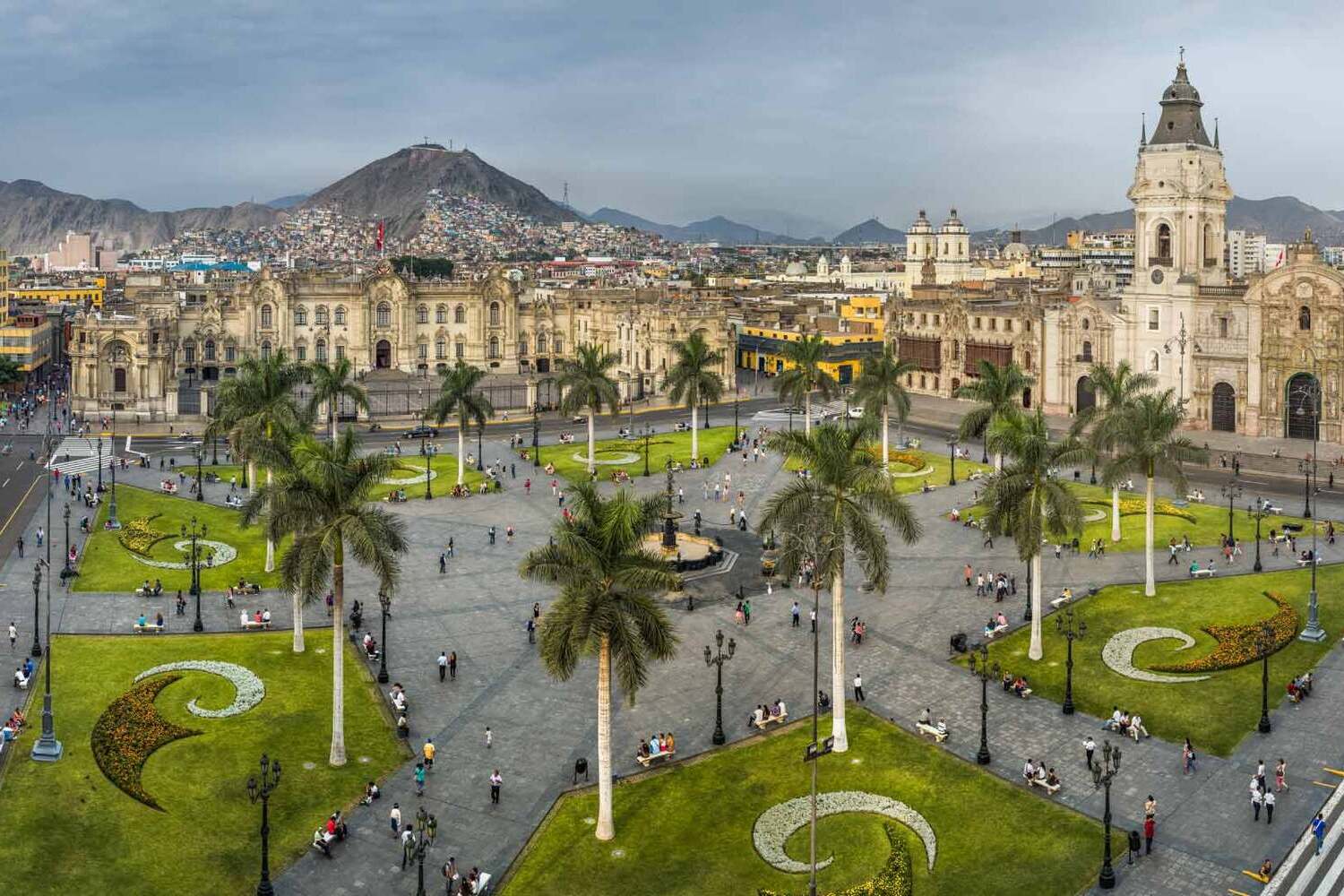
Lima, the capital of Peru, stands as one of South America’s most significant cultural and economic centers, with a rich history stretching back to the Spanish conquest. This remarkable city uniquely blends colonial architecture, modern skyscrapers, and an extraordinary culinary tradition that has earned global acclaim. Nestled in an exceptional natural setting between desert and ocean, Lima offers visitors an unforgettable experience difficult to find in other world capitals. We invite you to discover incredible facts about Lima, many of which you might not have known until now.
- Lima was founded by Spanish conquistador Francisco Pizarro on January twenty eighth, fifteen thirty five. Initially, the city received the name Ciudad de los Reyes, meaning City of Kings, though the name Lima eventually became firmly established. Several theories exist regarding the origin of this name: one connects it to the Rímac River flowing nearby, while another links it to the local Quechua word limaq, meaning to speak or talk.
- Lima holds the distinction of being the only capital city in the world situated within a coastal desert, which creates its remarkably distinctive climate. The city is bordered by desert on one side and the Pacific Ocean on the other, generating a unique microclimate unlike anywhere else. For many months throughout the year, Lima experiences virtually no rainfall, yet the air remains constantly filled with a fine mist locals call garúa.
- Lima’s historic center contains the largest concentration of colonial buildings in all of Latin America, earning it designation as a UNESCO World Heritage Site. Among its architectural treasures, visitors can admire Lima Cathedral, the Archbishop’s Palace, and the Monastery of San Francisco with its haunting catacombs. Many structures preserve their original design, featuring thick adobe walls and elaborately carved wooden balconies that have become the city’s signature visual element.
- Lima is widely regarded as the culinary capital of South America, hosting the greatest number of restaurants featured on the World’s Fifty Best Restaurants list. Local cuisine represents a fascinating fusion of indigenous Inca, Spanish, African, Chinese, and Japanese culinary traditions developed over centuries of cultural exchange. The dish ceviche, made from raw fish cured in lime juice, stands as Peru’s national culinary symbol and Lima’s most beloved specialty.
- Lima is home to the oldest university in the Americas, the National University of San Marcos, founded in fifteen fifty one. This institution was established during the Spanish colonial period, a full twenty four years before Lima itself was founded. Today, the university remains one of Latin America’s most prestigious academic centers, with an impressive historical legacy spanning nearly five centuries.
- The Love Park in the Miraflores district ranks among Lima’s most visited attractions thanks to its distinctive sculptures and breathtaking ocean panoramas. The park’s centerpiece is a bronze sculpture called El Beso, created by artist Victor Delfín, depicting an embracing couple in a passionate kiss. Daily, visitors attach padlocks to special fences surrounding the sculpture as tokens of eternal love before tossing the keys into the ocean below.
- Lima stands as one of the world’s largest cities without direct passenger rail connections to other major urban centers within its country. All passenger train services in Peru are limited exclusively to tourist routes heading toward Cusco and other mountainous regions. Peruvians rely primarily on intercity buses and domestic flights for travel between cities, making the nation’s transportation system notably unconventional.
- Lima hosts the world’s only museum entirely dedicated to Peruvian cuisine, the Museum of Peruvian Cuisine, founded by renowned chef Gastón Acurio. The museum’s exhibits trace the evolution of the country’s culinary traditions from pre Inca civilizations through colonial influences to contemporary innovations. Visitors can explore indigenous ingredients, learn about cooking techniques, and even participate in hands on workshops preparing authentic national dishes.
- Lima holds the record for the highest number of museums per capita among all Latin American capitals, with more than forty significant institutions. Notable collections include the National Museum of Archaeology, Anthropology, and History, the Larco Museum with its exceptional pre Columbian art holdings, and the Museum of the Inquisition. Many museums occupy beautifully preserved colonial era mansions, adding architectural charm to their cultural offerings.
- Lima’s climate ranks among the world’s most stable, with air temperatures fluctuating only a few degrees throughout the entire year. Average winter temperatures hover around sixteen degrees Celsius, while summer months reach approximately twenty four degrees Celsius. This remarkable consistency results from the cooling influence of the Humboldt Current flowing northward along Peru’s Pacific coastline.
- Lima contains the world’s largest urban ecological reserve, the Cerro San Cristóbal Park, spanning over four square kilometers of protected hillsides. This expansive green space offers visitors hiking trails, mountain biking routes, and a funicular railway ascending to the summit. From the top, breathtaking panoramic views unfold across the entire metropolitan area and the vast expanse of the Pacific Ocean.
- Lima possesses the strongest Chinese cultural influence of any city outside Asia due to massive Chinese immigration during the nineteenth century. This heritage manifests in the historic neighborhood of Barrio Chino and the widespread popularity of chifa cuisine, blending Chinese cooking techniques with Peruvian ingredients. Chifa restaurants have become integral to Lima’s culinary identity, creating innovative fusion dishes unavailable anywhere else in the world.
- Lima houses the world’s only museum devoted exclusively to a single artist, the Oswaldo Guzmán Museum, preserving over three thousand works by this Peruvian master. Guzmán gained recognition for his poignant paintings depicting everyday life in Lima, with particular focus on social inequality and urban struggles. The museum occupies the artist’s former residence in the historic center, providing intimate context for understanding his creative vision.
- Lima ranks among the very few capital cities where visitors can observe penguins in their natural habitat immediately adjacent to urban boundaries. The Palomino Islands, located just off Lima’s coastline, host a thriving colony of over one thousand Humboldt penguins. These islands form part of a protected marine reserve, where tourists can also encounter sea lions, diverse seabird species, and occasionally migrating whales.
- Lima contains the oldest continuously operating pharmacy in the Americas, functioning without interruption since seventeen seventy three. This historic apothecary resides within the San Francisco Monastery complex, preserving original colonial era instruments, ceramic storage jars, and handwritten medical recipes. Museum visitors can explore the pharmacy’s wooden cabinets and observe how medicinal compounds were prepared centuries before modern pharmaceuticals.
- Lima experiences the highest level of seismic activity among all Pacific coastal capitals due to its location at the convergence of the Nazca and South American tectonic plates. This geological positioning makes the city vulnerable to frequent earthquakes, including several devastating events throughout its history. Consequently, modern Lima architecture incorporates advanced seismic engineering techniques, allowing contemporary buildings to withstand significant tremors.
- Lima’s Larco Museum houses the world’s most comprehensive collection of pre Columbian ceramics and gold artifacts, totaling more than forty five thousand pieces. The private collection spans nearly twelve thousand years of Andean civilization, from early hunter gatherer societies through the height of Inca power. Particularly notable is the museum’s extensive gallery of Moche erotic pottery, offering rare insights into ancient Peruvian perspectives on sexuality and fertility.
Fascinating facts about Lima convincingly demonstrate how this city masterfully intertwines ancient heritage with contemporary dynamism across multiple dimensions. From gastronomic innovation to architectural preservation, Lima continues to captivate travelers seeking authentic cultural experiences in South America. We hope this collection of interesting facts inspires you to explore this extraordinary capital more deeply or perhaps plan a future journey to discover its many wonders firsthand.


