
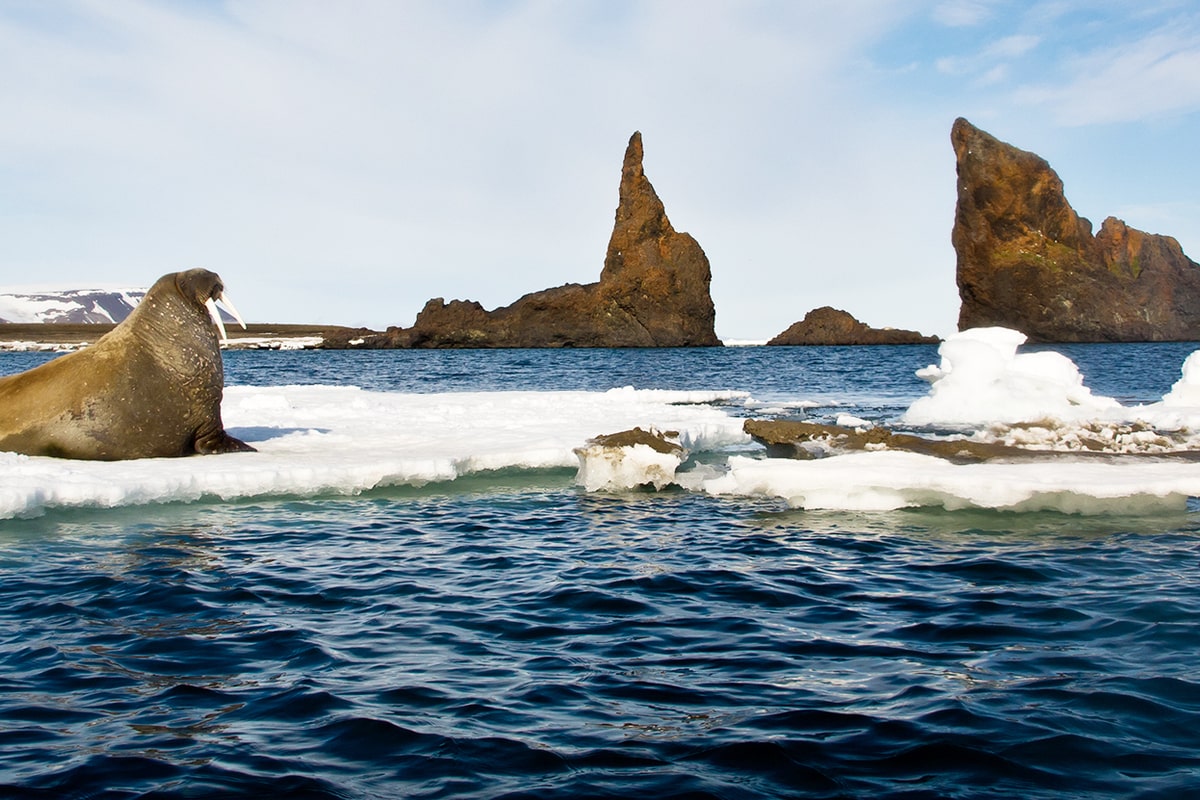
The Kara Sea remains one of the harshest and least explored regions of the Arctic, revealing many things you may not know. Its remote location, complex climate processes and diverse natural structure have long drawn the attention of researchers. This sea holds numerous mysteries, ranging from ancient polar expeditions to modern geological discoveries. The deeper it is studied, the more fascinating phenomena emerge before the scientific community. The following collection of remarkable and interesting facts allows you to see the Kara Sea from a completely new perspective.
- The Kara Sea takes its name from the Kara River, which flows into its waters. This name appears in early cartographic sources, where the sea was associated with the river systems of Siberia. In the past, the area was considered dangerous for navigation due to large amounts of sediment brought by the river. Sailors feared sudden changes in currents caused by freshwater inflow.
- The Kara Sea is part of the Arctic Ocean yet stands out because of its unique hydrological isolation. The archipelagos of Novaya Zemlya and the New Siberian Islands form natural barriers that restrict the movement of water masses. As a result, water exchange occurs more slowly than in many other Arctic basins. This gives the sea distinctive chemical and thermal properties.
- Many major rivers flow into the Kara Sea, with the Ob and Yenisei being the most significant. They deliver enormous quantities of freshwater, greatly reducing salinity in coastal regions. This seasonal input leads to a clear stratification of water layers. It also creates environmental conditions that support specific types of marine life.
- For most of the year, the surface of the Kara Sea is covered with ice, which creates serious challenges for navigation. Ice fields can rapidly shift under the influence of winds and currents. In earlier centuries, this made navigation extremely risky and resulted in numerous failed expeditions. Even modern icebreakers cannot fully eliminate the dangers posed by shifting ice.
- The Kara Sea contains underwater currents capable of transporting ice and sediment over long distances. These currents form when cold ocean water mixes with freshwater from rivers. They influence the microclimate of coastal zones. At the same time, they shape the seabed by creating new sedimentary areas.
- The seabed of the Kara Sea has a complex structure consisting of deep basins, underwater ridges and traces of ancient glaciations. These formations developed over millions of years through tectonic and climatic processes. In several locations, scientists have identified evidence of powerful glaciation periods. This makes the region crucial for reconstructing the geological history of the Arctic.
- The Kara Sea is known for sudden storms that can occur even in summer. They arise due to strong temperature contrasts between the air and the water surface. Storm waves can reach impressive heights, complicating the work of research vessels. These conditions make the Kara Sea one of the most unpredictable basins in the Arctic.
- Belugas, ringed seals and walruses inhabit the Kara Sea, each well adapted to the severe Arctic environment. These animals rely on ice platforms as resting areas and breeding grounds. The ecosystem is highly sensitive to temperature changes. Even slight warming affects species distribution and population patterns.
- The region around the Kara Sea is vital for Arctic birds that nest on nearby islands. Surface waters serve as their main feeding grounds. During migration seasons, thousands of birds travel across this sea on their route to southern regions. This makes the Kara Sea an important component of global ecological systems.
- The Kara Sea plays a key role in the functioning of the Northern Sea Route. This passage significantly shortens transport time between Europe and Asia. As the climate warms, the route becomes increasingly accessible, drawing commercial interest. However, ice-related hazards and unpredictable weather remain major obstacles.
- In the twentieth century, the Kara Sea was the site of numerous polar expeditions that expanded knowledge of the Arctic. Researchers studied local currents, climate patterns and the geography of the region. Many expeditions faced extreme conditions, which led to the development of new technologies. Their findings formed the basis of modern Arctic research.
- The Kara Sea region is rich in oil and gas deposits, attracting interest from global energy companies. The resources lie at substantial depths, making extraction particularly challenging. Harsh temperatures require specialised equipment capable of operating under extreme conditions. Environmental risks also play a significant role in slowing the exploitation of these reserves.
- In some areas of the Kara Sea, large groups of icebergs originating from the glaciers of Novaya Zemlya can be found. These ice masses may drift for years, carried by winds and currents. Icebergs pose serious threats to ships and coastal infrastructure. Their movement is constantly monitored by Arctic safety services.
- The region is experiencing rapid climate change, and the Kara Sea is one of the areas where ice melt occurs at a particularly high rate. Scientists track these changes using satellite data and underwater sensors. Temperature shifts affect the ecosystem and the distribution of marine species. Such observations are essential for predicting the future of the Arctic.
- Studies of the seabed have revealed zones where methane emissions occur. These emissions result from the breakdown of gas hydrates, which are sensitive to temperature fluctuations. Methane can alter the chemical composition of the water and influence biological processes. Scientists view this phenomenon as an important factor in global climate dynamics.
To conclude, the Kara Sea brings together many captivating facts that highlight its complexity and distinctive nature. This region continues to intrigue researchers with its harsh environment, variability and rich natural processes. It still holds many secrets that await discovery. For these reasons, it remains one of the most fascinating and significant areas of the Arctic world.


