
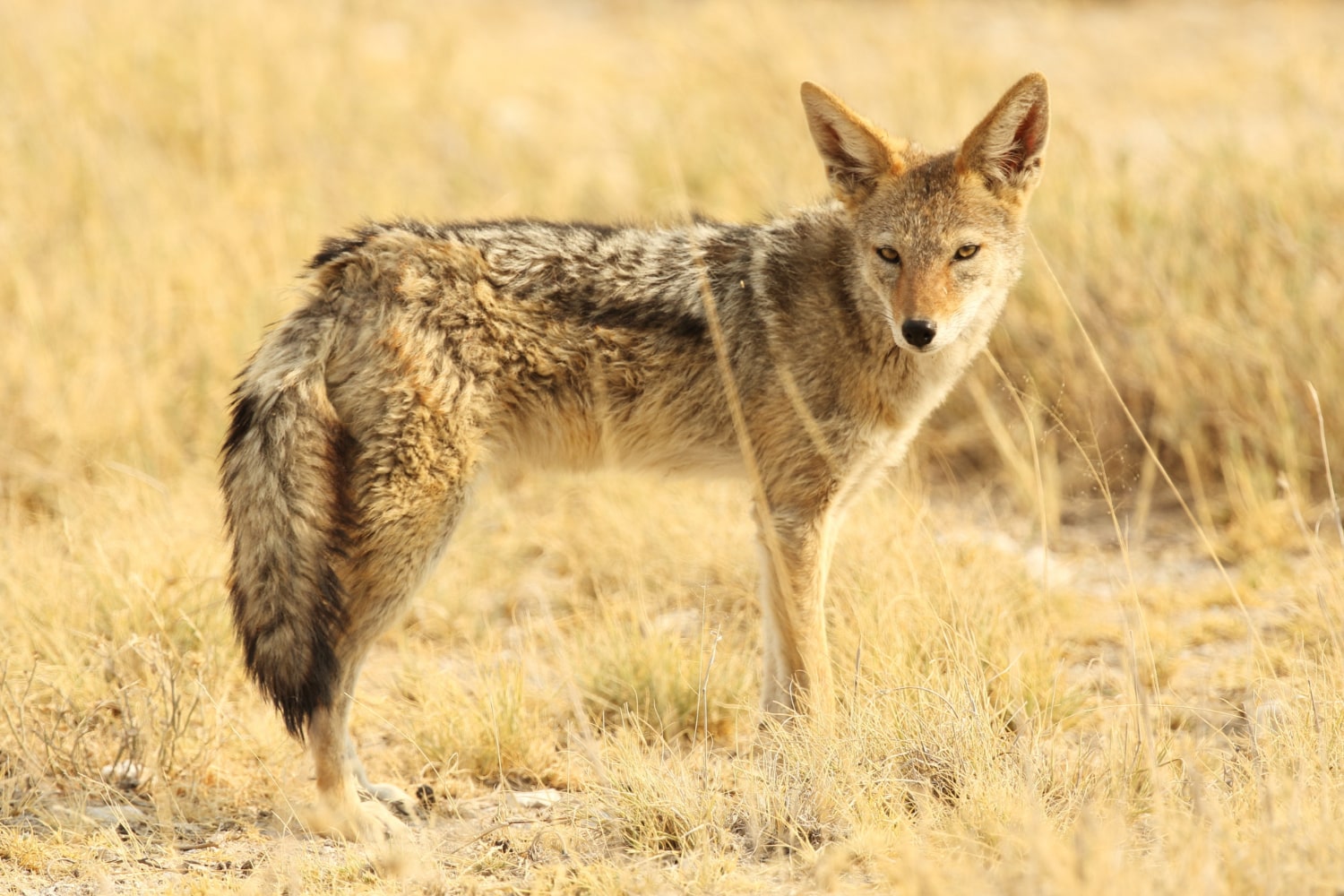
Jackals often remain in the shadow of more famous predators, even though their lifestyle and behavior are no less fascinating. These animals combine the traits of hunters, scavengers, and highly adaptable opportunists. Many interesting facts about jackals are connected to their remarkable ability to survive in very different environments. Among them are truly incredible facts that can change common perceptions of these animals. You may not know how important jackals are for the balance of natural ecosystems.
- Jackals belong to the canid family and are closely related to wolves, dogs, and foxes. At the same time, they form a distinct group with their own behavioral characteristics. Their evolutionary development occurred alongside other canids but within different ecological niches. This process shaped their notable versatility and adaptability.
- Several species of jackals exist in the wild, inhabiting Africa, Asia, and parts of Europe. Each species has adapted to specific climatic conditions. Some live in savannas, while others prefer semi-deserts or forest-steppe regions. This wide range of habitats makes jackals among the most flexible predators.
- Jackals are relatively small compared to wolves and have a slender body structure. Their light build allows them to move quickly over long distances. In a single night, they can cover dozens of kilometers in search of food. Such mobility significantly increases their chances of survival.
- The diet of jackals is extremely diverse. They feed on small mammals, birds, insects, carrion, and plant matter. This omnivorous behavior helps them survive during periods of food scarcity. Fascinating facts about jackals are often linked to this highly flexible feeding strategy.
- Jackals play the role of natural scavengers in ecosystems. By consuming carrion, they reduce the spread of infectious diseases. This has a positive effect on the overall health of the environment. Their presence often indicates a functioning natural balance.
- Many jackal species live in pairs or small family groups. Pairs frequently remain faithful to each other for many years. They jointly raise their offspring and defend their territory. This social structure is relatively complex for predators of their size.
- Jackals actively use vocal signals to communicate with one another. Their howling can be heard over long distances, especially at night. Through sounds, they coordinate actions and mark territorial boundaries. For humans, these nocturnal calls often seem mysterious and haunting.
- Jackals possess well-developed eyesight and hearing, which greatly assist them during hunting. They can detect even slight movements in low-light conditions. Their acute hearing allows them to locate prey hidden in vegetation or beneath the ground. This makes them efficient and cautious hunters.
- Jackals often adapt to living near human settlements. They may find food at landfills or around farms. Such proximity sometimes leads to conflicts with people. At the same time, it clearly demonstrates their high level of adaptability.
- In several regions, the range of jackals has been expanding. This expansion is linked to climate change and human activity. Jackals quickly occupy new territories and adjust to local conditions. You may not know that they have appeared in areas where they were previously absent.
- Jackals usually reproduce once a year. The female gives birth to several pups, which are protected and cared for by both parents. Young jackals grow quickly and learn independence at an early age. Strong family bonds play a crucial role in their survival.
- Jackals display a high degree of intellectual flexibility. They are capable of remembering routes, food sources, and potential dangers. Experience is passed on to younger individuals through observation. This ability helps entire populations adapt successfully to environmental changes.
- In the cultures of many peoples, jackals hold symbolic meaning. They are often depicted as clever, cunning, or resourceful animals. In myths and legends, they can appear as either positive or negative characters. This reflects the complex relationship between humans and jackals.
- Jackals are able to coexist with larger predators. They often feed on the remains of prey left behind by lions, wolves, or other carnivores. This strategy allows them to conserve energy. It is another example of their behavioral flexibility.
- The lifespan of jackals in the wild is usually limited to several years. In captivity, they can live significantly longer. The main threats they face include predators, diseases, and human activities. Despite this, many jackal populations remain stable.
- Jackals contribute to controlling populations of small animals. By hunting rodents, they help reduce damage to agriculture. From an ecological perspective, this makes them beneficial to humans. Incredible facts about jackals often highlight this important role.
- Caution is a prominent feature of jackal behavior. They rarely engage in direct confrontation without necessity. When faced with danger, they prefer to retreat quickly. This strategy helps them avoid injuries and unnecessary risks.
- Jackals have an exceptionally well-developed sense of smell. It allows them to locate food from great distances. They can detect carrion even when it is buried under soil. This ability makes them an important part of natural nutrient cycles.
Jackals are a clear example of how flexibility and intelligence help animals survive in a changing world. Interesting facts about them show that these creatures are far more complex than they may appear at first glance. Incredible facts and fascinating observations reveal jackals as an essential component of natural ecosystems. If you look more closely, you may discover just how significant their role is in maintaining the balance of wild nature.


