
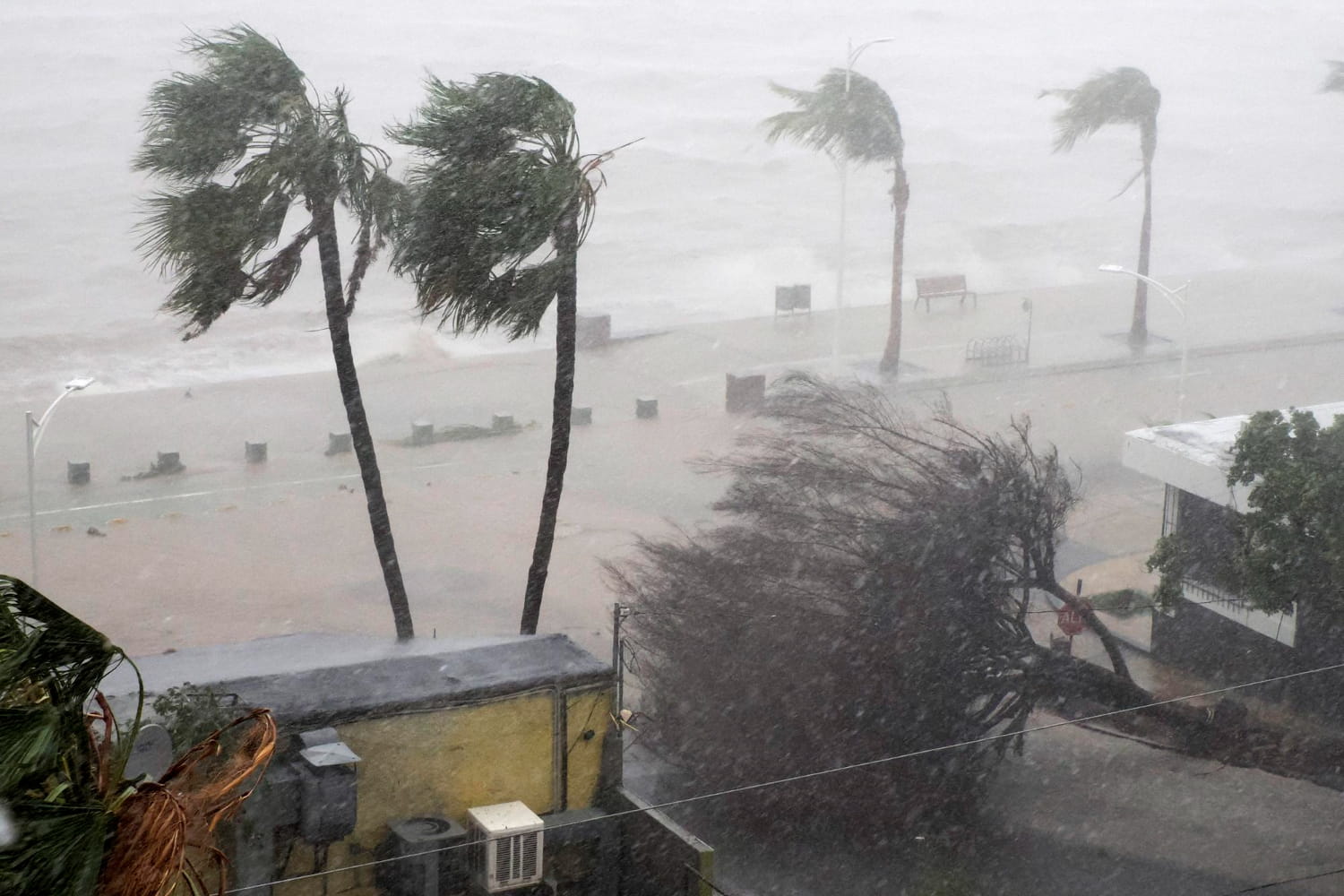
Hurricanes are far more than just strong winds—they are true monsters of nature, capable of reshaping entire regions in a matter of hours. You may not have known that the energy released by a single large hurricane can exceed the combined power of all nuclear weapons ever created by humanity. The astonishing facts about hurricanes reveal their complex nature—from formation over warm ocean waters to their devastating impact on land. Captivating insights into these atmospheric giants show just how thin the line is between the beauty of a natural phenomenon and its destructive force. Below is a collection of fascinating details, each illuminating a different facet of this powerful weather event.
- Hurricanes form only over warm ocean waters with temperatures no lower than 26.5°C (80°F), as the moist air above these areas provides the fuel for the storm. When warm air rises, it creates a low-pressure zone that draws in cooler air from all directions. This process initiates rotation due to the Coriolis effect, gradually forming an organized system of clouds and winds. Without sufficient oceanic heat, a hurricane simply cannot develop.
- Hurricane names are assigned from a predetermined list maintained by the World Meteorological Organization and recycled every six years. If a hurricane proves especially catastrophic, its name is permanently retired to avoid psychological distress in affected communities. For example, names like “Katrina,” “Sandy,” and “Harvey” will never be used again. This naming convention has been in place since 1954, when tropical cyclones began to be systematically named.
- The eye of a hurricane is a calm center where winds nearly vanish and skies often clear. This phenomenon occurs because air in the center sinks rather than rises, as it does in the outer eyewall. The eye can range from 30 to 65 kilometers (20–40 miles) in diameter, sometimes even larger. However, the eye should not be mistaken for a safe zone—once it passes, the second, equally destructive half of the hurricane begins.
- Hurricanes cause not only wind damage but also catastrophic flooding from torrential rains and storm surge. Storm surge—the abnormal rise of seawater pushed ashore by wind and low pressure—can elevate sea levels by several meters. This surge alone accounts for more than half of all hurricane-related fatalities. Even weaker hurricanes can trigger deadly inland flooding if they move slowly over land.
- The strongest hurricane ever recorded in the Atlantic Ocean was Hurricane Wilma in 2005, which reached a record-low central pressure of 882 hPa (hectopascals). This remains the lowest pressure ever measured in an Atlantic tropical cyclone. Wilma’s maximum sustained winds reached 298 km/h (185 mph), making it one of the most intense storms in the Gulf of Mexico. Its destruction affected Mexico, Cuba, and Florida.
- Hurricanes cannot form directly on the equator because the Coriolis effect is virtually absent there. This force is essential for initiating the rotation of tropical cyclones, and without it, storm systems cannot organize. Therefore, hurricanes always develop at least 5 degrees of latitude away from the equator. This rule applies to all ocean basins where tropical cyclones occur.
- Hurricanes follow a distinct life cycle—from a tropical wave to a mature hurricane and finally to dissipation. Once a hurricane moves over land or colder waters, it loses its primary energy source and begins to weaken. However, even after downgrading, it can still produce heavy rain and strong winds hundreds of kilometers inland. Some hurricanes, like Irene in 2011, caused their worst damage only after losing hurricane status.
- Hurricanes can spawn tornadoes, particularly in the right-front quadrant relative to the storm’s direction of motion. These tornadoes are typically short-lived but extremely intense and often form with little warning. They add another layer of danger to an already destructive system. Tornado outbreaks are especially common when hurricanes make landfall along the U.S. Gulf and Atlantic coasts.
- The colors of hurricanes in satellite imagery do not represent actual cloud colors but instead indicate cloud-top temperatures using infrared sensors. Colder cloud tops mean higher, more powerful thunderstorms—and thus a stronger storm. On such images, the most intense convection appears white or purple. This allows meteorologists to assess a hurricane’s strength in real time.
- Hurricanes can influence climate even after they dissipate—massive rainfall replenishes groundwater, while strong winds mix ocean layers, affecting marine currents. Additionally, hurricanes transport vast amounts of salt, dust, and even microorganisms across thousands of kilometers. For instance, Saharan dust frequently reaches the Caribbean basin via hurricanes, impacting human respiratory health and even coral growth. In this way, hurricanes are integral components of Earth’s global ecosystem.
- Humans attempted to control hurricanes as early as the mid-20th century through Project Stormfury, which involved seeding hurricane eyes with silver iodide to weaken them. Experiments ran from 1962 to 1983, but it was later determined that hurricanes often weaken naturally, making it impossible to confirm the project’s effectiveness. Moreover, such interventions risked unintended consequences for other regions. Today, such efforts have been abandoned, with focus shifted entirely to forecasting and evacuation.
- Hurricanes can undergo an “eyewall replacement cycle,” where a new outer ring of intense thunderstorms forms around the original eye and eventually replaces it. This process often causes temporary weakening followed by sudden reintensification. It complicates intensity forecasting and can mislead emergency managers into thinking the threat has passed. These cycles are most common in powerful Category 4 and 5 hurricanes.
These captivating facts about hurricanes reveal a phenomenon that is both awe-inspiring and terrifying—a force governed by precise physical laws yet capable of overwhelming human civilization. You may not have realized that behind their destructive power lies a delicate balance of heat, moisture, and planetary motion. The incredible truths about hurricanes remind us that, despite our technological advances, we remain deeply vulnerable to nature’s might. Interesting facts about these atmospheric titans inspire not only respect for the raw power of the planet but also a commitment to science, preparedness, and resilience in the face of an ever-changing climate.


