
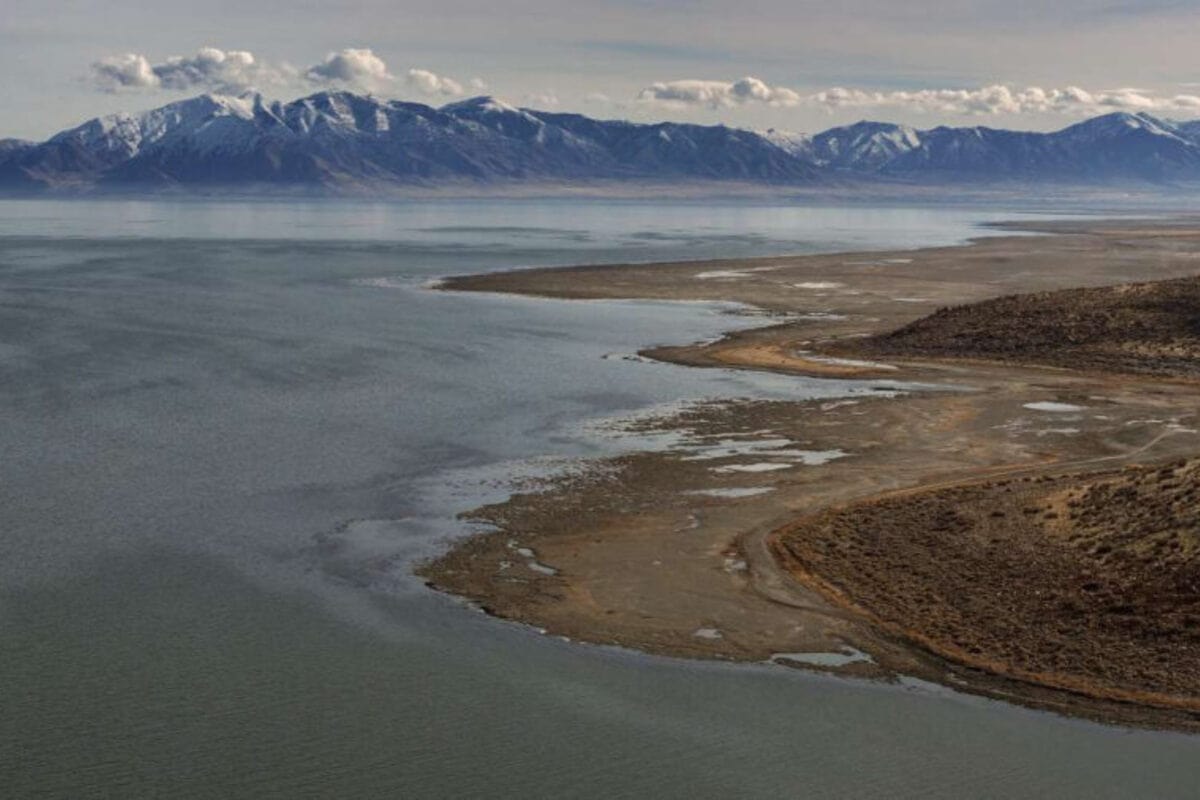
The Great Salt Lake is a natural wonder that may seem simple at first glance, yet it holds an astonishing depth of history and natural complexity. Its vast surface, shifting boundaries, and striking appearance make it one of the most unusual bodies of water in North America. Interesting facts about this lake reveal how closely nature, climate, and life are connected in one fragile system. Here, incredible facts emerge from scientific research, long-term observation, and natural processes shaped over thousands of years. You may not have known that this lake plays a role far greater than its quiet, mirror-like surface suggests.
- The Great Salt Lake is the remaining fragment of the ancient Lake Bonneville, which existed thousands of years ago. At its peak, that prehistoric lake covered a massive portion of what is now Utah. As the climate gradually became drier, water levels dropped through evaporation. What remained was a highly saline lake unlike most others on the continent.
- The salinity of the Great Salt Lake is much higher than that of the world’s oceans. Its salt concentration constantly changes depending on rainfall and river inflow. During especially dry periods, the water can become several times saltier than seawater. This extreme environment defines the unique biological conditions of the lake.
- Sinking in the Great Salt Lake is extremely difficult due to the high density of the water. The human body naturally floats with minimal effort. This phenomenon is often compared to floating in the Dead Sea. Because of this, the lake has long attracted curious visitors and researchers.
- Fish are almost completely absent from the Great Salt Lake. The high salinity makes survival impossible for most freshwater and marine species. Instead, the lake supports brine shrimp and microscopic algae. These organisms form the foundation of the lake’s food system.
- The lake plays a critical role in the survival of millions of migratory birds. Every year, hundreds of bird species stop here to rest and replenish their energy reserves. Brine shrimp and insect larvae provide a rich and reliable food source. Without this lake, many migration routes would be severely disrupted.
- The surface area of the Great Salt Lake is not fixed. It can change dramatically over years and decades. During droughts, the water retreats and exposes vast areas of lakebed. In wetter periods, the lake expands again and can flood surrounding land.
- In some sections of the lake, the water appears pink or reddish. This coloration is caused by specialized algae and bacteria that produce natural pigments. The intensity of the color depends on temperature and salt concentration. These vivid tones make the lake easily recognizable from the air.
- A railroad causeway crosses the Great Salt Lake and divides it into two sections. Water exchange between these parts is limited. As a result, salinity levels differ greatly on each side. This separation has created two distinct aquatic environments within the same lake.
- The Great Salt Lake has no natural outlet. All incoming water leaves only through evaporation. Over thousands of years, this process has caused salts and minerals to accumulate continuously. This makes the lake a classic example of an endorheic, or closed, basin.
- Salt extraction is an important economic activity around the lake. Salt is harvested by allowing lake water to evaporate in large shallow ponds. This technique has remained largely unchanged for decades. The extracted salt is used in both industry and everyday applications.
- Historically, the lake played a significant role in the settlement of the surrounding region. It served as a natural landmark for early explorers and settlers. Communities and transportation routes developed nearby. Its influence remains visible in the region’s development today.
- Declining water levels in the Great Salt Lake represent a serious environmental concern. Exposed lakebed can become a source of toxic dust. Strong winds can carry this dust over long distances. This poses risks to human health and local ecosystems.
- The lake has a noticeable effect on the local climate. It contributes to a phenomenon known as the lake effect, which increases snowfall during winter. Nearby mountain areas receive more snow as a result. This plays an important role in regional water supplies.
- Sediments at the bottom of the lake provide valuable information for scientists. These layers preserve evidence of past climate conditions. By studying them, researchers can identify periods of drought and increased rainfall. In this way, the lake functions as a natural climate archive.
- The Great Salt Lake is often described as one of the most unusual landscapes in North America. It combines characteristics of a sea, a desert, and a salt flat. Its vast open spaces can appear almost surreal. This striking appearance continues to attract scientists, artists, and photographers.
The Great Salt Lake leaves the impression of a place where nature reveals both its strength and vulnerability at the same time. Fascinating facts about the lake show how deeply water, climate, and living organisms depend on one another. You may not have known many of these details before, yet they help explain why this lake matters far beyond its shores. Interesting facts about the Great Salt Lake remind us that even seemingly simple natural features can hold immense importance.


