
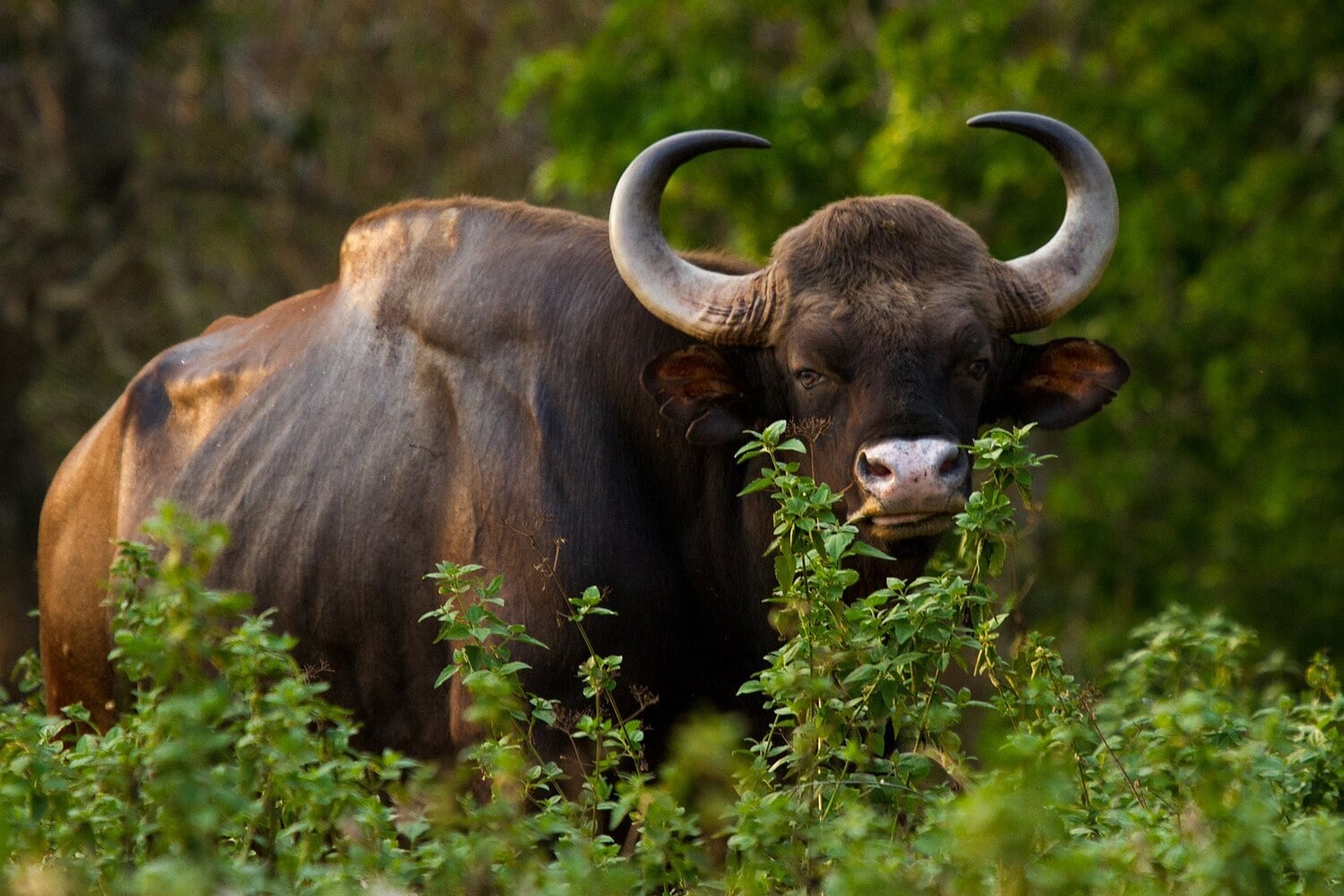
Gaur bulls, sometimes referred to as Indian bison, are among the most impressive wild bovines you may not know much about. These powerful animals combine strength, endurance and unique biological traits, making them a remarkable phenomenon among large herbivores. They inhabit dense tropical forests where their size, behaviour and social structure grant them a dominant position in local ecosystems. Their presence influences vegetation patterns and maintains balance within their natural environment. That is why this selection of fascinating and extraordinary facts offers a deeper understanding of these exceptional animals.
- Gaurs are the largest wild cattle species alive today and surpass both European bison and American bison in body mass. An adult male may weigh over one tonne, placing it among the heaviest land mammals in Asia. Their shoulder height can reach two metres, giving them an imposing silhouette. Such dimensions allow gaurs to feel secure even in landscapes shared with large predators.
- Despite their immense size, gaurs are considered cautious and generally peaceful animals. They avoid confrontations and attack only when threatened or when protecting their offspring. When danger approaches, the herd often forms a protective circle with the calves in the centre. This strategy greatly increases the survival rate of young individuals.
- Gaurs inhabit dense forests of India, Nepal and Southeast Asia, where thick vegetation provides natural cover. They select areas rich in food resources and tend to avoid open landscapes. Forest environments help shield them from predators and reduce disturbance. This lifestyle often makes them difficult to spot in the wild.
- Their diet consists mainly of grasses, leaves and young plant shoots. Gaurs can consume coarse vegetation thanks to their strong jaws, which many other herbivores cannot manage. By feeding in this manner, they influence plant communities and shape the growth of young trees. Their foraging habits make them an ecologically important species.
- Gaurs have extremely well-developed musculature, particularly in the shoulder region, creating a distinctive hump above their forelegs. This feature enhances their strength when navigating rugged terrain. Their muscular build also enables them to cover long distances between feeding sites. As a result, they adapt effectively to seasonal climate fluctuations.
- They are most active during early morning and late afternoon, avoiding the intense heat of midday. This rhythm helps them conserve energy and limit water loss. At night they usually rest and recover. Such behaviour supports their high endurance in demanding tropical environments.
- Gaurs possess a striking colour pattern with a dark body and pale legs that resemble white stockings. This contrast helps camouflage them in the forest shadows. Their coloration can vary slightly depending on age and region. These variations contribute to visual diversity within the species.
- To communicate, gaurs rely on vocalisations, body postures and scent signals, forming a complex social system. Herds are typically composed of females and younger individuals, while adult males often live alone and join the group only during breeding season. Internal communication helps warn the herd of danger and reduces conflicts. This ensures stability within the social structure.
- Male gaurs have larger and broader horns, which they use to display strength and during ritualised contests. The horns curve smoothly and often have lighter tips, making them visually striking. Battles between males are usually brief and seldom result in serious injuries. This form of competition maintains balance within the population.
- Females most often give birth during the rainy season when vegetation is most nutritious. Calves quickly learn to stand and stay close to their mothers. They are particularly vulnerable in the first days, so females remain highly attentive. Maternal care ensures a high survival rate among young gaurs.
- Gaur populations are declining due to habitat loss caused by deforestation and agricultural expansion. Reduction of forested areas leads to fragmentation of their range. Consequently, gaurs must migrate in search of food, increasing the likelihood of conflict with humans. This makes conservation efforts essential for the species’ survival.
- Gaurs are among the few large bovines that have retained genetic purity despite their close relation to domestic cattle. In captivity, however, they can interbreed with cows, producing hybrids known as gayals. These hybrids exhibit increased hardiness and productivity. Such traits attract the interest of livestock breeders.
- Adult gaurs have very few natural predators. Tigers are the primary hunters capable of targeting vulnerable or young individuals. A healthy adult bull is nearly impossible for predators to overcome. This advantage helps maintain stable population numbers.
- Gaurs are highly resilient and capable of travelling long distances in search of water or food. Climate change forces them to migrate more frequently and across wider territories. They navigate dense forests with ease, choosing optimal travel routes. This adaptability makes them one of the most successful species in tropical ecosystems.
- In various regions, the gaur is regarded as a symbol of strength and nobility. Its image appears in art, mythology and cultural traditions. Local communities often treat these animals with respect, acknowledging their ecological role. This cultural significance highlights the importance of protecting the species.
In conclusion, gaur bulls hide many interesting facts that reveal them in a new light. They astonish not only with their massive build and power but also with their complex behaviour and essential ecological functions. Their presence in tropical forests reflects the resilience and richness of natural environments. For these reasons, these extraordinary animals continue to inspire scientific curiosity and admiration around the world.


