
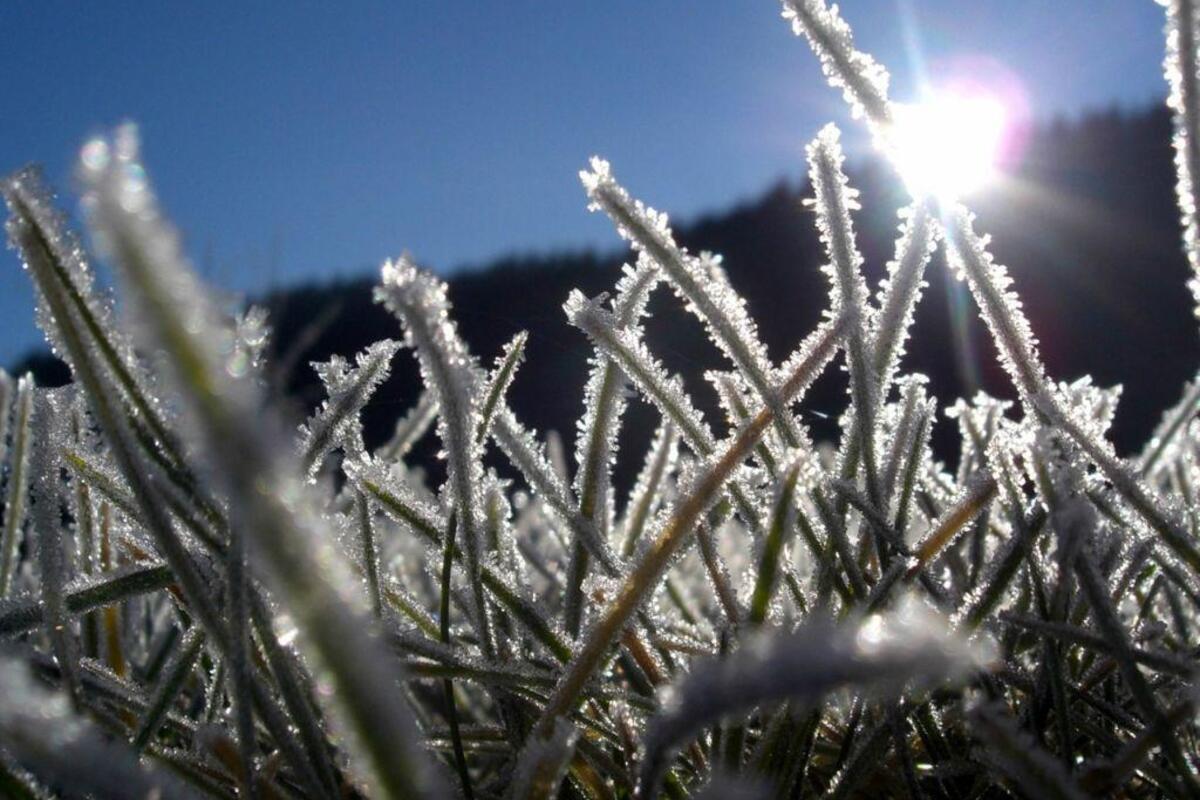
Frost has fascinated people for centuries, as its crystal-like delicacy can transform an ordinary morning into a true winter fairy tale. It covers tree branches, grass, fences and windows with a thin yet remarkably intricate layer of icy patterns. Although it may seem simple at first glance, this natural phenomenon forms through complex physical processes and possesses many unusual properties. Incredible facts about frost reveal how moisture and cold interact in the atmosphere. Below are captivating details you may not have known.
- Frost forms when water vapour turns directly into solid ice without passing through the liquid phase. This happens when a surface becomes extremely cold and the air contains enough moisture. Water molecules settle on objects and form tiny ice crystals. This process is known as sublimation and is one of the most interesting principles in physics.
- Frost most often appears on calm, windless nights when the temperature drops evenly. The absence of wind allows water vapour to remain close to the surface, enabling crystals to grow more densely. On such mornings the most striking patterns can be seen on car roofs, tree branches and rooftops. Frost becomes especially visible at sunrise when light illuminates the frozen surfaces.
- There are several types of frost, including granular frost and soft, feathery frost. Granular frost forms under humid conditions and creates a hard, compact layer that is difficult to remove. Soft frost consists of tiny light crystals that resemble white powder or down. Different environmental conditions influence both its appearance and structure.
- Frost can form patterns that resemble leaves, feathers or coral. This occurs because ice crystals grow in the direction of least resistance, creating complex geometric structures. The shapes depend on temperature, humidity and the texture of the surface. As a result every frost pattern is unique and cannot be repeated exactly.
- Frost develops especially easily on glass because glass cools quickly and loses heat faster than many other materials. That is why winter windows often feature elaborate icy decorations. Micro-defects on the glass surface influence the direction in which crystals grow. Each pattern is therefore one of a kind, almost like a miniature artwork created by nature.
- Frost can serve as a natural weather indicator and signal upcoming temperature changes. In many cultures people observed its density and structure to predict the following day. A thick layer of frost suggested cold and clear weather, while a thin layer pointed to potential warming. These observations eventually became part of traditional weather lore.
- Frost is sometimes confused with rime, although the two are distinct phenomena. Rime forms from supercooled droplets that freeze instantly upon contact with a cold surface. It appears denser, rougher and heavier than delicate frost. Understanding the difference helps in accurately evaluating atmospheric conditions.
- In mountainous regions frost can form even when the air seems dry. At high altitudes temperatures drop faster than humidity levels, which promotes more intense sublimation. Ice crystals formed there can be larger and more solid. Hikers often encounter plants covered with thick white layers of high-altitude frost.
- Frost plays a role in helping some plants survive winter. It creates a thin insulating layer that reduces heat loss and protects buds from sudden temperature changes. This natural shield can help vegetation endure freezing nights. However a very thick frost layer can sometimes be harmful.
- From a physical perspective frost alters the optical properties of the surface it settles on. It scatters light and makes winter mornings appear brighter and more luminous. This scattering also affects how quickly objects lose heat. Such optical effects show how frost contributes to the microclimate of an area.
- In some regions there are traditions and beliefs connected to the appearance of frost. It was often viewed as a symbol of purity, renewal and good fortune. In folklore frost was sometimes considered a sign of a favourable day ahead. These cultural associations have survived in many stories and rituals.
- Frost can also form indoors if windows are poorly insulated. During severe cold weather warm humid air from inside meets the chilled surface of the glass and freezes instantly. This phenomenon is common in older homes or buildings with weak insulation. It clearly illustrates how humidity and heat transfer work in everyday environments.
- Frost seldom lasts long, as even weak morning sunlight begins to melt it. The most beautiful crystal formations are seen at dawn before temperatures start to rise. Later the delicate structures disappear quickly, turning into droplets of water. This fleeting nature makes frost especially appealing to photographers and nature lovers.
- Some artists and photographers study the fractal patterns created by frost. They consider them examples of complex natural geometry similar to lace-like structures. These patterns often inspire artwork, design concepts and scientific research. Frost therefore demonstrates a remarkable connection between nature and creativity.
These interesting facts about frost show that this fragile winter phenomenon is far more complex than it might appear. Its structure, properties and interaction with the environment open a window into the fascinating world of physics and meteorology. These incredible facts remind us how extraordinary the simplest natural processes can be. Frost remains one of the wonders that can adorn an ordinary morning with a touch of quiet, magical beauty.


