
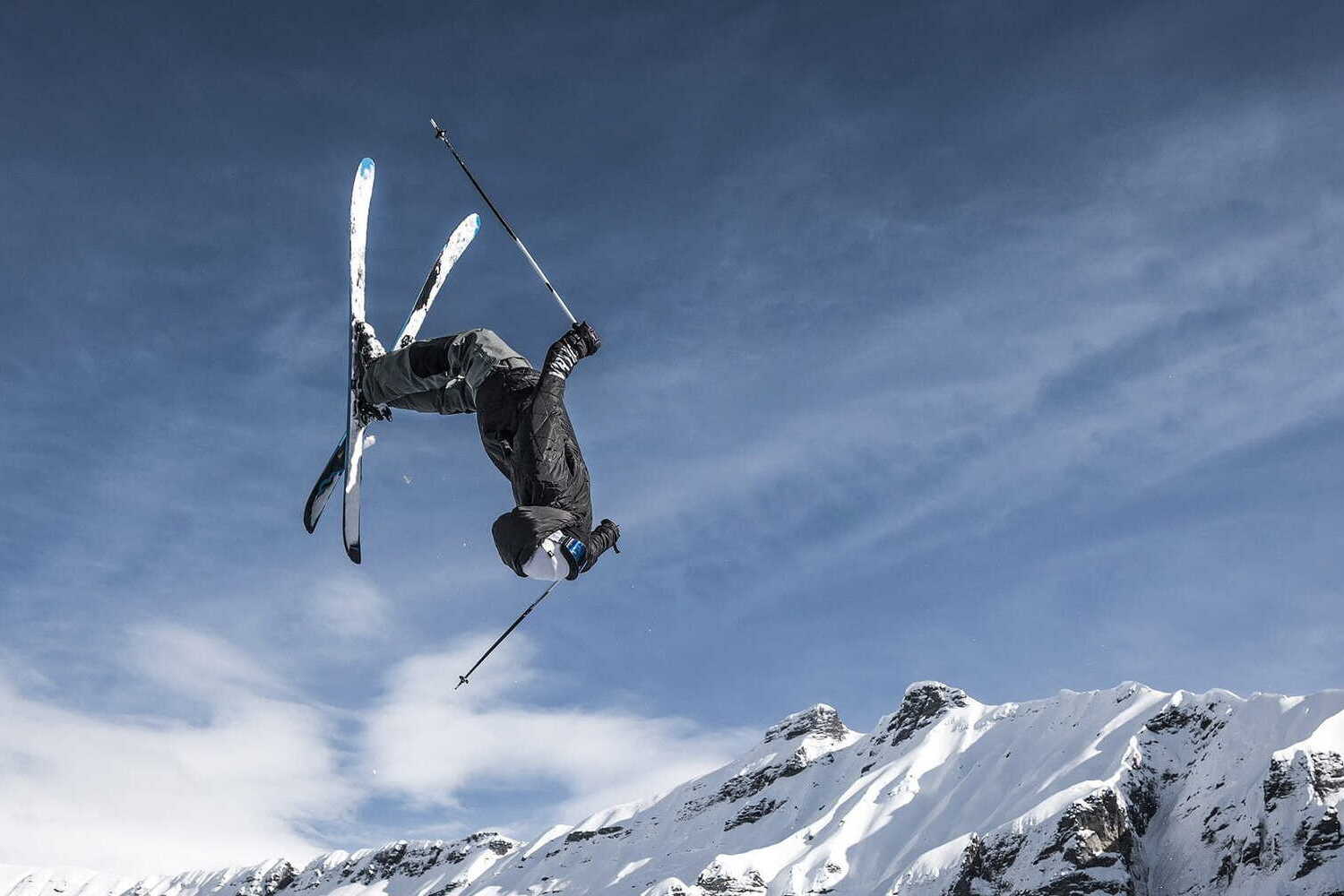
Freestyle captivates the imagination with its breathtaking fusion of grace, courage, and technical complexity, transforming snowy slopes into dynamic stages for aerial artistry. This winter sport revolutionized skiing by introducing elements of dance, circus performance, and calculated risk-taking that challenged conventional alpine disciplines. Amazing facts about freestyle reveal a world where athletes soar several meters above the snow, executing rotations and flips with seemingly effortless precision. You might not know that this discipline emerged as a rebellious response to the rigid formalism of traditional skiing competitions in the mid-twentieth century. Fascinating facts about freestyle illuminate the journey from spontaneous slope improvisations to one of the most thrilling Olympic sports watched by millions worldwide.
- Freestyle originated as a distinct sporting discipline in the United States during the 1960s when adventurous skiers began incorporating acrobatic movements into their downhill runs. The first organized freestyle competitions took place in 1971 followed by the establishment of the International Freestyle Skiing Federation in 1980. Initially met with skepticism from mainstream skiing authorities due to undefined rules and significant injury risks the sport gradually gained legitimacy through standardization of techniques and safety protocols. Freestyle finally achieved full Olympic recognition at the 1992 Winter Games in Albertville France marking its transition from counterculture activity to respected athletic discipline.
- Modern freestyle encompasses multiple specialized disciplines each demanding unique physical attributes and technical mastery. Moguls requires athletes to navigate a steep course covered with large bumps while performing two mandatory jumps with precise aerial technique. Slopestyle challenges competitors to demonstrate creativity across a terrain park featuring rails boxes and jumps where they execute complex tricks during flight phases. Ski cross adds competitive racing dynamics as four skiers simultaneously descend a course filled with banked turns rollers and massive jumps creating thrilling head to head battles.
- The halfpipe represents one of freestyle’s most visually spectacular disciplines where athletes ride a U shaped snow structure typically twenty two feet deep. Skiers generate momentum by carving up and down the pipe walls launching themselves nearly twenty feet above the rim to perform multiple rotations and flips. Judges evaluate performances based on trick difficulty amplitude height above the pipe edge technical execution and overall style fluidity. Success demands extraordinary body awareness spatial orientation and the ability to maintain rhythm while executing increasingly complex aerial maneuvers.
- Aerials stands as freestyle’s oldest competitive discipline featuring spectacular jumps from specially designed kickers that propel athletes up to twenty meters through the air. During these brief three second flights competitors execute combinations of somersaults and twists sometimes rotating around multiple body axes simultaneously. Elite performers routinely complete triple backflips with quadruple twists requiring immense core strength precise timing and fearless commitment. Training involves countless repetitions on water ramps during summer months where athletes land safely in pools filled with aerated water before transferring skills to snow.
- Freestyle skis differ significantly from traditional alpine equipment featuring wider waists symmetrical shapes and twin tips that allow backward skiing and landing. This construction enables effortless 180 and 360 degree rotations and provides stability when landing switch meaning backwards. Modern skis utilize advanced composite materials including carbon fiber and titanium layers creating lightweight yet torsionally stiff platforms ideal for aerial maneuvers. Most competition skis weigh between three and four kilograms per pair allowing athletes to manipulate them easily during complex in air movements.
- Safety equipment forms an essential component of freestyle preparation with athletes wearing specialized protective gear beyond standard helmets. Many competitors wear impact vests containing foam padding designed to absorb shock during hard landings particularly important when tricks go wrong. Knee and elbow guards protect joints during inevitable falls on hard packed snow while spine protectors shield the vertebral column from compression injuries. Despite comprehensive protection the sport maintains inherent risks especially when attempting progressive tricks at competition speeds.
- Judging systems in freestyle vary by discipline but consistently evaluate multiple performance dimensions beyond simple trick completion. Officials assess difficulty of maneuvers technical execution amplitude height and distance of jumps variety of tricks performed and overall impression including style fluidity and confidence. In slopestyle competitions athletes must demonstrate creativity by utilizing different features throughout the course rather than repeating identical tricks. Interestingly two athletes performing tricks of equal difficulty may receive different scores based on execution quality grace and how seamlessly tricks flow together.
- Freestyle functions as a genuine school of courage where athletes systematically confront and overcome primal fears associated with height and complex aerial movements. Many professionals acknowledge that attempting a new trick for the first time represents the most psychologically challenging moment when instinctive self preservation conflicts with athletic ambition. Athletes employ visualization techniques mental rehearsal and progressive skill building starting with simplified versions before advancing to full competition execution. This psychological training often cultivates life skills including resilience stress management and the ability to perform under pressure.
- Women’s freestyle has demonstrated extraordinary progression particularly in slopestyle and halfpipe where female athletes now perform maneuvers once considered exclusively male territory. In 2014 Keri Herman became one of the first women to land a double cork 1080 in competition pushing technical boundaries for her gender. Contemporary female skiers regularly execute triple cork rotations and other highly technical maneuvers that seemed impossible for women just a decade ago. This evolution reflects broader cultural shifts recognizing that gender should not limit athletic potential in extreme sports disciplines.
- Training regimens for freestyle athletes extend far beyond time spent on snow incorporating diverse cross training methodologies year round. Trampolines serve as essential tools where athletes practice aerial awareness rotation techniques and landing positions without snow related risks. Strength conditioning focuses heavily on core stability leg power and spinal resilience to withstand repeated impact forces during landings. Many elite skiers supplement training with yoga or gymnastics to enhance body control spatial awareness and flexibility critical for complex aerial maneuvers.
- Freestyle has profoundly influenced winter sports culture inspiring developments across multiple disciplines including snowboarding which adopted many freestyle principles and judging criteria. Traditional alpine skiing organizations have incorporated freestyle elements into youth programs recognizing their appeal to younger generations seeking creative expression. The sport catalyzed infrastructure development at ski resorts worldwide with terrain parks becoming standard features at virtually every major destination. Today freestyle culture extends beyond competition influencing fashion music and youth identity around winter sports globally.
- Beyond the Olympic Games the Winter X Games represents freestyle’s cultural pinnacle attracting massive audiences and setting trends for progression in the sport. These invitation only events often witness world premiere performances of never before seen tricks that subsequently become competition standards. Winning X Games gold carries prestige rivaling Olympic medals within the freestyle community due to the event’s focus on progression innovation and authentic action sports culture. The festival atmosphere surrounding X Games creates unique energy that inspires athletes to push boundaries beyond conservative competition environments.
- Social media has transformed freestyle into a global phenomenon with athletes amassing millions of followers who watch highlight reels of their most spectacular tricks. Platforms like Instagram and YouTube enable skiers to build personal brands independent of traditional sports marketing channels. This visibility attracts sponsorships from diverse industries beyond winter sports equipment manufacturers including technology fashion and lifestyle brands. The resulting financial support allows athletes greater training resources and extends competitive careers while inspiring countless young people to try skiing.
Fascinating facts about freestyle remind us that human potential expands when creativity meets courage within a framework of dedicated practice. Behind every breathtaking aerial maneuver lies years of incremental progression countless falls and persistent refinement of both physical technique and mental fortitude. Freestyle teaches us that true freedom emerges not from absence of rules but through mastery of fundamentals that enable authentic self expression. Each athlete’s journey embodies the universal truth that extraordinary achievements begin with ordinary individuals willing to leap into the unknown.


