
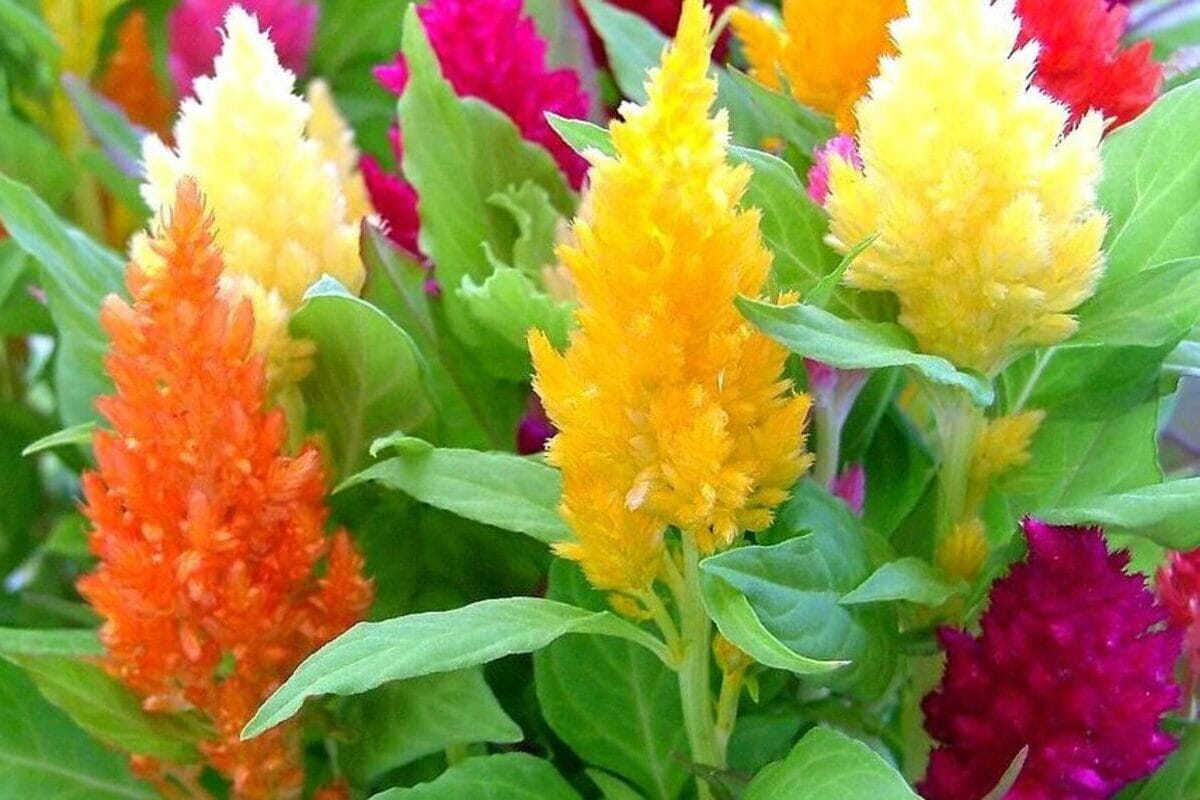
Celosia is far more than just an ornamental plant with delicate blooms—it is a true natural wonder that combines elegance, resilience, and unique biological structure. Often seen in gardens, on balconies, or in parks, it creates an atmosphere of lightness and airiness. Yet behind this graceful appearance lies a rich world of adaptations, evolutionary traits, and cultural significance. Interesting facts about celosia can transform your perception of this plant, revealing its vital role in nature and human life. You might not have known just how profound the story of these flowers truly is—here are some astonishing details worth discovering.
- Celosia belongs to the amaranth family, though it was once mistakenly classified among the carnation family due to superficial floral similarities. The genus includes over 60 species, primarily native to tropical and subtropical regions of Africa, Asia, and the Americas. The name “celosia” comes from the Greek word “keleos,” meaning “burned” or “fiery,” inspired by its vivid red flower heads that resemble flames. This fiery appearance has given rise to poetic common names such as “cockscomb” and “flame flower.”
- Celosia is cultivated not only for its beauty but also as an edible crop, especially in parts of Africa and Southeast Asia. Young leaves and tender shoots are rich in protein, vitamins A and C, and iron, and are commonly used in soups, stews, and salads. In Nigeria, Ghana, and India, celosia is a staple in traditional diets, particularly during seasons when other leafy vegetables are scarce. In some regions, it is even called “poor man’s spinach” due to its affordability and high nutritional value.
- Celosia flower heads come in three main forms: crested (resembling a rooster’s comb), plumed (soft, feathery, and fluffy), and spiked (dense, upright, and cylindrical). Each type has popular cultivars—for example, ‘Cristata’ for crested, ‘Plumosa’ for plumed, and ‘Spicata’ for spiked varieties. These forms differ not only in appearance but also in climate tolerance and growth habits. Through selective breeding, horticulturists have developed hundreds of hybrids suited to diverse growing conditions worldwide.
- Celosia is easily propagated from seed, and the first blooms can appear just 60 to 70 days after sowing. The seeds are extremely tiny—one gram can contain up to 1,500 seeds—making celosia highly economical for large-scale cultivation. It thrives in full sun and well-drained soil, and it is sensitive to overwatering. With proper care, celosia will bloom continuously from late spring through early autumn, providing long-lasting color in the garden.
- In traditional African and Asian medicine, celosia is used to treat a variety of ailments, including eye inflammation, diarrhea, wound infections, and even malaria. Extracts from its leaves have demonstrated anti-inflammatory and antibacterial properties in modern scientific studies. In China, it is sometimes used as a remedy to improve eyesight. However, medical use should be approached with caution and professional guidance, as the plant may trigger allergic reactions in some individuals.
- Celosia is a nectar-rich plant that attracts bees, butterflies, and other pollinators. Although its flowers lack a strong fragrance, their bright colors and textured surfaces create ideal landing platforms for insects. This makes celosia valuable for supporting biodiversity in home gardens and urban landscapes. Additionally, it is rarely troubled by pests or diseases, which enhances its appeal in organic and sustainable gardening practices.
- In the symbolism of certain African cultures, celosia represents fire, vitality, and life force. Its vibrant red inflorescences are often used in rituals aimed at warding off evil spirits or attracting good fortune. In contemporary floristry, celosia is prized for its exceptional longevity in dried arrangements—the flower heads retain their shape and color for months. For this reason, it is a favorite in everlasting bouquets and decorative crafts.
- Celosia is grown as an annual in temperate climates but can behave as a perennial in tropical zones. In warm regions, it readily self-seeds and may return the following year without replanting. In cooler areas, it is treated as a seasonal plant, as frost quickly kills it. This adaptability makes celosia ideal for temporary landscaping projects, such as municipal flower beds, event decorations, or seasonal displays.
- Celosia seeds contain up to 13% oil rich in unsaturated fatty acids, and in some countries, this oil is explored for use in food production. While not yet widely commercialized, research suggests potential for celosia as a source of edible plant oil. Moreover, natural dyes can be extracted from the seeds for textile coloring. These applications open new avenues for the sustainable utilization of the plant beyond ornamental or culinary purposes.
- Beyond its visual appeal, celosia benefits soil health—its dense root system helps prevent erosion on slopes and embankments. In agriculture, it is sometimes used as a green manure or cover crop because it rapidly produces abundant biomass. When cut and tilled into the soil, it decomposes quickly, enriching the earth with nitrogen and organic matter. This makes it a valuable component in agroforestry systems and permaculture designs.
- In modern botany, celosia serves as a model organism for studying the genetic stability of flower color. Due to its ease of cultivation and short life cycle, it is frequently used in educational labs to demonstrate principles of inheritance and trait expression. Some cultivars maintain consistent color throughout blooming, while others gradually shift hues—a phenomenon of interest to geneticists. This characteristic also makes celosia popular among amateur plant breeders and hobbyist gardeners.
Fascinating facts about celosia reveal that this plant is much more than a seasonal garden accent. Remarkable insights into its nutritional, medicinal, and ecological value show that nature often hides true treasures in seemingly ordinary forms. You might not have realized that celosia is not only a symbol of fire but also a source of nourishment, resilience, and beauty. Interesting facts about this remarkable plant remind us that every flower can carry deep meaning—if only we take the time to look closely.


