
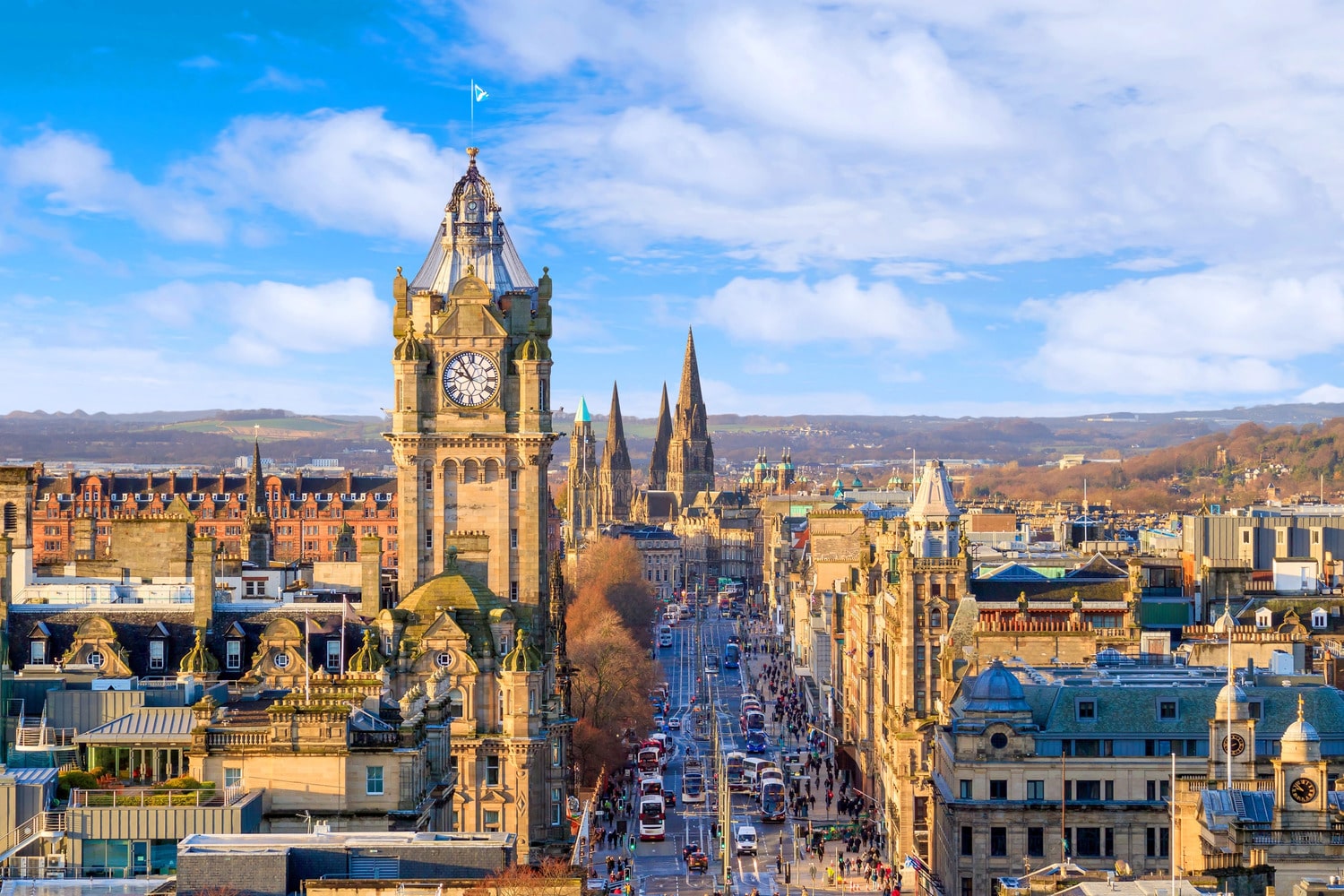
Edinburgh is one of the most recognisable and distinctive cities in the United Kingdom, combining a rich history, impressive architecture and the unique atmosphere of Scottish culture. Visitors immediately sense the charm of its ancient streets, the influence of medieval legends and the beauty of panoramic views unfolding from its steep hills. The city is often called the Athens of the North due to its enormous contribution to science, education and the arts. Edinburgh preserves monuments from many different eras, each of which tells its own fascinating story. Below you will find interesting facts about Edinburgh that you may not have known, helping you better understand the city’s unique character.
- Edinburgh Castle stands on the summit of an extinct volcano known as Castle Rock. This natural fortification made the stronghold nearly impregnable for many centuries. The castle served as a royal residence, a military base and a symbol of Scottish statehood. Today it is one of the most visited attractions in the country.
- The famous Royal Mile is the city’s main historic artery, stretching from Edinburgh Castle to the Palace of Holyroodhouse. Along this route you will find historic townhouses, engaging museums and charming cafés. The street has preserved its medieval layout, giving visitors the feeling of stepping back in time. It is often chosen as the starting point for exploring the city.
- Arthur’s Seat is another extinct volcano rising above the city and forming part of Holyrood Park. Its summit offers striking panoramic views that inspire both locals and visitors. According to legend, the hill is linked to King Arthur and his knights. It remains one of the most popular walking and leisure spots in Edinburgh.
- In the past Edinburgh was considered one of the darkest cities in the United Kingdom due to its numerous narrow and deep alleyways known as closes. These cramped and poorly lit passages were prone to flooding, making everyday life extremely difficult. Such conditions contributed to the spread of diseases and created serious hygienic challenges. Today some of these underground areas can be visited during guided tours.
- Edinburgh is often referred to as a literary capital because many prominent writers lived and worked here. Robert Louis Stevenson, Arthur Conan Doyle and Muriel Spark are among the most notable figures associated with the city. It was here that the story of Dr Jekyll and Mr Hyde was born, as well as the first tales of Sherlock Holmes. The city’s literary heritage has had a significant influence on global culture.
- In the Old Town stands one of the oldest tower clocks in Scotland. It has been functioning for several centuries and represents an outstanding example of medieval engineering workmanship. The mechanism is known for its precision and durability. The clock has become an important symbol of the city’s historical identity.
- Edinburgh is famous for its many festivals, the largest of which is the Edinburgh International Festival. Each year it brings together artists from around the world, filling the city with a creative and inspirational atmosphere. At the same time the Edinburgh Festival Fringe takes place, known as the largest arts festival on the planet. In August the entire city transforms into one massive open-air stage.
- The city is home to one of Europe’s oldest public parks, Princes Street Gardens. Situated in a valley between the Old and New Towns, the park offers a peaceful green space in the heart of the city. It features elegant pathways, well-kept lawns and decorative fountains. It is a favourite spot for both residents and tourists.
- Edinburgh is considered one of the most haunted cities in Europe, with numerous ghost stories adding to its mystique. Its underground passages, old cemeteries and abandoned buildings have inspired many eerie legends. Special tours devoted to paranormal tales attract visitors seeking a thrilling experience. These stories contribute to the city’s mysterious and atmospheric identity.
- The National Museum of Scotland, located in Edinburgh, houses a vast collection ranging from ancient artefacts to modern innovations. Its exhibitions present the history of Scotland through the lenses of art, science and culture. It is one of the most visited museums in the United Kingdom, and entry is free of charge. The museum plays a significant role in the educational life of the city.
- The city has one of the highest numbers of protected architectural monuments in the United Kingdom. This is due to the unique architecture of the Old Town, which has retained its historical authenticity. Many buildings are constructed from dark volcanic stone, giving Edinburgh its characteristic appearance. For this reason it is often considered one of the most beautiful cities in Scotland.
- Edinburgh is home to the monument of Greyfriars Bobby, a dog who has become a symbol of loyalty. According to legend, Bobby guarded his master’s grave for fourteen years. This touching story has become part of local tradition and has inspired books and films. The monument remains a beloved photo spot for visitors.
- The University of Edinburgh is one of Europe’s oldest and most prestigious educational institutions. Founded in the sixteenth century, it has produced numerous outstanding scholars. Among its notable alumni are Charles Darwin, David Hume and Alexander Graham Bell. The university continues to be a leading centre of research and innovation.
- On Calton Hill stands the National Monument of Scotland. Its construction began in the nineteenth century but was never completed due to a lack of funding. As a result the monument is often compared to the Parthenon and is sometimes called the Scottish Parthenon. The hill is a popular place for watching sunsets and admiring city panoramas.
These interesting facts about Edinburgh show how rich, diverse and culturally significant this city truly is. Its remarkable stories help us better understand the traditions, architecture and long history of the region. These fascinating facts reveal the depth of the city’s heritage, making Edinburgh a truly unique place on the European map. The city continues to inspire travellers and researchers alike, inviting them to discover its unforgettable character.


