
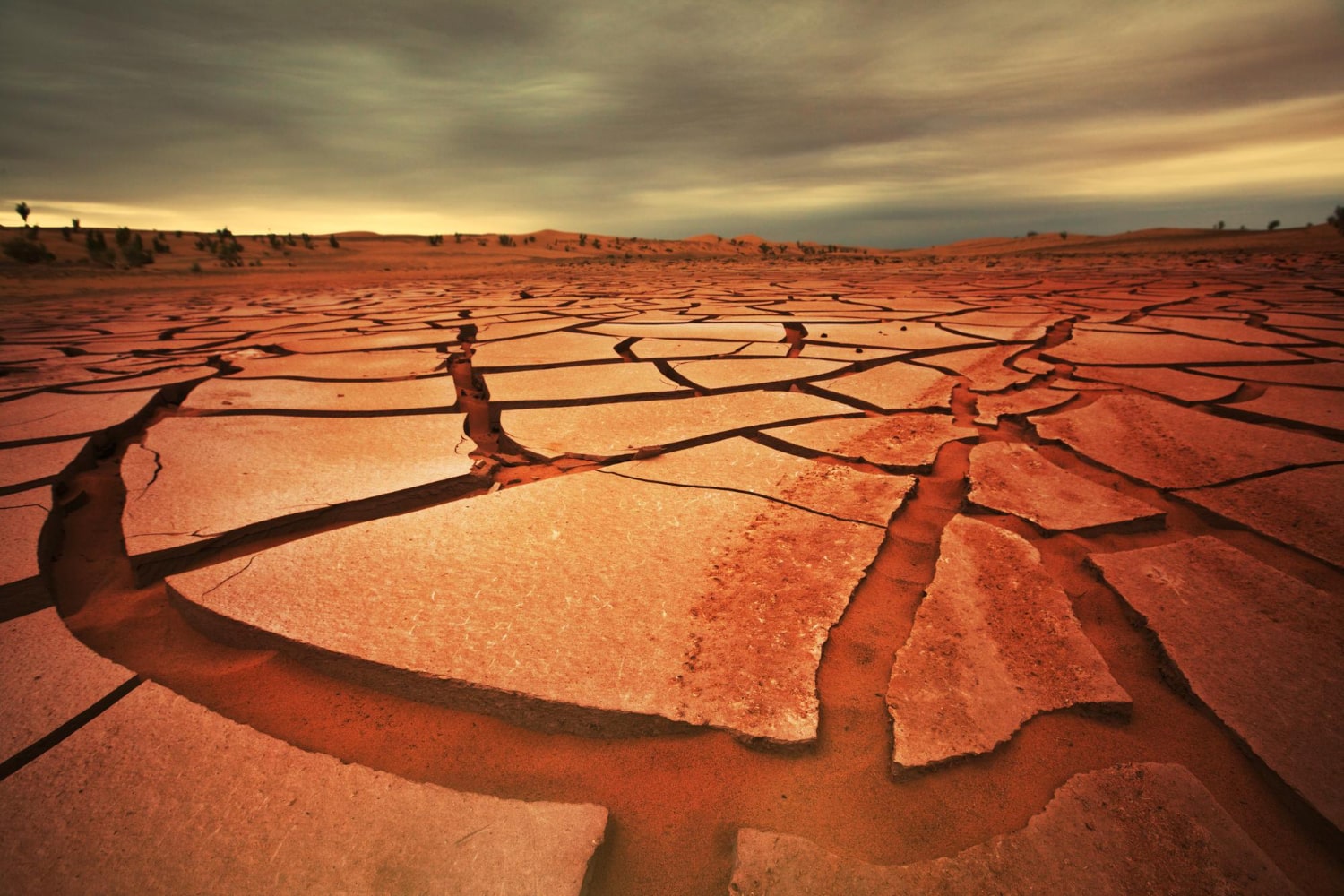
Droughts are one of the most destructive natural phenomena on the planet, about which you may not have known countless fascinating and alarming things. These prolonged periods of abnormally low precipitation are capable of changing ecosystems, destroying the economies of entire countries, and affecting the lives of millions of people. From ancient civilizations to modern megacities, droughts have always been a serious trial for humanity. Incredible facts about this phenomenon show how vulnerable our planet is to climate change. Discover the most interesting information about droughts, their causes, and consequences for our world.
- The longest recorded drought in history lasted 400 years in the Atacama Desert in Chile, where some weather stations recorded no precipitation from 1570 to 1971. This desert is considered the driest place on Earth, where the average annual precipitation is less than one millimeter. The unique conditions are created by the cold Humboldt Current and mountain ranges that block moisture.
- A drought is defined not simply by the absence of rain but by a prolonged deficit of moisture that affects soils, vegetation, and water resources. Meteorologists distinguish four types of droughts: meteorological, agricultural, hydrological, and socioeconomic. Each type has its own characteristics and different development time from the onset of precipitation deficit.
- The Great Drought of the 1930s in the USA, known as the “Dust Bowl,” forced more than 2.5 million people to leave their homes. Intensive farming without proper soil conservation methods led to erosion and the creation of enormous dust storms. Some dust clouds reached heights of 3,000 meters and were carried thousands of kilometers all the way to the Atlantic coast.
- Droughts can last from several weeks to decades, and their onset is often difficult to determine precisely. Unlike sudden natural disasters such as earthquakes or hurricanes, drought develops gradually and imperceptibly. This makes it a “creeping disaster” that is difficult to predict and prevent its consequences in a timely manner.
- The El Niño anomaly is one of the main causes of global droughts and can affect weather conditions across the entire planet. This cyclical phenomenon changes the surface temperature of the Pacific Ocean every 2-7 years, disrupting the usual patterns of atmospheric circulation. During strong El Niño events, droughts can simultaneously strike Australia, Indonesia, South Africa, and Latin America.
- Droughts kill more people than any other natural disaster, mainly due to famine and diseases arising from food and water shortages. Over the past 50 years, droughts have claimed the lives of more than 650,000 people worldwide. Countries in sub-Saharan Africa and some regions of Asia suffer most due to their dependence on agriculture.
- Trees can “remember” droughts through annual rings that become narrower in dry years due to limited growth. Dendrochronology allows scientists to reconstruct climatic conditions hundreds and even thousands of years ago. Some sequoia trees in California preserve information about droughts that occurred over 2,000 years ago.
- Droughts can cause mass migration of animals in search of water and food, leading to conflicts with humans and the death of wild species. In 2019, during a drought in Botswana, more than 200 elephants died due to water shortage. Droughts also force predators to approach human settlements, increasing the risk of attacks on livestock and people.
- Soils during prolonged droughts can become hydrophobic, meaning they repel water instead of absorbing it. This occurs due to the accumulation of waxy substances on the surface of soil particles as a result of organic matter decomposition. When rains finally fall after a drought, water quickly runs off the surface, causing sudden floods instead of soil saturation.
- The deadliest drought in history is considered to be the drought of 1876-1879, which encompassed China, India, Brazil, and North Africa, claiming the lives of 30 to 60 million people. This disaster coincided with an extreme El Niño event and was intensified by socioeconomic factors of the colonial era. The famine resulting from the drought is considered one of the most terrible humanitarian catastrophes in history.
- Droughts have a cascading effect on the economy, affecting not only agriculture but also energy production, transportation, and tourism. Low water levels in reservoirs reduce hydroelectric power generation, forcing countries to switch to more expensive alternatives. During the 2022 drought in Europe, rivers became so shallow that it paralyzed river navigation and logistics chains.
- Cities and megacities are particularly vulnerable to droughts due to high population concentration and enormous water demand. Cape Town in South Africa in 2018 barely avoided “Day Zero,” when the city’s water supply was to be completely shut off. Residents were forced to limit water consumption to 50 liters per person per day.
- Artificial rain induction through dispersing chemical substances in clouds is practiced in many countries to combat droughts. China actively uses this technology, releasing silver iodide or dry ice into clouds to stimulate precipitation. However, the effectiveness of this method still remains a subject of scientific debate, and it cannot completely solve the problem of serious droughts.
- Climate change intensifies the frequency and intensity of droughts in many regions of the world due to rising temperatures and changes in precipitation distribution. Global warming increases moisture evaporation from soil and plants, even if the total amount of precipitation does not decrease. Scientists predict that by 2050, the area of land suffering from droughts may increase by 10-30 percent.
- Some plants and animals have evolved to survive in conditions of regular droughts, developing unique adaptations. Cacti are capable of storing water in thick stems and have a special type of photosynthesis that minimizes moisture loss. Some frogs can enter a state of estivation, slowing metabolism and surviving without water for months while awaiting rains.
- Droughts can lead to an increase in forest fires, which in turn worsen air quality for hundreds of kilometers around. Dry vegetation and low air humidity create ideal conditions for rapid fire spread. During the 2019-2020 drought in Australia, more than 18 million hectares of forest burned, equivalent to the area of Syria.
Droughts remain one of the most serious threats to humanity in the context of climate change and growing planetary population. Incredible facts about this phenomenon demonstrate the necessity of developing effective adaptation strategies and water resource conservation. Understanding the nature of droughts and their consequences is key to creating sustainable food security systems and protecting vulnerable communities from this slow but destructive element.


