
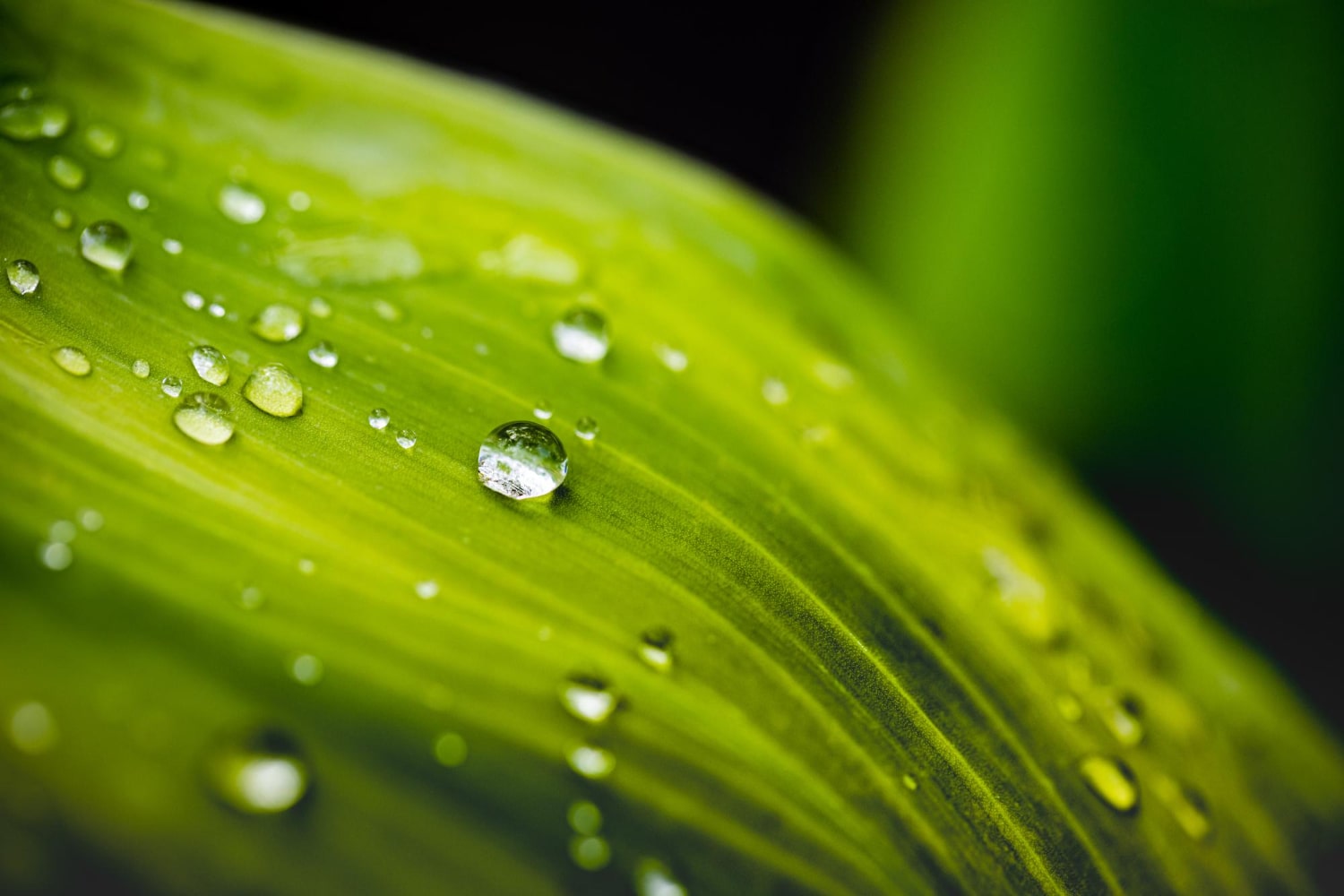
Dew is one of the most widespread yet most mysterious atmospheric phenomena that we can observe almost every day. These tiny water droplets covering grass, leaves, and spider webs at dawn have long inspired poets and artists, while prompting scientists to carefully study the physical processes of condensation. You may not have known that dew plays an extremely important role in sustaining the life of plants and animals, especially in arid regions of the planet. Fascinating facts about this natural phenomenon will open up a world of complex physical processes hidden behind simple water droplets.
- Dew forms as a result of the condensation of water vapour from the air onto cooled surfaces. This occurs when the surface temperature drops below the dew point, which is the temperature at which air becomes saturated with water vapour. Water molecules transition from a gaseous state to a liquid state and settle as fine droplets. This process occurs most actively during night and morning hours when the ground rapidly loses heat.
- The dew point is an important meteorological indicator used for weather forecasting and determining air comfort levels. When the dew point approaches the actual air temperature, humidity becomes very high, making it difficult for people to tolerate the heat. Meteorologists consider a dew point above 20 degrees Celsius uncomfortable for most people. When the dew point exceeds 24 degrees, conditions are considered dangerous for health.
- The maximum amount of dew falls during clear, windless nights when the sky is free of clouds. Under such conditions, the Earth’s surface intensively radiates heat into space and cools rapidly. Cloud cover acts like a blanket, reflecting part of the thermal radiation back towards the ground. Wind also hinders dew formation because it mixes the air and prevents surfaces from cooling sufficiently.
- Some desert animals and plants are completely dependent on dew as their only source of moisture during prolonged dry periods. The darkling beetle from the Namib Desert has a unique shell structure with bumps that collect dew from fog and direct water straight to the insect’s mouth. This mechanism has inspired engineers to create technologies for harvesting water from the air. Desert plants also have special adaptations for maximum absorption of dew moisture.
- In some regions of the world, people traditionally collect dew for drinking and household purposes. On the Canary Islands, the local population has used special trees capable of condensing moisture from fog and dew for centuries. Modern dew collection technologies include special nets and surfaces that can yield up to 10-15 litres of water per square metre per night. This technology is particularly relevant for arid coastal areas.
- Dew plays an important role in agriculture by providing plants with additional moisture during night hours. Research shows that dew can supply up to 25-30 percent of plants’ water needs in some climatic zones. Dew is especially important for young plants and seedlings whose root systems are not yet sufficiently developed. However, excessive dew can promote the development of fungal diseases on leaves.
- There is a difference between true dew and what is called guttation, although visually they may look identical. Guttation is the secretion of water droplets by the plant itself through special openings on the edges of leaves under pressure from the root system. Guttation drops usually appear on the tips and edges of leaves, while dew evenly covers the entire surface. Guttation fluid contains mineral substances and organic compounds, unlike pure dew water.
- A spider web covered with dew is not only a beautiful sight but also demonstrates unique physical properties. Spider silk threads have hydrophilic and hydrophobic sections that cause dew drops to arrange themselves in characteristic patterns. Scientists study these properties of spider webs to create new materials for water collection. Some synthetic fibres created based on spider web principles can collect moisture from the air three times more efficiently than ordinary materials.
- Dew has significant importance for the formation of the microclimate in the near-ground air layer. The evaporation of dew in the morning absorbs a considerable amount of thermal energy, slowing down the heating of the air. This process affects the distribution of temperature and humidity in the lower layers of the atmosphere. Farmers take into account the drying time of dew when planning agricultural work and plant spraying.
- The average annual amount of dew in temperate latitudes is equivalent to approximately 10-50 millimetres of precipitation. In some coastal desert regions, such as the Atacama Desert or the coast of Namibia, dew and fog are the main sources of moisture. Dew can constitute up to 80 percent of all precipitation in these regions. Without this source of moisture, the ecosystems of these territories simply could not exist.
- The phenomenon of dew has been known to humanity since ancient times and is surrounded by numerous myths and legends. In many cultures, dew was considered a sacred substance with healing properties. Medieval alchemists collected May dew, believing it contained a special life force. Some folk traditions recommended washing with dew to preserve youth and beauty.
- The formation of dew on metal surfaces can lead to corrosion and equipment damage. Engineers take this factor into account when designing outdoor structures and electronic equipment. Special anti-corrosion coatings and hydrophobic materials are used for protection against the effects of dew. The aviation industry pays particular attention to preventing dew formation on critical aircraft components.
- Dew on car windscreens and house windows forms according to the same principle as on natural surfaces. Glass fogging occurs when warm moist air comes into contact with a cold surface. Modern technologies include glass heating and special coatings that prevent condensation formation. Hydrophobic coatings cause droplets to roll off the surface without impairing visibility.
- Scientists use dew measurements to monitor climate change and the planet’s water cycle. Changes in the amount and distribution of dew can indicate global climate shifts. Special instruments called drosometers allow for precise measurement of dew quantities. Satellite observations help track dew formation over large areas.
- Dew can serve as an indicator of air pollution and environmental quality. Dew drops dissolve gases and particles from the atmosphere, accumulating pollutants. Analysis of the chemical composition of dew allows assessment of air pollution levels in a particular area. Acid dew, similar to acid rain, can damage plants and building materials.
- Photographers value morning dew for the opportunity to create incredible macro photographs of nature. Dew drops act as miniature lenses, creating unique optical effects and reflections. The best time for photographing dew is the first hours after dawn, before the sun evaporates the moisture. Professional photographers use special lighting to emphasise the beauty of dew droplets.
- Some insects use dew not only for drinking but also for thermoregulation and protection from predators. Bees and other insects collect dew to cool their hives on hot days. Small insects can become trapped in dew drops due to the surface tension of water. Predatory insects sometimes hunt near dew drops, waiting for prey that will come to drink.
- Dew affects the spread of certain plant diseases by creating favourable conditions for pathogenic fungi. Prolonged exposure of foliage to a moist state increases the risk of infection with powdery mildew and other diseases. Gardeners recommend watering plants in the morning so that leaves have time to dry before evening. Proper planting arrangements ensure better air circulation and faster drying of dew.
Incredible facts about dew demonstrate how complex and multifaceted this seemingly simple natural phenomenon truly is. From sustaining life in deserts to influencing modern water harvesting technologies, dew continues to amaze scientists and inspire inventors. These captivating details remind us of the close interconnection of all elements of nature and the importance of even the smallest water droplets for the existence of life on our planet.


