
Deserts have long captured human imagination, appearing at once harsh, mysterious and endlessly fascinating. Their landscapes can change within hours, and the extreme conditions shape unique ecosystems with remarkable resilience. In this article you will find interesting facts you may not have known, revealing natural processes that make deserts some of the most intriguing environments on Earth. Deserts demonstrate how adaptable nature can be when faced with intense heat, freezing nights, water scarcity and powerful winds. These captivating facts will help you discover the richness and diversity hidden within these seemingly barren spaces.
- Deserts cover about one third of all land on the planet, although many people associate them only with the sands of the Sahara. They can be rocky, clay-based, salty, gravelly or even icy. The Arctic and Antarctic regions are officially classified as the largest deserts in the world because they receive extremely little precipitation. This shows that the concept of a desert is far broader than the stereotypical sandy image.
- Temperature changes in deserts are extremely sharp and occur not only between day and night. Daytime heat can exceed 50 degrees Celsius, while nighttime temperatures may drop below freezing. Such abrupt fluctuations cause rocks to crack and landscapes to erode. This phenomenon plays a major role in shaping the physical features of desert terrain.
- Not all deserts are hot, even though hot deserts are the most widely recognised. Cold deserts such as the Gobi or the Great Victoria Desert experience snow and severe winter temperatures. What defines a desert is low precipitation, not high heat. This explains the wide range of desert climates around the world.
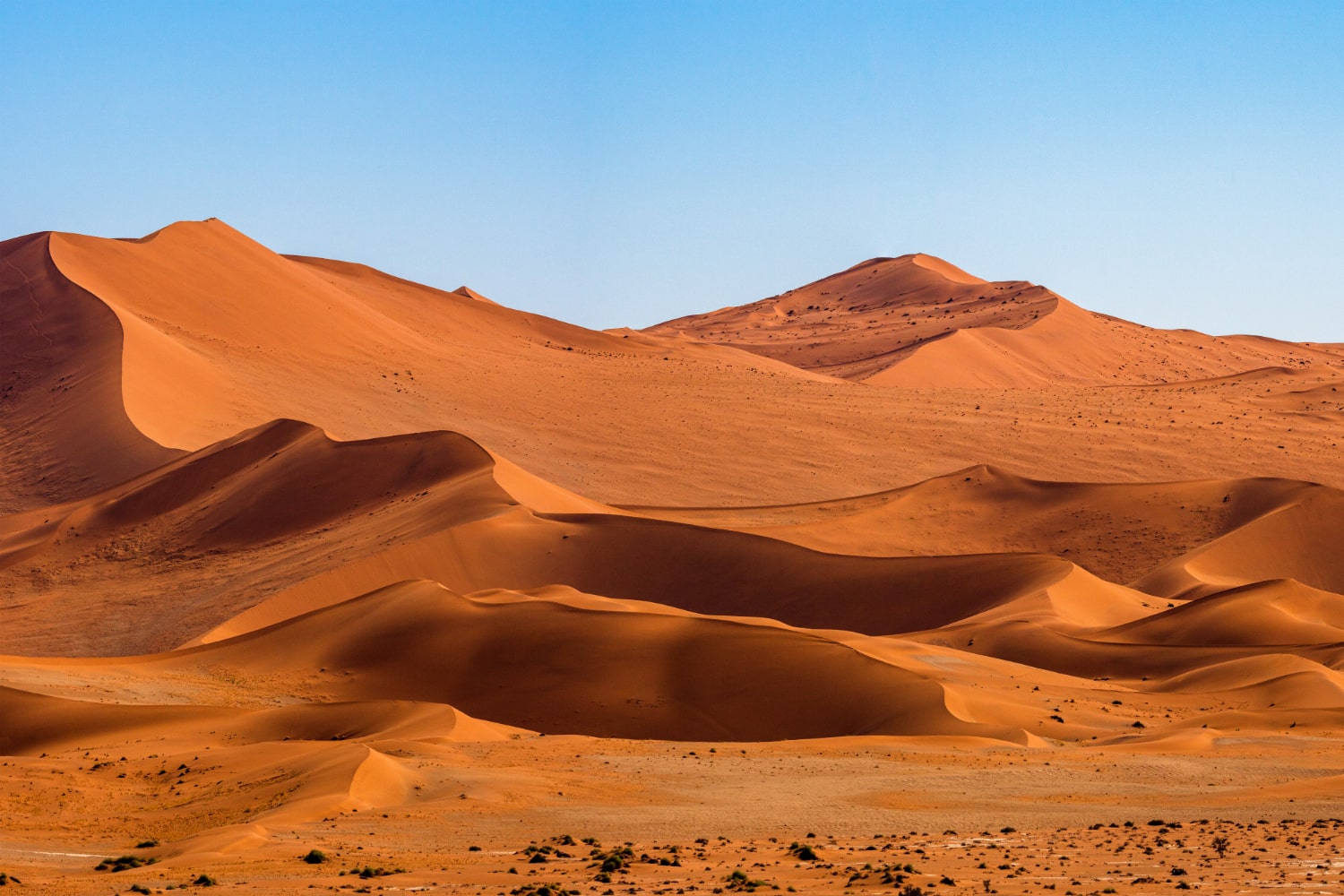
- Many deserts feature moving dunes and barchans that shift under the influence of strong winds. Some dunes migrate by several dozen metres each year. Certain sand formations grow as tall as multi-storey buildings and can change direction depending on air currents. This constant movement makes desert landscapes dynamic and ever-changing.
- In some deserts there is a phenomenon known as singing dunes, where shifting sand produces a deep, resonant sound. This unusual noise can continue for minutes and be heard from afar. Scientists believe the sound is caused by millions of grains of sand vibrating and rubbing against one another. It adds a mysterious and memorable quality to desert regions.
- Desert regions are rich in valuable minerals, including gold, copper and uranium. Sparse vegetation makes geological exploration easier and more efficient. As a result many deserts play an important economic role. They have become significant contributors to the mining industries of numerous countries.
- Animals living in deserts have evolved extraordinary adaptations to survive extreme conditions. They conserve water, avoid scorching sunlight and often lead nocturnal lifestyles. The fennec fox cools its body with its large ears, while camels can endure long periods without drinking. These examples highlight the impressive adaptability of desert species.
- Desert plants typically have thick stems, deep root systems and spines that reduce water loss. Such characteristics help them endure extreme drought and store moisture efficiently. Some plants can remain dormant for decades and revive after brief rainfall. They are true champions of survival in harsh environments.
- Camels are often seen as symbols of deserts, yet there are many misconceptions about them. Their humps contain fat rather than water, and this reserve provides energy when food is scarce. Camels can drink enormous amounts of water at once and survive long stretches without replenishing it. Their physiology makes them ideal for long journeys across arid terrain.
- Dust storms and sandstorms are common in deserts, lifting fine particles high into the atmosphere. These storms influence the climate by transporting mineral dust to other continents, enriching soils elsewhere. Suspended dust can also limit solar heating, affecting temperature levels. Such processes are an essential part of global environmental dynamics.
- Water is the most precious resource in deserts, and it is oases that sustain life in these regions. Oases provide vegetation, wildlife habitat and spaces where human settlements can exist. They often become hubs of trade and cultural exchange. Many ancient caravan routes were established around these vital water sources.
- Deserts preserve ancient artefacts exceptionally well because dry air slows down decay. Archaeologists frequently discover well-preserved mummies, manuscripts and tools in desert regions. The dry climate acts as a natural preservative. This makes deserts invaluable for historical and archaeological research.
- Optical illusions are common in deserts due to the way hot air bends light. The most famous example is the mirage, in which distant objects or water appear where nothing actually exists. This natural effect can confuse travellers, yet it is simply a result of temperature differences near the ground. Mirages are a defining element of many desert landscapes.
- Despite their harshness deserts are home to numerous unique cultures and peoples. Berbers, Bedouins and other nomadic groups have developed sophisticated survival strategies for living in such demanding environments. Their traditions, knowledge and lifestyles form a rich cultural heritage. These communities play a significant role in the history of desert regions.
- Deserts change over thousands of years and their borders are not fixed. They may expand or shrink due to climate change, natural erosion or human activities. For example, the Sahara was once a green savannah filled with rivers and lakes. This history demonstrates the dynamic nature of desert landscapes.
These interesting facts about deserts show how diverse, surprising and scientifically important these environments truly are. You may not have known that deserts influence global climate, economies and cultures in profound ways. Studying them helps us better understand the planet’s evolution and the resilience of life in extreme conditions. Deserts continue to fascinate researchers and travellers, revealing new mysteries with every discovery.


