
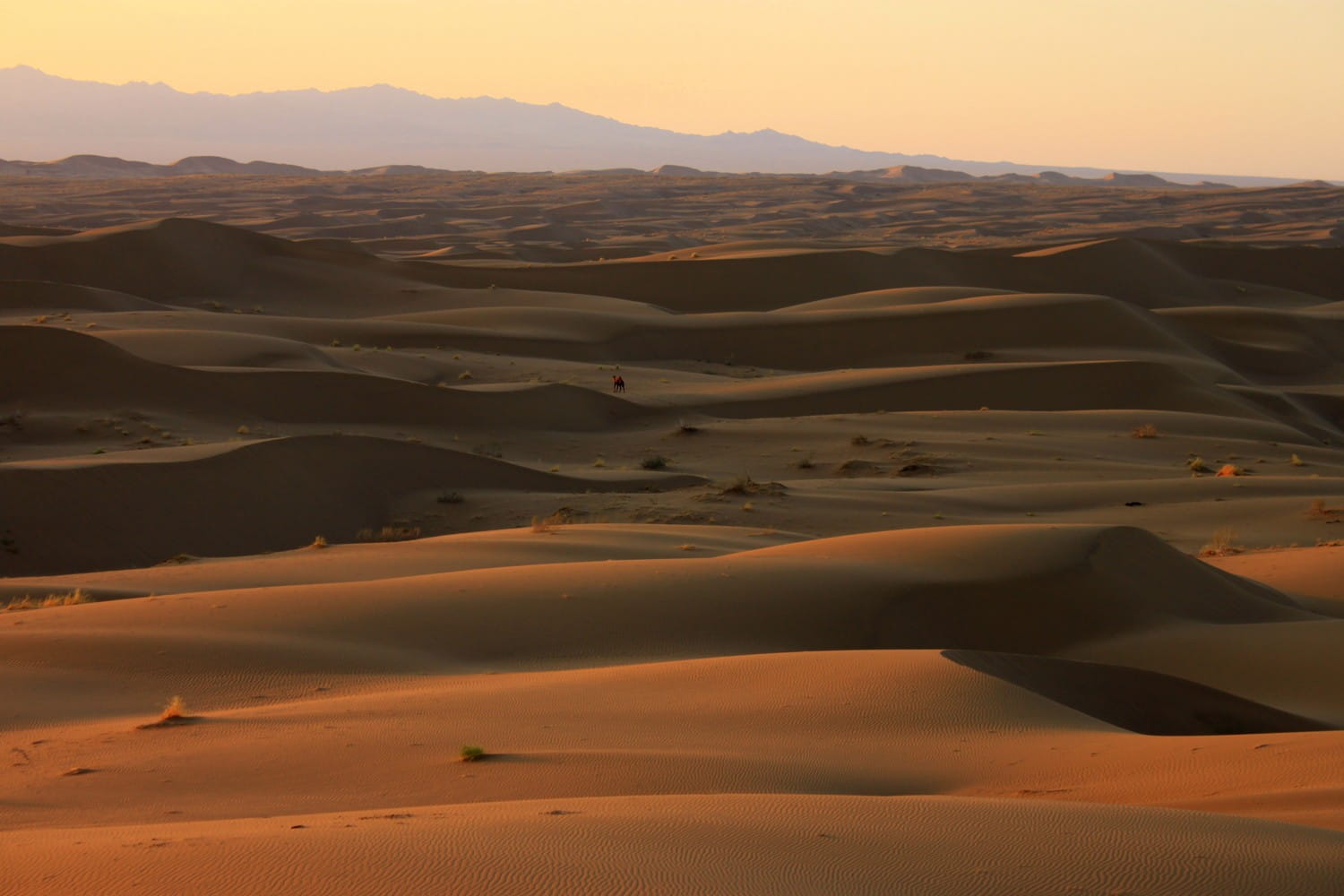
Dasht-e Kavir, the immense salt desert nestled in the heart of Iran, conceals mysteries that have captivated travelers and explorers for centuries. This seemingly lifeless expanse stretching across hundreds of kilometers creates an otherworldly impression with its crystalline salt lakes and vast clay plains shimmering under the relentless sun. Despite its harsh conditions, this desert harbors a unique ecosystem and holds profound historical significance for Iranian civilization. Today we will uncover incredible facts about this extraordinary region that will transform your understanding of desert landscapes. You might not have known just how rich and complex life truly is in this apparently barren corner of our planet.
- Dasht-e Kavir occupies approximately seventy-seven thousand square kilometers in central Iran making it one of the country’s largest desert regions. It stretches between the Alborz mountain range to the north and the Zagros mountains to the south forming a vast natural basin. The name translates from Persian as Great Desert or Salt Desert reflecting its dominant characteristics. The central portion remains almost completely uninhabited due to extraordinarily difficult environmental conditions.
- The desert experiences an extreme continental climate with scorching summers and surprisingly cold winters. Summer temperatures frequently soar to fifty degrees Celsius in direct sunlight creating an oven-like environment for any living organism. Winter nights often plunge below freezing particularly during December and January months. These dramatic temperature fluctuations accelerate the weathering process of surface rocks and soil structures.
- Seasonal salt lakes and playas represent the most distinctive features of Dasht-e Kavir appearing after spring rainfall. These temporary water bodies evaporate rapidly under intense solar radiation leaving behind thick crusts of crystalline salt deposits. Lake Gavkhoun stands as the most famous example recognized as Iran’s saltiest water body. The salt crystals frequently arrange themselves into geometric patterns creating surreal landscapes that resemble alien worlds.
- The desert floor consists primarily of takir soils characterized by fine clay composition that cracks extensively during dry periods. Following rare precipitation events the surface becomes temporarily soft and sticky before hardening into a rigid crust within days. These polygonal crack networks can reach several centimeters in width and extend dozens of centimeters deep into the earth. Such terrain makes vehicular travel exceptionally challenging without proper equipment and local knowledge.
- Remarkably diverse wildlife has adapted to survive Dasht-e Kavir’s extreme conditions through specialized physiological and behavioral traits. The critically endangered Asiatic cheetah roams remote sections alongside the Persian onager a wild ass subspecies and the striped hyena. Most desert fauna maintains nocturnal activity patterns to avoid daytime heat stress and conserve precious body moisture. Several species obtain sufficient hydration from vegetation alone surviving weeks without direct water access.
- Plant life in the desert demonstrates extraordinary resilience through salt tolerance and drought resistance mechanisms. Saltwort species saxaul shrubs and various wormwood varieties dominate the sparse vegetation with deep root systems reaching underground moisture sources. Many plants feature reduced leaf surface area or complete leaflessness to minimize water loss through transpiration. Brief floral displays occasionally transform sections of the desert into colorful carpets following uncommon rainfall events.
- Scattered oases have sustained human communities throughout Dasht-e Kavir’s history thanks to artesian springs and qanat irrigation systems. Villages such as Nain Semiran and Khur maintain agricultural traditions centered around date palm cultivation and limited crop production. Water management represents the absolute priority for survival with every drop carefully allocated and conserved. These isolated communities preserve ancient knowledge about desert navigation and resource location passed through generations.
- Historical trade routes carefully skirted Dasht-e Kavir’s edges connecting Persian civilization with Central Asian cultures and beyond. Caravans avoided the desert interior due to navigation hazards and water scarcity following mountain foothills instead. Archaeological evidence confirms human presence in peripheral zones dating back to Neolithic times. These ancient pathways later evolved into segments of the Silk Road network facilitating cultural exchange across continents.
- Kavir National Park protects a significant portion of the desert’s central region spanning over four thousand square kilometers of pristine wilderness. Established to conserve vulnerable species and fragile ecosystems the park remains one of Iran’s least visited protected areas due to access difficulties. Strict regulations govern entry to sensitive zones particularly during wildlife breeding seasons. The park serves as a crucial refuge for species threatened by habitat loss elsewhere in the country.
- Geological evidence indicates Dasht-e Kavir occupied the basin of an ancient inland sea that evaporated millions of years ago. Remaining sedimentary deposits contain substantial potassium salt reserves alongside other valuable minerals like gypsum and sodium chloride. Modern extraction operations harvest these resources primarily for industrial applications though on a limited scale. Geologists continue investigating potential petroleum and natural gas reserves beneath the salt crust layers.
- Quicksand areas present serious hazards throughout the desert particularly near seasonal water sources and playas. These deceptive patches appear solid but conceal deep saturated sediments capable of trapping unwary travelers or animals. Local inhabitants possess detailed mental maps of dangerous zones developed through centuries of experience. Rescue operations in these areas require specialized equipment and knowledge making prevention the primary safety strategy.
- Intense dust storms periodically reshape Dasht-e Kavir’s landscape sometimes lasting several consecutive days. Powerful winds lift millions of tons of fine particles creating towering walls of dust that reduce visibility to near zero. These haboobs can transport sediment hundreds of kilometers affecting air quality in distant urban centers. The storms significantly influence regional climate patterns and contribute to soil formation processes across surrounding territories.
- Nomadic communities maintain seasonal migration patterns within Dasht-e Kavir’s peripheral zones following ancient traditions adapted to desert rhythms. These groups primarily herd camels and goats animals uniquely suited to sparse vegetation and minimal water requirements. Their encyclopedic knowledge of hidden water sources seasonal plant availability and safe travel routes ensures survival in this demanding environment. Oral traditions preserve sophisticated meteorological observations and navigation techniques refined over countless generations.
- Dasht-e Kavir ranks among Iran’s most sparsely populated regions with fewer than one person per square kilometer in central areas. Permanent settlement remains impossible without substantial infrastructure investment for water provision and climate control. Only desert fringes support small agricultural villages where groundwater access permits limited habitation. This isolation has preserved the desert’s pristine character protecting it from large-scale development pressures.
- Optical mirages frequently manifest across Dasht-e Kavir especially during hot summer afternoons when temperature gradients distort light rays. Travelers often report seeing illusory lakes or distant objects that vanish upon approach creating dangerous navigation errors. These phenomena result from atmospheric refraction bending light through layers of air at different temperatures. Historical accounts describe mirages contributing to fatal disorientation among inexperienced desert travelers.
- Unique geological formations called kaluts rise dramatically from the desert floor sculpted by wind and occasional water erosion over millennia. These natural structures resemble castles towers or minarets with intricate layered patterns revealing the region’s geological history. The most spectacular examples cluster near Yazd city attracting photographers and geologists alike. Kaluts continue evolving slowly as erosion processes gradually reshape their distinctive silhouettes.
- Dasht-e Kavir holds profound cultural significance in Persian literature and spiritual traditions symbolizing both physical hardship and spiritual purification. Sufi mystics historically sought solitude in the desert’s vast emptiness for meditation and divine contemplation. Classical Persian poetry frequently employs desert imagery to represent the soul’s journey toward enlightenment and self-discovery. This symbolic association continues influencing Iranian philosophical thought and artistic expression today.
These fascinating facts merely scratch the surface of Dasht-e Kavir’s complex reality where nature displays both brutal severity and subtle beauty. Incredible discoveries about this desert remind us that Earth’s most inhospitable environments often harbor unexpected complexity and resilience. Studying such extreme ecosystems deepens our appreciation for life’s adaptability and the delicate balance sustaining biodiversity. Preserving these unique landscapes ensures future generations can continue learning from nature’s most challenging classrooms.


