
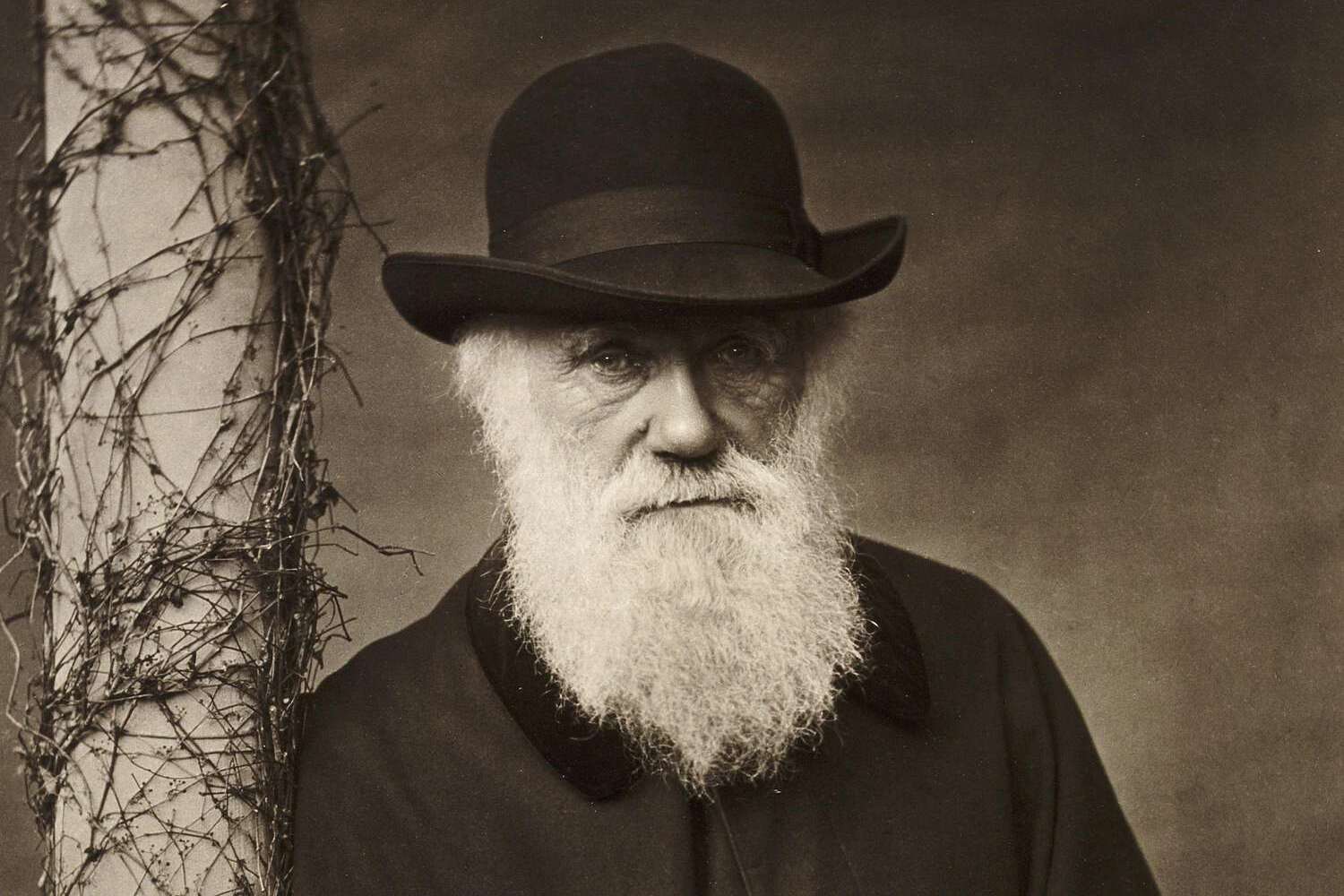
The name Charles Darwin is forever linked with one of humanity’s most transformative scientific ideas – the theory of evolution by natural selection. Yet behind this monumental discovery lies the life of an extraordinarily complex, contradictory, and deeply human individual. Amazing facts about Darwin reveal not merely a brilliant researcher but also a sensitive person who struggled with illness, doubt, and societal pressure throughout his career. You might not know that his path to scientific breakthrough was long, deliberate, and filled with unexpected turns that shaped both his intellectual development and personal character. Fascinating facts about Darwin help us understand how an unassuming man managed to revolutionize our understanding of life itself.
- Charles Darwin initially studied medicine at the University of Edinburgh but abandoned his studies due to distress over surgical operations performed without anesthesia. His father later sent him to Cambridge University to train for the clergy, believing his son lacked a clear vocational direction. It was at Cambridge that Darwin developed his passion for natural science through friendships with enthusiastic professors who recognized his potential. This indirect route into scientific work ultimately proved decisive for the future development of evolutionary biology.
- The voyage aboard HMS Beagle lasted nearly five years from 1831 to 1836 and became the defining experience of Darwin’s life. He was not officially appointed as the expedition’s naturalist but joined Captain Robert FitzRoy as a gentleman companion to provide intellectual conversation during the long journey. Throughout the voyage Darwin collected thousands of specimens of animals, plants, and minerals that later formed the foundation of his scientific investigations. His observations on the Galápagos Islands proved especially significant though he only recognized their full importance after returning to England.
- Darwin delayed publishing his theory of evolution for almost twenty years following his return from the Beagle expedition. He feared religious and social backlash against ideas that contradicted the prevailing belief in divine creation of species. Only when Alfred Russel Wallace sent him a letter outlining nearly identical concepts about natural selection did Darwin finally decide to present his work publicly. This lengthy hesitation demonstrates Darwin’s profound caution and sense of responsibility as a scientist confronting potentially disruptive ideas.
- The scientist married Emma Wedgwood who was his first cousin on his mother’s side. Marriages between cousins were common among British aristocracy during that era though Darwin later worried about possible genetic consequences for their children. They had ten children together but three died during childhood which deeply affected Darwin emotionally. This personal tragedy may have influenced his scientific reflections on mortality and survival in the natural world.
- Darwin suffered from chronic health problems throughout most of his adult life and modern researchers still debate the exact cause of his condition. Some scholars suggest he contracted Chagas disease during the Beagle voyage through the bite of a triatomine bug in South America. Others believe his symptoms stemmed from psychosomatic disorders triggered by stress from his scientific work and anxiety about publishing controversial ideas. Due to his poor health Darwin lived a largely secluded life at Down House in the Kent countryside.
- The scientist conducted extensive research not only on animals but also on plants particularly orchids and climbing vines. He wrote an entire monograph on orchids demonstrating how their intricate structures evolved specifically for insect pollination. His experiments with climbing plants revealed their active movement to wrap around supports which revolutionized understanding of plant behavior. These botanical investigations helped him substantiate his broader ideas about adaptation across different organism groups.
- Darwin was a committed opponent of slavery and these convictions formed during his Beagle voyage. He was profoundly disturbed by the brutality of the slave trade in Brazil and expressed moral outrage about racial inequality in his private notebooks. His belief in the unity of the human race became integral to his evolutionary theory which demonstrated the common ancestry of all people. This humanitarian perspective often remains overlooked in discussions of his scientific legacy.
- Darwin actively enlisted the help of family members and friends for his scientific work creating an extensive network of citizen scientists. His children assisted with observations of insects and plants in the garden at Down House often participating in simple experiments. He maintained correspondence with hundreds of naturalists worldwide gathering data about organisms from every continent and ocean. Such collaborative approaches to scientific inquiry were remarkably innovative for the mid-nineteenth century.
- Darwin’s first published book appeared well before his famous On the Origin of Species and focused on geology titled Geological Observations on Volcanic Islands. In it he described his findings about coral reef formation proposing they develop around subsiding volcanic islands. This geological work earned him recognition in scientific circles years before he introduced his evolutionary concepts. Throughout his life Darwin considered himself primarily a geologist rather than a biologist.
- The scientist investigated human and animal behavior publishing a book titled The Expression of the Emotions in Man and Animals. He argued that emotional expressions have evolutionary origins and appear across multiple species with remarkable similarities. To support his claims he conducted one of history’s first scientific questionnaires distributing surveys to missionaries and colonists in distant lands. This pioneering work laid foundations for modern ethology and the psychology of emotions.
- Darwin was an enthusiastic pigeon breeder maintaining numerous varieties in the dovecote at his home. He purchased exotic breeds at auctions and carefully studied how artificial selection could produce dramatically different forms from a single ancestral population. These observations provided crucial evidence for understanding how natural selection might operate in wild populations over extended periods. His pigeon collection eventually included dozens of distinct breeds with extraordinary physical variations.
- Despite his revolutionary theory Darwin remained a modest and courteous individual who avoided public controversy whenever possible. He declined a knighthood that was offered to him and never sought political office or public acclaim. Darwin frequently acknowledged errors in his publications and graciously accepted constructive criticism from colleagues when it was scientifically valid. This intellectual honesty earned him respect even among scientists who disagreed with his evolutionary conclusions.
- Darwin’s final major scientific work focused not on animals or plants but on earthworms and their role in soil formation. In The Formation of Vegetable Mould through the Action of Worms he demonstrated how these humble creatures gradually transform rock into fertile soil over thousands of years. He conducted meticulous experiments in his garden measuring how quickly stones sank into the earth through worm activity. This research established fundamental principles for modern soil science and ecology.
- Darwin died on April 19 1882 and was buried in Westminster Abbey alongside other distinguished British figures. This proved highly symbolic since his evolutionary ideas had often been viewed as conflicting with Christian doctrine. Interment in the Abbey represented a reconciliation between science and religion and formal recognition of his contribution to human knowledge. Even former opponents acknowledged his genius following his death.
- The scientist maintained a close friendship with botanist Joseph Hooker who became one of the earliest supporters of his evolutionary theory. Hooker provided crucial moral support during Darwin’s periods of doubt and assisted with botanical identifications for his research. It was Hooker who urged Darwin to publish his theory immediately after receiving Wallace’s letter outlining similar ideas. Their friendship endured for more than fifty years exemplifying scientific solidarity and mutual respect.
- Darwin never actually used the phrase survival of the fittest in his published works though this expression is frequently attributed to him. The phrase originated with philosopher Herbert Spencer who applied evolutionary concepts to social theory and economics. Darwin himself emphasized that natural selection favors organisms best adapted to their specific environments not necessarily the strongest or most aggressive individuals. This misunderstanding contributed to social Darwinism a concept Darwin never endorsed or supported.
Fascinating facts about Darwin remind us that great scientific breakthroughs often emerge not from moments of triumph but from periods of personal struggle uncertainty and perseverance. His life demonstrates how patience meticulous observation and willingness to devote decades to a single intellectual pursuit can fundamentally transform human understanding. Darwin’s legacy endures not only in biology textbooks but in our everyday comprehension of humanity’s place within the natural world. Each of these insights reveals behind the name of a great scientist a living breathing individual whose curiosity courage and dedication reshaped our view of life on Earth.


