
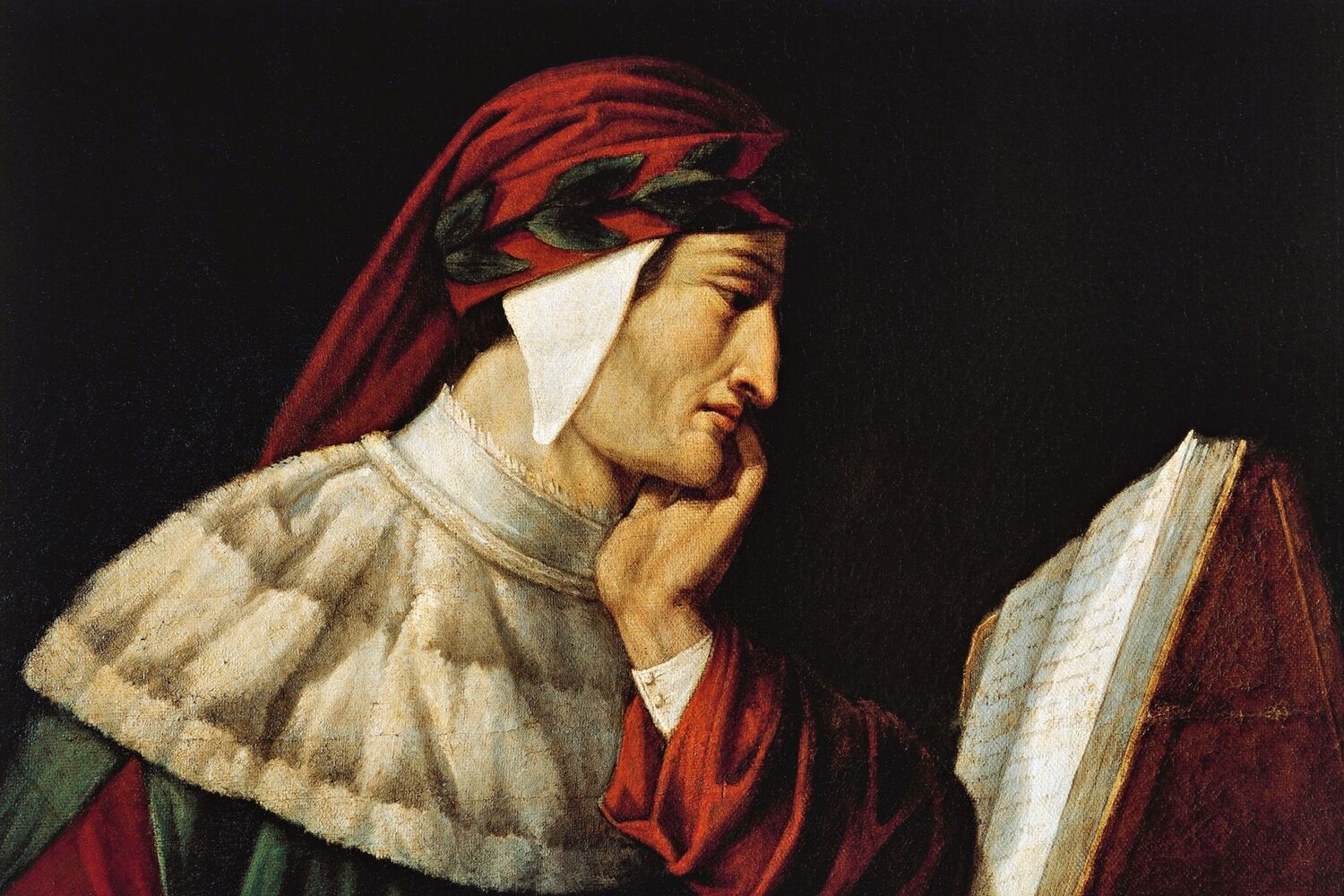
The name Dante Alighieri is inseparably linked with European literature, yet behind the image of a stern poet stands an exceptionally complex and multifaceted individual. His life was marked by political conflicts, personal tragedies, and intense spiritual searching. Interesting facts about Dante allow us to see him not only as the author of a monumental work, but also as a man of his time who reacted sharply to injustice and change. Here, fascinating facts intertwine with real historical events and deep inner experiences. You may not have known that many pages of his legacy were born out of exile, loneliness, and profound reflection.
- Dante Alighieri was born in Florence into a family belonging to the lesser nobility. His childhood coincided with a period of fierce political struggles within the city. This environment strongly influenced the formation of his character and worldview. From an early age, he understood the importance of power, honor, and civic responsibility.
- Dante received a broad and thorough education. He studied rhetoric, philosophy, theology, and poetry. Ancient authors and medieval thinkers had a strong influence on his intellectual development. This synthesis of knowledge shaped the distinctive style of his writing.
- Beatrice held a special place in Dante’s life. He first encountered her in his youth and regarded her as an embodiment of spiritual purity. Their connection was largely symbolic rather than based on real interaction. The image of Beatrice became a powerful source of inspiration throughout his works.
- Dante was deeply involved in the political life of Florence. He held public offices and took part in important civic decisions. Intense rivalry between political factions eventually led to his downfall. As a result, he was sentenced to exile.
- Exile became a turning point in Dante’s life. He never returned to his native city. Forced to travel across various regions of Italy, he depended on the protection of different patrons. During this period, his most profound and enduring works were created.
- Dante wrote not only in Latin, but also in the Italian vernacular. At the time, this choice was bold and innovative. He aimed to make literature accessible to a broader audience. In doing so, he laid the foundations of the Italian literary language.
- Dante’s most famous work was composed over many years. Much of it was written during his exile, accompanied by constant rethinking of its structure and meaning. The text brings together poetry, philosophy, theology, and political commentary. This layered complexity is one of the reasons for its lasting impact.
- Dante boldly introduced real historical figures into his writings. He did not hesitate to criticize his contemporaries, including powerful and influential individuals. These figures often carried symbolic significance. Through them, Dante expressed his moral judgments.
- The idea of justice occupied a central place in Dante’s worldview. He believed that every individual is responsible for their actions. This conviction runs throughout his entire body of work. It gives his writing a strict and uncompromising ethical tone.
- Dante combined the roles of poet and philosopher. He reflected on the meaning of life, the place of humanity in the universe, and the nature of the soul. His works are filled with complex symbols and allegories. Reading them requires careful attention and intellectual engagement.
- The poet showed a deep interest in the sciences of his time. He possessed knowledge of astronomy, cosmology, and natural phenomena. These ideas were organically woven into his literary works. As a result, his writing conveys a sense of cosmic scale.
- Dante’s views evolved over the course of his life. Historical events and personal experiences led him to reassess his political and philosophical positions. This demonstrates his intellectual honesty and capacity for growth. His creative output clearly reflects this ongoing transformation.
- The final years of Dante’s life were spent far from Florence. He lived under the patronage of various supporters. Despite ongoing difficulties, he continued to write and think deeply. During this time, his ideas reached a remarkable level of maturity.
- After Dante’s death, Florence made several attempts to reclaim his remains. The city fully recognized his importance only many years later. These efforts, however, were unsuccessful. Ironically, Dante never returned to his homeland, even after death.
- Dante’s legacy has had a profound influence on European culture. His ideas inspired writers, artists, and thinkers across many generations. Imagery from his works became part of a shared cultural heritage. The influence of Dante continues to be felt in modern culture.
Dante Alighieri emerges not only as a poet, but as a thinker striving to understand humanity’s place in the world. His captivating facts show how personal suffering can be transformed into timeless art. You may not have known many details of his life, yet they are essential to grasping the depth of his legacy. Interesting facts about Dante Alighieri remind us that true literature is born where pain, reason, and hope converge.


