
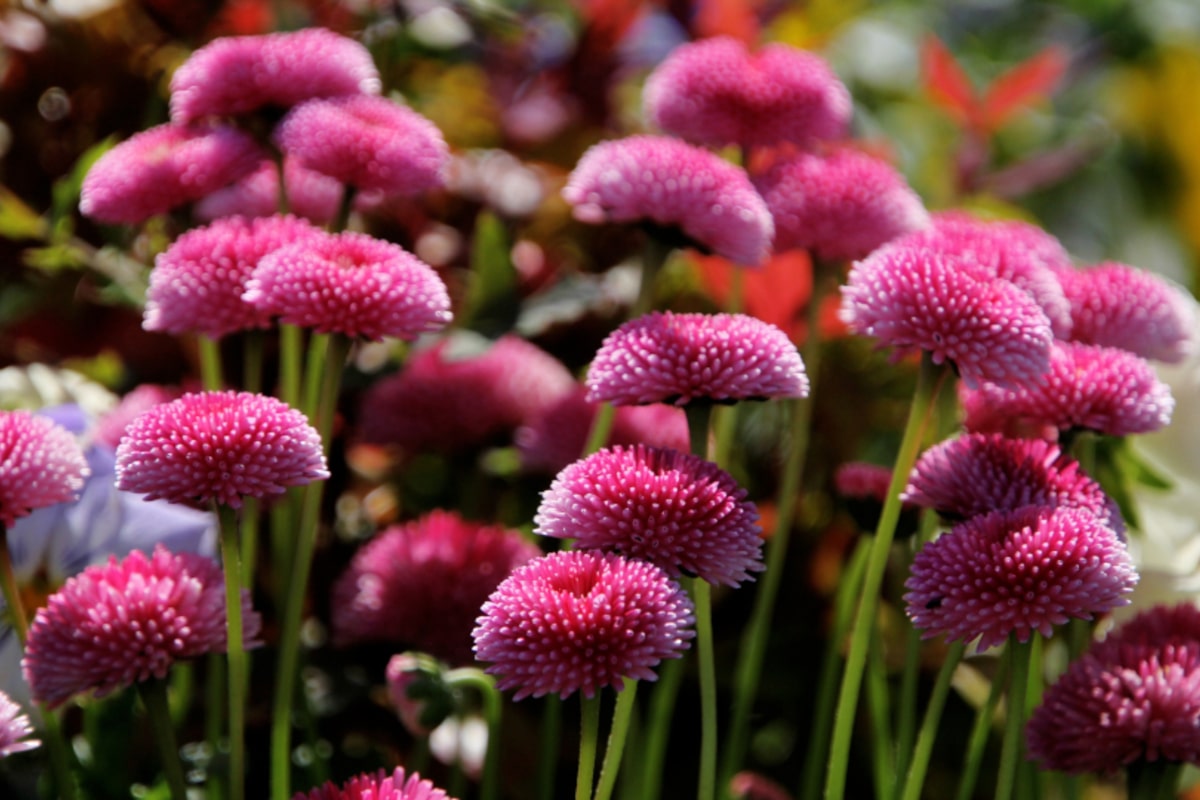
Daisies are some of the most recognizable and beloved flowers in the world, about which you may not have known countless fascinating things. These modest yet charming flowers conceal incredible botanical features, rich cultural history, and amazing properties. From their unique structure to symbolic meanings in different cultures, daisies constantly surprise with their diversity and adaptability. Distributed across almost all continents, these flowers have become an integral part of gardens, meadows, and wildlife. Discover the most interesting facts about these incomparable flowers that adorn our world.
- The name daisy comes from the Old English word “dægeseage”, which means “day’s eye”. This name appeared because daisy flowers open in the morning with the appearance of the sun and close in the evening. This feature was noticed by our distant ancestors, who saw in it a symbol of awakening and renewal of nature.
- A daisy is actually not a single flower but consists of hundreds of tiny florets gathered together. The white “petal” is actually a separate flower, and the yellow center consists of numerous tubular flowers. This structure is called a composite flower and makes the daisy a representative of one of the largest plant families, the asters.
- Daisies are capable of closing their petals not only at night but also before rain or in cloudy weather. This is a natural protective mechanism that shields the pollen from getting wet and being destroyed. Thanks to this feature, daisies have long been used as natural barometers for predicting weather.
- In the Middle Ages, daisies were considered sacred flowers of the Virgin Mary and were often depicted in religious paintings. Their white purity symbolized innocence and divinity, so the flowers were used in church decorations. It is from the name Margaret, associated with the Virgin Mary, that another name for these flowers in many languages originated.
- Daisies contain a large amount of vitamin C and were traditionally used in folk medicine to treat various ailments. Young daisy leaves can be added to salads, and flowers can be used to prepare medicinal teas. In ancient herbals, the daisy is mentioned as a remedy for wounds, bruises, and inflammations.
- Roman surgeons accompanied their legions on campaigns with bags filled with daisies. They used the juice of these flowers to soak bandages with which they dressed the wounds of warriors after battles. The antiseptic properties of daisies were known in ancient times and saved the lives of thousands of soldiers.
- Daisies are capable of growing on practically any soil and withstanding extreme conditions. They can survive at temperatures from minus 20 to plus 40 degrees Celsius. This incredible endurance has made daisies one of the most widespread flowers on the planet.
- In the Victorian era, daisies were used in the language of flowers to convey secret messages. A gifted daisy signified innocence, purity, and faithful love. Young men gave daisies to their chosen ones as a sign of pure and sincere feelings.
- Daisies have an extraordinarily long flowering period that can last from spring to late autumn. One bush can produce up to a hundred flower stalks per season. This feature makes daisies ideal ornamental plants for gardens and parks.
- There is a traditional children’s game with daisies called “loves me, loves me not”. Children pluck the petals of a daisy one by one, saying these words alternately. This game is widespread in many cultures of the world and symbolizes innocent fortune-telling about love.
- Daisies are an important source of nectar for bees and other pollinating insects. Their flowers provide food for insects from early spring to late autumn, when many other plants are no longer blooming. Biologists note that daisies play a critically important role in maintaining populations of beneficial insects.
- In Celtic mythology, daisies were considered flowers of fairies and elves. Ancient Celts believed that when an infant dies, the gods scatter daisies across the earth to console the parents. This belief made the daisy a symbol of innocence and lost childhood in Celtic culture.
- Daisies are capable of producing natural pesticides that protect them from pests. These substances are so effective that scientists are studying the possibility of their use in organic farming. Some gardeners specifically plant daisies next to vegetable crops for natural protection against insects.
- Daisy roots have a unique ability to improve soil structure. They loosen dense earth and enrich it with organic substances after dying. Thanks to this property, daisies are often used for reclamation of damaged or depleted lands.
- In Japanese culture, white daisies are a symbol of purity and truth. Japanese traditionally use these flowers in purification ceremonies and wedding bouquets. The country even has a daisy festival that is celebrated annually in spring.
- Daisies can reproduce both by seeds and vegetatively through division of bushes. One plant is capable of producing thousands of small seeds that are easily carried by wind over great distances. This dual reproduction strategy provides daisies with extraordinary vitality and prevalence.
Daisies continue to captivate us with their simple beauty and incredible properties that science is still discovering today. Interesting facts about these flowers show that even the most ordinary plants can harbor amazing secrets and have deep cultural significance. These modest white flowers with a yellow center remain a symbol of purity, innocence, and joy of life in cultures around the world.


