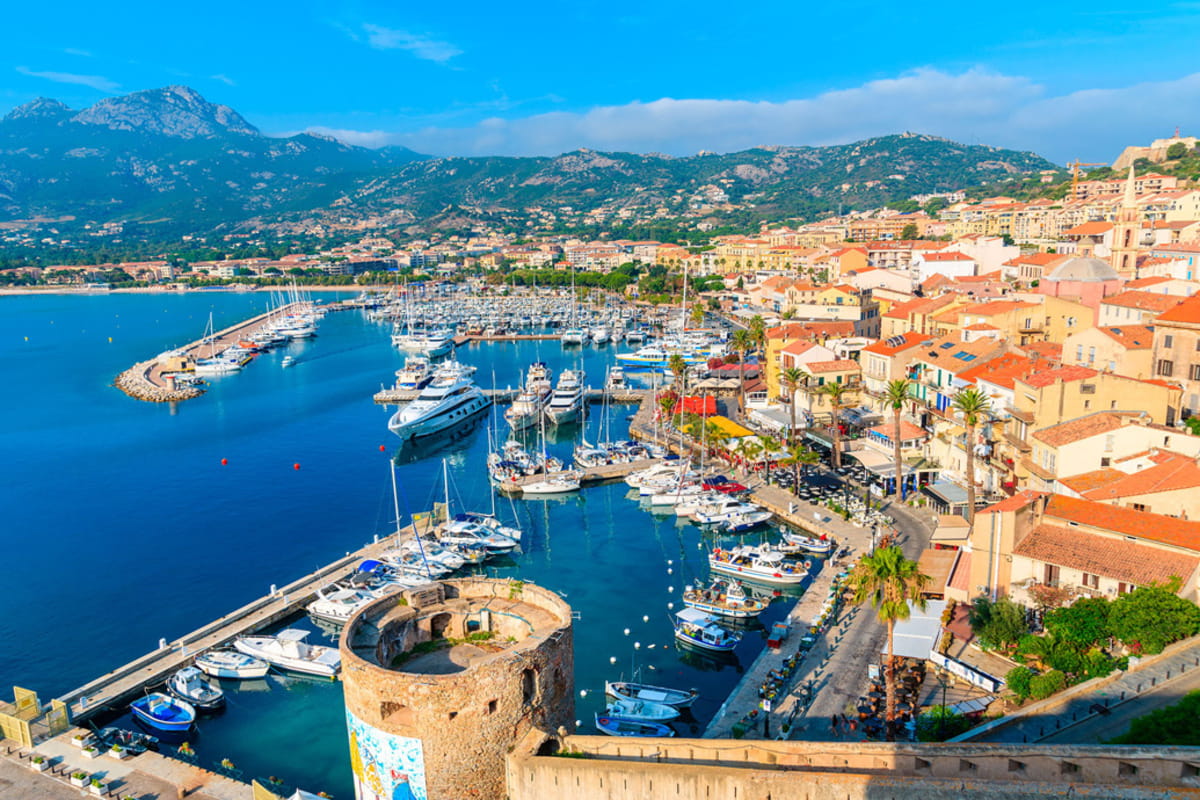
Corsica is far more than just a Mediterranean island—it is a true treasure trove of nature, history, and cultural identity. With its rugged mountain ranges, crystal-clear coves, and ancient hilltop villages, it captivates even the most discerning travelers. You may not have known that Napoleon Bonaparte was born here or that Corsica has its own distinct language, separate from French. Among the countless fascinating details about this island lie secrets that reveal its authentic soul. Here are some of the most captivating.
- Corsica is the fourth-largest island in the Mediterranean Sea, after Sicily, Sardinia, and Cyprus. It covers an area of approximately 8,680 square kilometers, with a coastline stretching over 1,000 kilometers. The island lies about 170 kilometers from mainland France and only 12 kilometers from the Italian island of Sardinia. This unique geographic position has given Corsica a rich blend of cultural influences throughout history.
- Napoleon Bonaparte was born in Ajaccio, Corsica, in 1769—just one year after France formally annexed the island from the Republic of Genoa. Prior to that, Corsica had briefly been an independent republic led by Pasquale Paoli. The house where Napoleon was born is now a museum and one of the island’s most visited landmarks. Locals take pride in their famous native son, though opinions about his legacy remain complex and sometimes ambivalent.
- Corsica has its own language—Corsican (Corsu)—which belongs to the Italo-Dalmatian branch of Romance languages and is closely related to Tuscan Italian rather than French. Although French is the official language, Corsican is taught in schools, used in local media, and heard in everyday conversation, especially in rural areas. In recent years, the French government has increasingly recognized it as a regional language, helping preserve the island’s linguistic heritage.
- Over one-third of Corsica is protected natural territory, making it one of Europe’s most ecologically preserved islands. The Regional Natural Park of Corsica, established in 1972, encompasses the island’s mountainous interior, including Monte Cinto—the highest peak at 2,706 meters. This park shelters rare wildlife such as the Corsican red deer, the endemic Corsican nuthatch, and golden eagles.
- The island boasts a remarkable flora, with hundreds of plant species found nowhere else on Earth. Endemics include the Corsican pine, which grows only on high mountain slopes, and several rare orchids. Wild aromatic shrubs like myrtle, rosemary, and immortelle (helichrysum) cover the hillsides, forming the fragrant maquis that perfumes the air. This botanical richness contributes to Corsica’s nickname: “L’Île de Beauté” (The Island of Beauty).
- Corsica is home to the longest river among all Mediterranean islands—the Tavignano. Flowing for about 80 kilometers from the central mountains to the eastern coast, it carves deep gorges and sustains fertile valleys. Historically, its banks were lined with watermills and stone bridges, many of which still stand today. The river remains a vital source of freshwater and a symbol of the island’s untamed interior.
- Corsican cuisine reflects its geography and history, blending Italian simplicity with mountain and sea traditions. Dishes often feature wild boar, brocciu (a fresh whey cheese similar to ricotta), and prisuttu (dry-cured ham). Chestnut flour, once a staple during famines, is still used in polenta-like dishes and cakes. Corsican honey—especially from the maquis flowers—and wines like Niellucciu and Vermentino are highly prized by connoisseurs.
- Corsica is the only region in France historically associated with the vendetta—a tradition of blood feuds between families. Though largely extinct today, these cycles of revenge were common well into the 20th century, often sparked by disputes over land, honor, or political rivalries. This legacy contributed to the island’s reputation for fierce independence and clan loyalty.
- The Calanches de Piana—dramatic red granite cliffs along the western coast—are among Corsica’s most iconic landscapes and a UNESCO World Heritage Site. Sculpted by wind and sea over millions of years, these formations resemble surreal towers and arches. They are part of the Gulf of Porto, a protected marine and terrestrial zone celebrated for its geological and scenic grandeur.
- Corsica’s coastal waters are among the clearest in Europe, particularly around the Scandola Nature Reserve and the southern tip near Capu di Spergina. Visibility often exceeds 35 meters, making the island a premier destination for snorkeling and diving. Strict environmental protections ban industrial fishing and large-scale development in these zones, preserving marine biodiversity.
- Traditional Corsican polyphonic singing, known as “paghjella,” is performed by three male voices without instrumental accompaniment. Recognized by UNESCO as Intangible Cultural Heritage, this haunting vocal style features a solo voice supported by two harmonizing parts that create rich, resonant chords. Paghjella is sung at religious festivals, weddings, and funerals, embodying the island’s deep spiritual and communal bonds.
- Corsica’s flag features a Moor’s head wearing a white bandana over one eye—a symbol dating back to the 14th century. Originally representing the liberation of Corsica from foreign rule, the blindfolded eye came to signify justice that sees only truth. This emblem appears on everything from souvenirs to official documents and remains a powerful marker of Corsican identity.
- Throughout history, Corsica has been ruled by Carthaginians, Romans, Byzantines, Pisans, Genoese, and finally the French. Each civilization left its mark: Roman ruins dot the countryside, Genoese watchtowers line the coast, and Italian architectural influences are visible in towns like Bastia and Calvi. This layered past makes Corsica a living open-air museum of Mediterranean history.
These remarkable facts about Corsica reveal a land of profound depth—where ancient customs meet modern conservation, and rugged landscapes echo with centuries of resilience. You may not have realized that behind its postcard-perfect vistas lies a spirit of autonomy that pulses through every village and song. These fascinating insights remind us that Corsica is not merely a dot on the map but a vibrant world where nature, memory, and culture intertwine in perfect harmony.


