
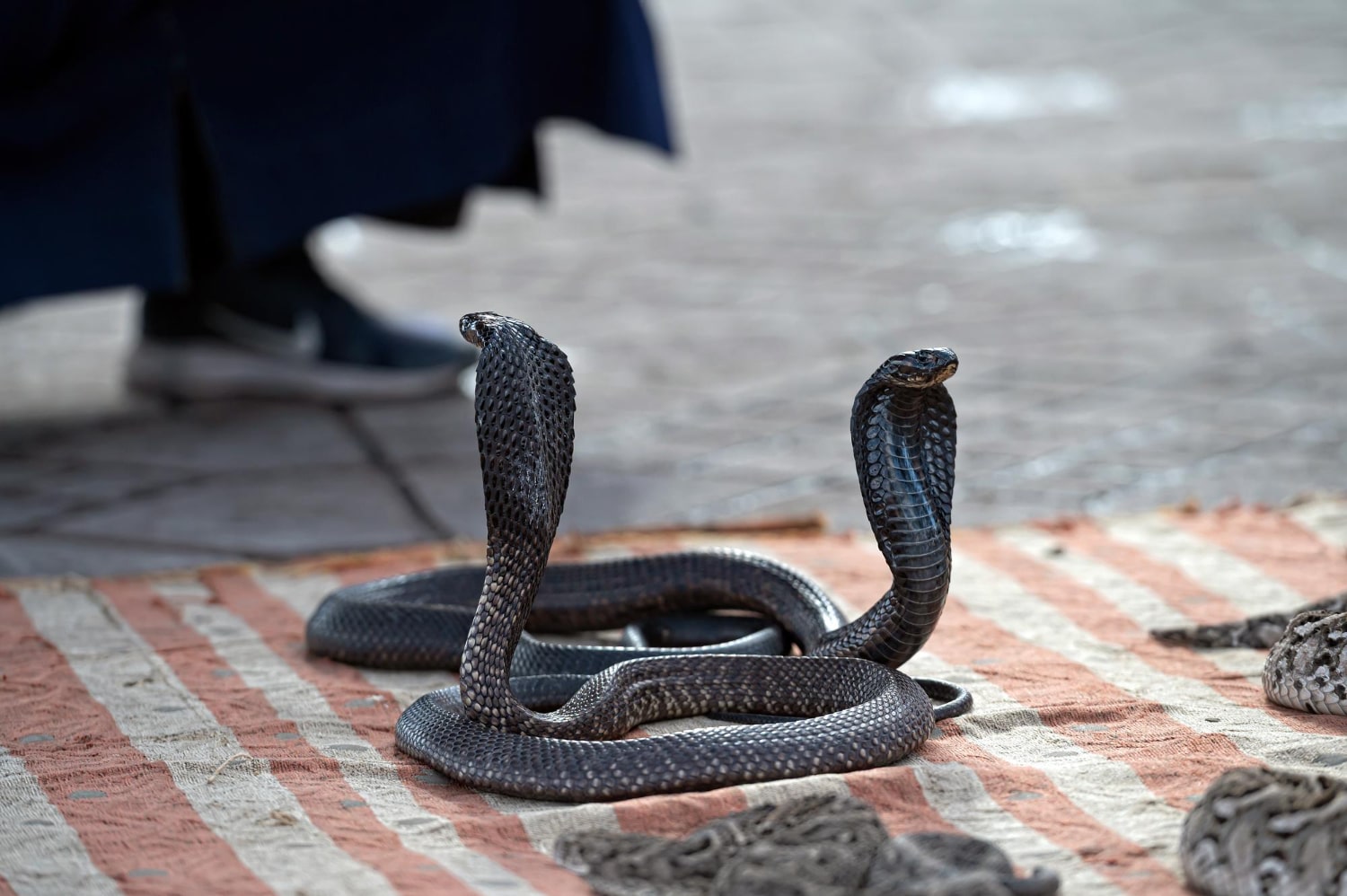
Cobras have fascinated humans for centuries, evoking a mix of fear, respect, and admiration. In many cultures around the world, they have become symbols of danger, power, and mystery. These snakes are known not only for their venom, but also for their complex behavior, advanced defense mechanisms, and remarkable adaptability. Many interesting facts about cobras can surprise even those who are well acquainted with the world of reptiles. You may not know that behind the intimidating appearance of a cobra lies an extremely sophisticated and efficient form of life.
- Cobras belong to the family Elapidae and include several dozen different species. They are widely distributed across Africa, Asia, and the Middle East. Each species differs in coloration, body size, and behavioral traits. This diversity makes cobras a highly varied group rather than a single uniform type of snake.
- The most recognizable feature of cobras is their ability to spread a hood. This behavior serves as a defensive display intended to intimidate potential threats. The hood is formed by the expansion of ribs in the neck region. As a result, the cobra appears much larger and more threatening than it actually is.
- Cobra venom is primarily neurotoxic in nature. It affects the nervous system by disrupting the transmission of signals between nerves and muscles. Without timely medical treatment, a bite can lead to respiratory paralysis. For this reason, cobras are considered among the most dangerous snakes in the world.
- Not all cobras are naturally aggressive toward humans. In most situations, they attempt to avoid confrontation. An attack is usually a last resort when the snake feels cornered or threatened. Fascinating facts about cobras are often connected to their calm yet decisive defensive behavior.
- Some cobra species are capable of spitting venom. They can accurately project venom toward the eyes of an opponent. The venom causes intense pain and may result in temporary or permanent loss of vision. This represents a unique form of long-distance defense among snakes.
- Cobras have relatively well-developed eyesight compared to many other snake species. They can effectively track moving objects in their environment. This explains their response to the movement of a snake charmer’s flute. In reality, the cobra reacts to motion rather than to sound or music.
- When faced with danger, cobras display complex warning behaviors. They raise the front part of their body, sway from side to side, and emit a loud hiss. These actions are intended as a warning signal. You may not know that such displays are meant to prevent a bite rather than initiate one.
- The size of cobras varies greatly depending on the species. Some reach only about one meter in length, while others exceed five meters. The king cobra is the longest venomous snake in the world. Its impressive size allows it to dominate many other reptiles.
- The king cobra has a highly specialized diet. It feeds primarily on other snakes, including venomous ones. This specialization places it at the top of the food chain among snakes. It is one of the incredible facts that highlights the uniqueness of this species.
- Cobras play an important role in maintaining ecological balance. They help control populations of rodents and other small animals. This indirectly reduces the spread of certain diseases. Even where they are feared, cobras provide significant ecological benefits.
- Cobra reproduction has distinctive characteristics. Most species lay eggs, but some display elements of parental care. The king cobra is known to build a nest and guard its eggs. Such behavior is extremely rare among snakes.
- Young cobras are born fully venomous. Although the quantity of venom is smaller, its effects are still dangerous. Defensive instincts are present from the earliest stages of life. This greatly increases their chances of survival in the wild.
- Cobras are capable of adapting to life near human settlements. They are often found close to villages and cities. The primary reason is the abundance of prey such as rodents. This proximity frequently leads to conflicts between humans and snakes.
- In many cultures, the cobra holds strong symbolic meaning. In India, it is regarded as a sacred animal. The cobra is associated with protection, strength, and rebirth. These beliefs have developed and persisted over thousands of years.
- Cobras possess a highly effective sense of smell that functions through their tongue. By flicking it, they collect chemical particles from the air and ground. This allows them to locate prey and navigate their surroundings. The mechanism is extremely efficient and precise.
- The lifespan of cobras in the wild typically ranges from 15 to 20 years. In captivity, they can live even longer. The main threats they face are predators and human activity. Despite these challenges, many cobra populations remain stable.
- Cobras are able to control the amount of venom they inject. Sometimes they deliver so-called dry bites without releasing venom. This behavior helps conserve their valuable venom supply. It demonstrates a high level of biological adaptation.
- The skin of cobras is shed regularly throughout their lives. During the shedding period, they tend to be less active. The new skin provides improved protection and sensitivity. Shedding is a crucial part of their life cycle.
Cobras are a striking example of how nature combines danger with perfection. Interesting facts about them reveal that these snakes are far more complex than they appear at first glance. Incredible facts and fascinating details present cobras as an essential part of natural ecosystems. If you look more closely, you may discover just how carefully balanced and impressive their role in the living world truly is.


