
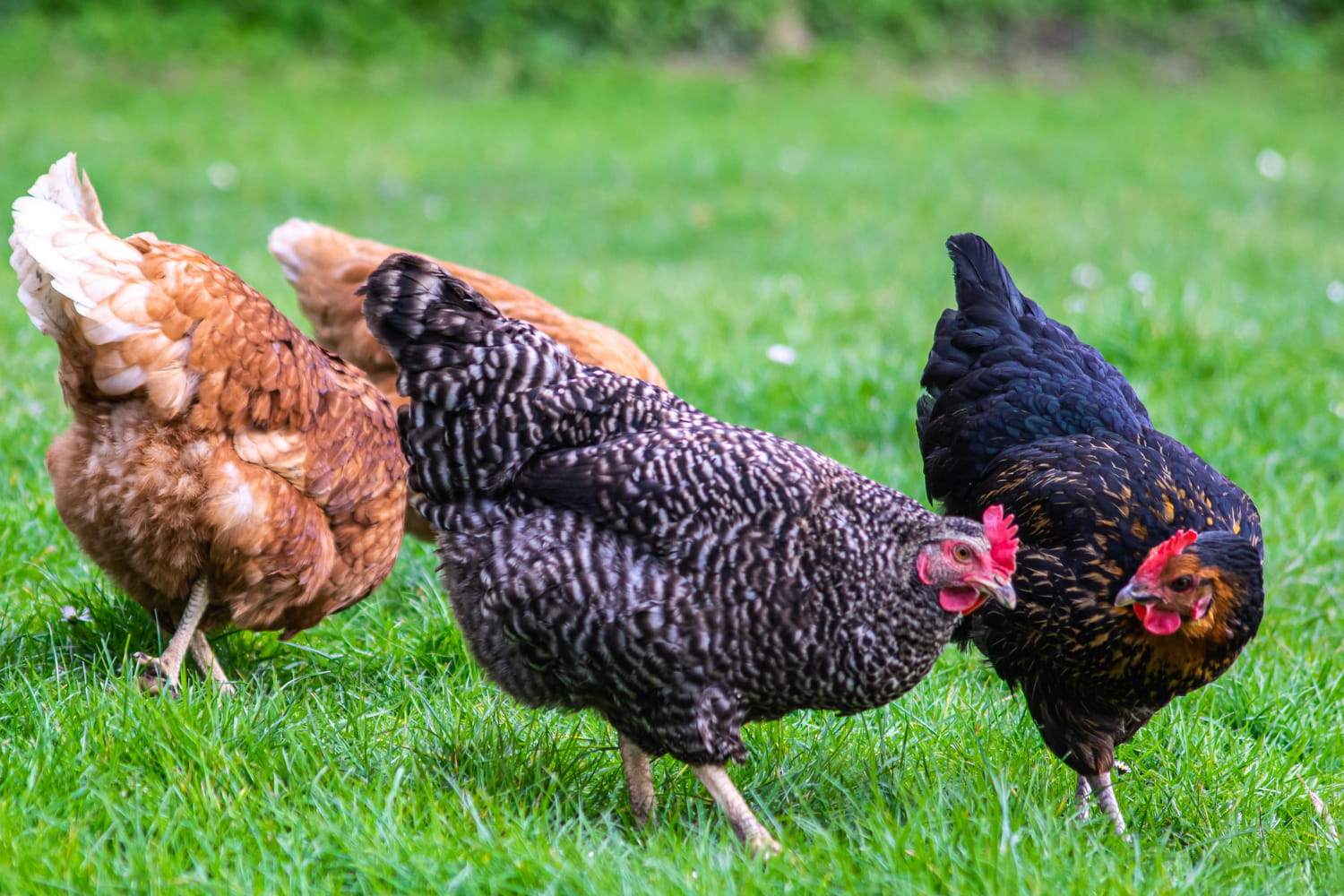
Chickens have accompanied humanity for thousands of years and have become the most widespread domestic birds on the planet, yet these seemingly simple creatures conceal numerous amazing secrets. Despite the fact that chickens are a familiar part of agriculture and daily life for billions of people, most of us know about them at a surprisingly superficial level. From complex social behavior to impressive cognitive abilities, from unique physiological features to cultural significance in various civilizations, chickens turn out to be far more interesting than one might imagine. You may not have known about the incredible facts that demonstrate these birds deserve significantly more respect and attention than is usually given to them. We invite you to discover fascinating facts about chickens that will forever change your attitude toward these amazing feathered creatures.
- Chickens are the most numerous birds on Earth, their population exceeding 33 billion individuals at any given moment. This means there are approximately four times more chickens than people on the planet. More than 65 billion chickens are raised and consumed annually, making them the most important source of animal protein for humanity. Such an enormous quantity has led to chicken bones becoming one of the most common fossils of the modern era, which future archaeologists will certainly discover as a marker of our civilization.
- The ancestor of all modern domestic chickens is the wild red junglefowl from Southeast Asia, domesticated approximately 8,000 years ago. The domestication process began in the territories of modern-day Thailand and Vietnam, where local tribes started breeding these birds initially for entertainment in the form of cockfighting. Only later did people realize the nutritional value of chickens and their eggs. Genetic research shows that all chicken breeds, from tiny bantams to huge Brahmas, originate from this single species of wild bird.
- Chickens are capable of distinguishing over 100 different faces of their fellow chickens and even humans. This testifies to the complex social structure and excellent visual memory of these birds. Chickens can remember people who treated them well or badly and change their behavior accordingly. Studies have also shown that chickens can recognize faces in photographs and distinguish them from unfamiliar faces, which indicates complex cognitive processes.
- The pecking order in a chicken flock is an actual scientific term describing a complex social structure. Each chicken knows its place in this hierarchy, and dominant birds have advantages in accessing food, roosting spots, and nests. This system can be very harsh, and birds on lower rungs often experience stress and aggression. Interestingly, position in the hierarchy is not always determined by size or age, but rather by the personality and confidence of an individual chicken.
- Chickens can see and distinguish colors better than humans, including the ultraviolet light spectrum. Their eyes have five types of light-sensitive cones compared to three in humans, which allows them to perceive shades invisible to us. This explains why roosters and hens often have such bright and colorful plumage that looks even more impressive in their perception. Chickens can also see with each eye separately and have an almost 300-degree viewing angle without needing to turn their heads.
- A chicken can lay an egg once every 24-26 hours thanks to a complex hormonal cycle. The egg formation process takes about 24-25 hours, with most of this time going to shell formation. This is precisely why chickens usually lay eggs at approximately the same time each day. The record productivity of one chicken is 371 eggs per year, although the average layer produces 250-300 eggs annually.
- Chickens are capable of elementary mathematics and can perform simple arithmetic operations better than three-year-old children. In experiments, chicks demonstrated understanding of quantity and could compare groups of objects. They are also capable of ordinal learning, understanding concepts of more and less. Studies have shown that even one-day-old chicks can add and subtract small quantities of objects, which testifies to innate mathematical abilities.
- Chickens have complex vocal communication with over 30 different types of sounds for transmitting information. They have separate alarm signals for ground predators and aerial threats, and other chickens respond accordingly. A mother hen communicates with her chicks even before they hatch, and chicks respond to her from inside the egg. Roosters also use various calls to announce found food, attract hens, or establish territoriality.
- A chicken’s heart beats at a frequency of 220 to 360 beats per minute, which is incredibly fast compared to the human heart. Such a high heart rate is necessary to maintain high metabolism and constant activity. The body temperature of chickens is about 41-42 degrees Celsius, which is higher than human temperature. During stress or excitement, heart rate can increase even more, sometimes exceeding 400 beats per minute.
- The longest recorded chicken flight distance was 301 meters, and the greatest flight height reached almost 10 meters. Despite the widespread belief about chickens’ inability to fly, they actually can rise into the air for short distances. Wild ancestors of domestic chickens regularly fly up to trees for roosting to avoid ground predators. Selective breeding aimed at increasing meat and egg productivity has decreased the flight abilities of modern breeds.
- Chickens can remember the path to food and hide information from other birds, demonstrating tactical intelligence. Studies have shown that chickens are capable of deception, when dominant birds may pretend they found food in one place to distract competitors from the real source. They also remember places where they found food before and can return there again. Such behavior indicates the presence of theory of mind and understanding that other birds have their own thoughts and intentions.
- Chicks develop brain lateralization while still inside the egg due to asymmetric positioning. During incubation, the chick is positioned so that the right eye faces light through the shell, while the left remains in darkness. This leads to specialization of brain hemispheres, where the left hemisphere better processes categorization and detailed analysis, while the right is responsible for reaction to predators. Such early brain specialization helps chicks more effectively perform various tasks immediately after hatching.
- Chickens are capable of feeling pain and emotional stress, demonstrating empathy toward other birds. Scientific research has confirmed that a mother hen shows signs of stress when her chicks experience discomfort, even if she herself is safe. The mother’s heart rate increases and eye temperature decreases, which are physiological signs of an empathetic response. This refutes outdated notions about chickens as primitive creatures without emotions.
- An eggshell consists of approximately 17,000 tiny pores that allow gas exchange for embryo development. Through these pores, oxygen enters the egg interior, while carbon dioxide and moisture exit. Shell color is determined by the chicken breed and does not affect the egg’s nutritional value. White eggs are laid by chickens with white earlobes, and brown eggs are usually laid by chickens with red earlobes, although there are exceptions to this rule.
- A rooster crows about 15 times per day, and the loudness of his call can reach 130 decibels at a distance of one meter. This is approximately as loud as the sound of a jet engine from close range and can cause hearing damage in humans. The rooster himself does not go deaf thanks to special tissue covering his ear during crowing, acting as natural protection. Crowing performs several functions, including establishing territory, synchronizing the flock, and demonstrating dominance.
- Chickens have a third eyelid known as the nictitating membrane, which moves horizontally across the eye. This semi-transparent membrane cleans and moistens the eye without completely obstructing vision. The nictitating membrane is especially useful during food gathering, protecting eyes from dust and small particles. Humans lost this structure in the evolutionary process, but we have a small remnant left in the inner corner of the eye.
- A chicken can live from 5 to 10 years in natural conditions, although industrial layers are usually used for only 1-2 years. The oldest recorded chicken lived 16 years and died from heart failure. As chickens age, they lay less intensively, which makes them economically unprofitable for commercial production. In home conditions with good care, chickens can live their full natural lifespan and even lay occasional eggs in old age.
- Chickens have the ability to anticipate future events and can delay immediate gratification for a larger reward. In experiments, chickens demonstrated self-control, waiting longer for a greater amount of food instead of taking a smaller portion immediately. This indicates complex cognitive processes, including planning and evaluating future outcomes. Such behavior was previously considered inherent only to primates and some other highly developed animals.
- In some cultures, chickens are considered sacred or have special symbolic significance. In ancient Rome, priests used the behavior of sacred chickens to predict the future before important battles. In many African and Asian cultures, chickens are used in religious rituals and ceremonies. In the Chinese zodiac, the year of the rooster symbolizes honesty, energy, and confidence, and people born in this year are considered hardworking and observant.
- Chicks can learn through observing their mother and other adult birds, demonstrating cultural transmission of knowledge. They learn which food is safe, where to find water, and how to avoid danger by watching adult behavior. This is a form of social learning that is not genetically encoded but passed from generation to generation. This type of learning was previously considered characteristic only of mammals and some bird species such as crows and parrots.
Incredible facts about chickens demonstrate that these birds are far more complex and intelligent creatures than is commonly believed in modern society. From impressive cognitive abilities to emotional depth and complex social behavior, chickens deserve a reconsideration of their place in our world. Interesting facts about these amazing birds remind us of the importance of respectful treatment toward all living beings with whom we share the planet. Now, having learned about the fascinating features of chickens, you will certainly look at these feathered creatures with completely different eyes and perhaps think about their true place in nature and our lives.


