
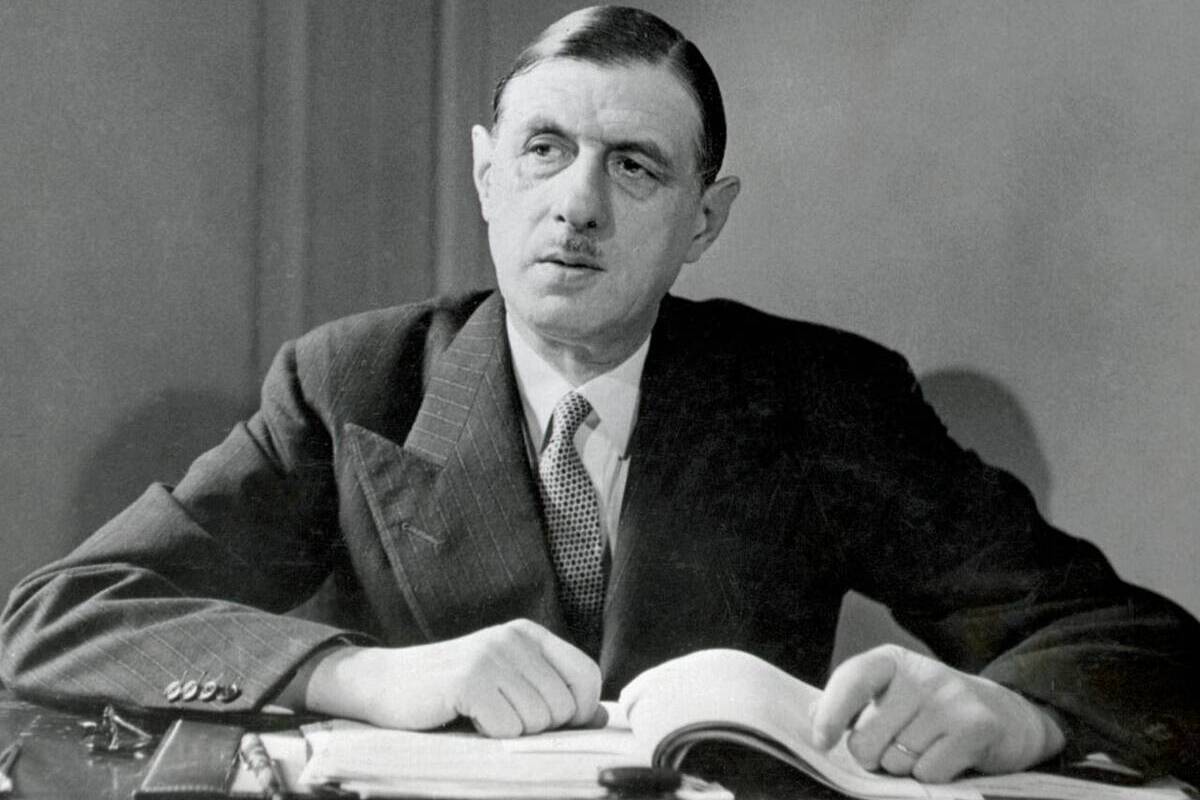
Charles de Gaulle is one of the most outstanding and influential figures in French and world history of the twentieth century, whose name is forever associated with the French Resistance, the rebirth of the nation and the creation of the Fifth Republic. This charismatic leader, military strategist and statesman played a decisive role in liberating France from Nazi occupation and shaping postwar Europe. Incredible facts about Charles de Gaulle reveal to us a figure complex, contradictory and at the same time extraordinarily determined, who was guided by deep patriotism and unwavering faith in the greatness of the French nation. From early military years to the presidency, from the dramatic call to resistance in 1940 to revolutionary reforms and foreign policy initiatives, de Gaulle demonstrates an extraordinary combination of military valor, political wisdom and personal courage. Get ready to learn fascinating details about this outstanding French leader, as you might not have known most of these striking features of the life and activities of the man who forever changed the face of France and influenced the course of world history.
- Charles de Gaulle was born on November 22, 1890 in Lille into the family of history and literature teacher Henri de Gaulle. His family was deeply Catholic and patriotic, which shaped the worldview of the future leader from early childhood. De Gaulle’s father taught at a Jesuit college and instilled in his son a love of French history and literature. From a young age, Charles dreamed of a military career and restoring French glory after defeat in the Franco-Prussian War of 1870-1871.
- De Gaulle had an extraordinarily tall stature for his time and reached 196 centimeters, which made him a noticeable figure in any situation. His height became the subject of numerous jokes, and opponents ironically called him the great asparagus or the great charlatan. De Gaulle himself used his height to create commanding presence and authority. His physical grandeur perfectly corresponded to his ambitions regarding the greatness of France.
- During World War I, de Gaulle was wounded three times and mentioned five times in orders for bravery. In the Battle of Verdun in 1916, he was seriously wounded and captured by the Germans. De Gaulle spent 32 months in German prisoner-of-war camps, where he made five unsuccessful escape attempts. In captivity, he studied German, read military literature and reflected on the lessons of war.
- De Gaulle was one of the first military theorists who foresaw the revolutionary role of tanks and mechanized warfare in future conflicts. In 1934, he published the book Vers l’armée de métier, where he advocated for creating a professional army with powerful tank forces. His ideas were ignored by French military command, which relied on the static Maginot Line. German generals, on the contrary, carefully studied his works and used these concepts during the blitzkrieg of 1940.
- On June 18, 1940, after France’s capitulation to Nazi Germany, de Gaulle delivered his famous call to resistance from London. This historic BBC radio address became a symbol of French resistance and refusal to accept defeat. De Gaulle called on the French to continue the fight and stated that France had lost a battle but had not lost the war. Few heard this speech live, but it became legendary and defined his role as leader of Free France.
- The Vichy regime, collaborating with the Germans, sentenced de Gaulle to death in absentia for desertion and treason. His property was confiscated and his family suffered persecution. De Gaulle’s wife Yvonne and their children initially remained in France but later fled to England. Despite personal danger, de Gaulle never wavered in his decision to continue the fight against the Nazis.
- Relations between de Gaulle and British Prime Minister Winston Churchill were complex and often tense. Churchill recognized de Gaulle as leader of Free France but was often irritated by his pride and intransigence. De Gaulle, for his part, suspected the British of attempting to control France and its colonial possessions. Their relationship was characterized by mutual respect but also frequent conflicts and diplomatic clashes.
- De Gaulle’s relations with American President Franklin Roosevelt were even worse than with Churchill. Roosevelt long refused to recognize de Gaulle as the legitimate representative of France and supported other French leaders. The American president considered de Gaulle too authoritarian and egocentric. De Gaulle, in turn, resented American patronage and sought to assert France’s independence and sovereignty in relations with the Allies.
- In 1944, de Gaulle triumphantly returned to liberated Paris and on August 26 conducted a historic march down the Champs-Élysées. Millions of Parisians took to the streets to greet their national hero and symbol of resistance. During the parade, gunfire suddenly broke out, probably from collaborationist snipers, but de Gaulle imperturbably continued walking. This demonstration of personal courage further strengthened his authority and legendary status.
- After France’s liberation, de Gaulle headed the provisional government and carried out important reforms, including granting women the right to vote. He also nationalized key industries and created a social security system. However, in 1946, de Gaulle suddenly resigned due to disagreements regarding the constitution of the Fourth Republic. He believed that the parliamentary system was too weak for effective governance of France.
- For twelve years, de Gaulle was in political retirement at his estate in Colombey-les-Deux-Églises. There he wrote his memoirs, which became a classic of twentieth-century political literature. His three-volume work War Memoirs demonstrates his literary talent and deep understanding of history. De Gaulle also closely followed political events and waited for an opportunity to return to power.
- In 1958, during the Algerian crisis that brought France to the brink of civil war, de Gaulle returned to power. He was appointed prime minister with extraordinary powers to draft a new constitution. De Gaulle created the Fifth Republic with strong presidential power, where the president was initially elected by an electoral college, and from 1962 by direct popular vote. This constitutional system functions in France to this day.
- De Gaulle made the complex and controversial decision to grant independence to Algeria, despite resistance from a significant portion of the French army and colonists. This decision led to the creation of the terrorist organization OAS, which carried out several assassination attempts on the president’s life. The most famous attempt occurred in Petit-Clamart in 1962, when machine gun fire hit the presidential car, but de Gaulle and his wife miraculously escaped injury. This episode became the basis for the novel and film The Day of the Jackal.
- De Gaulle’s foreign policy was characterized by a desire for France’s independence from both Cold War blocs. In 1966, he withdrew France from NATO’s military structure, although the country remained a member of the alliance. De Gaulle also developed the French nuclear program force de frappe, which was to ensure the country’s strategic independence. He sought to create a Europe from the Atlantic to the Urals and establish dialogue between West and East.
- De Gaulle twice vetoed Britain’s entry into the European Economic Community in 1963 and 1967. He believed that Britain was too closely connected with the United States and could turn the EEC into a Trojan horse of American influence. De Gaulle aspired to a Europe that would be independent of American domination. His vision of European integration envisioned cooperation of sovereign states rather than a federalist superstructure.
- In May 1968, France was shaken by mass student protests and a general strike that swept the entire country. De Gaulle initially seemed confused by events and even secretly traveled to Germany for consultations with General Massu. However, he quickly returned, dissolved parliament and held early elections in which his party won a convincing victory. However, these events undermined his authority and showed the rise of a new generation that did not share his values.
- In April 1969, de Gaulle proposed a referendum on senate reform and regionalization, putting his presidency at stake. When 52 percent of French people voted against, he immediately resigned without waiting for the end of his term. De Gaulle believed he had lost the confidence of the people and could no longer effectively lead the country. This decision demonstrated his consistency and devotion to democratic principles.
- After resignation, de Gaulle returned to his rural estate in Colombey, where he spent the last years of his life in seclusion. He continued working on his memoirs and recollections but refused any public activity. De Gaulle died on November 9, 1970 from a ruptured aortic aneurysm at age 79. According to his will, the funeral was modest and took place in his native village without the presence of state leaders.
- De Gaulle’s personal life was marked by the tragedy of his younger daughter Anne, who was born with Down syndrome. De Gaulle and his wife Yvonne devoted much time and attention to caring for Anne, who died at age twenty in 1948. This personal tragedy deeply affected de Gaulle and made him more sensitive to the suffering of others. After Anne’s death, de Gaulle established a charitable foundation to help children with disabilities.
- De Gaulle was a talented writer and author of numerous books on military strategy, history and politics. His literary style was distinguished by grandeur, classical clarity and use of the third person to refer to himself. He wrote in the tradition of great French memoirists and historical authors. His works continue to be studied in military academies and universities around the world.
- De Gaulle’s legacy in France remains ambiguous, but his contribution to French and European history is undeniable. He saved France’s honor during World War II, modernized the country and created a stable political system. Charles de Gaulle Airport in Paris, an aircraft carrier and numerous streets and squares throughout France are named in his honor. The political philosophy of Gaullism continues to influence French politics and foreign policy thinking.
These fascinating facts about Charles de Gaulle demonstrate the extraordinary complexity and multifaceted nature of a leader’s personality who combined unwavering patriotism with political pragmatism, personal courage with state wisdom. Each aspect of his life and activity reflects deep understanding of history, unwavering faith in the greatness of the French nation and willingness to make difficult decisions for national interests. The incredible figure of de Gaulle reminds us of the power of leadership, the importance of principles and the ability of one person to change the course of history, leaving behind a legacy that continues to influence the modern world and inspire future generations to serve their country and its ideals.


