
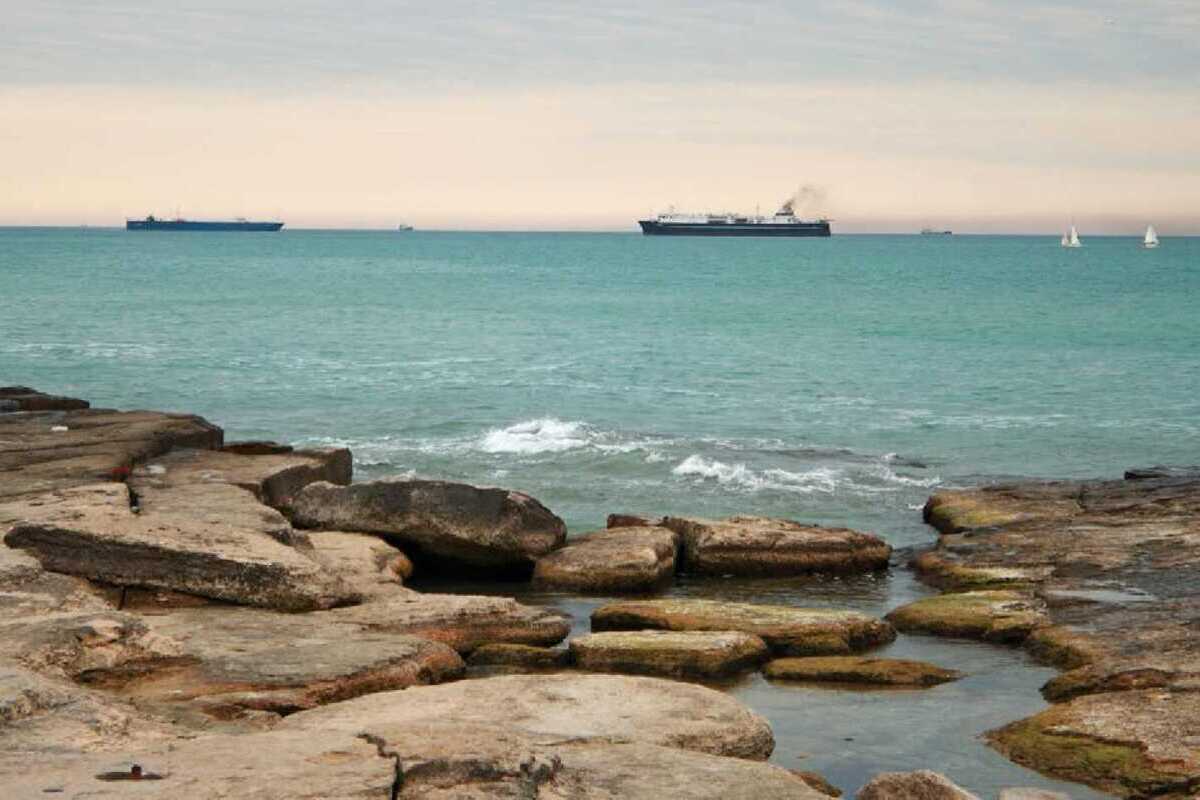
The Caspian Sea stands as one of nature’s most fascinating enigmas blending characteristics of both seas and lakes to create a unique ecosystem found nowhere else on Earth. This largest enclosed inland body of water stretches between Europe and Asia like a vast silver mirror holding secrets from millions of years of geological and biological evolution. Amazing facts about the Caspian Sea reveal a world where salinity transforms from nearly freshwater in the north to almost oceanic levels in the south while its waters shelter relic species dating back to the Ice Age. You might not know that this remarkable water body serves as the cradle for valuable fish species and represents an immense energy treasure for surrounding nations. Fascinating facts about the Caspian Sea illuminate why this region has become one of the most strategically significant geopolitical hubs of our time.
- The Caspian Sea holds the distinction of being the world’s largest enclosed inland water body covering approximately three hundred eighty six thousand square kilometers an area exceeding that of many sovereign nations. It extends twelve hundred kilometers from north to south and reaches a maximum width of about four hundred kilometers from west to east. Despite its name the Caspian is not technically a sea in geographical terms since it lacks any connection to the World Ocean. This isolation has fostered the development of a distinctive ecosystem evolving independently from other aquatic environments for millions of years.
- Salinity levels within the Caspian Sea vary dramatically across different regions representing an exceptionally rare phenomenon for such a massive water body. In the northern section where the Volga River empties its freshwater flow salinity measures barely one part per thousand nearly equivalent to freshwater conditions. By contrast southern waters reach salinity levels of thirteen parts per thousand approaching typical oceanic concentrations. This gradient creates diverse ecological niches supporting organisms with vastly different environmental requirements. Such variation enables the Caspian to sustain extraordinary biodiversity including numerous species found exclusively within its waters.
- The Caspian Sea provides the only habitat on Earth for the Caspian seal an endemic species that separated from its Arctic relatives during the Ice Age more than twenty thousand years ago. These seals have successfully adapted to life in a completely landlocked water body developing unique behavioral traits distinguishing them from other seal species worldwide. They reproduce on ice sheets forming during winter months in the northern Caspian a remarkable phenomenon for a region with predominantly temperate climate conditions. Today this species faces serious extinction threats due to water pollution declining ice coverage linked to climate change and habitat degradation.
- The sea has earned global recognition for its sturgeon populations which supplied the world market with natural black caviar for centuries. Historically the Caspian produced more than ninety percent of all black caviar traded internationally thanks to five principal sturgeon species inhabiting its waters. However excessive fishing industrial pollution and dam construction on rivers flowing into the sea triggered catastrophic population declines among these ancient fish. All Caspian sturgeon species now appear on endangered species lists making their conservation and reproduction a priority for all littoral states.
- Five nations border the Caspian Sea Russia Kazakhstan Turkmenistan Iran and Azerbaijan creating a unique situation in international law regarding resource management and territorial boundaries. The legal status of the Caspian whether classified as a sea or lake remained contested for decades since this designation directly impacted rights to resource extraction and maritime borders. Only in twenty seventeen did all five coastal countries sign the Convention on the Legal Status of the Caspian Sea resolving most longstanding disputes. This landmark agreement established a framework for environmental protection and sustainable resource utilization across the region.
- The Caspian seabed contains some of the world’s most substantial petroleum and natural gas reserves making the region strategically vital to global energy markets. Proven oil reserves exceed thirty billion tons while natural gas deposits surpass ten trillion cubic meters. Resource extraction began as early as the nineteenth century when the world’s first offshore oil wells were drilled on the Absheron Peninsula in Azerbaijan. Today the oil and gas sector forms the economic backbone for most littoral states though extraction activities pose significant environmental risks to the fragile Caspian ecosystem.
- Water levels in the Caspian Sea have undergone continuous fluctuations throughout recorded history significantly impacting coastal ecosystems and human settlements. The twentieth century witnessed dramatic changes including a nearly three meter drop between the nineteen nineties and two thousand five. These variations result from complex interactions among climatic factors river discharge patterns and tectonic activity beneath the region. Recent scientific studies indicate that global warming combined with reduced Volga River inflow could lower sea levels by seven to eight additional meters by century’s end potentially triggering catastrophic consequences for coastal communities and ecosystems.
- The Caspian Sea possesses a remarkable geological history as a remnant of the ancient Tethys Ocean which existed during the Mesozoic Era more than one hundred million years ago. Approximately five million years ago during the Alpine orogeny the Caspian became separated from the world ocean transforming into an isolated inland water body. This evolutionary history explains the presence of relict species sharing common ancestry with marine fauna of the World Ocean. Beyond sturgeons and seals these living fossils include certain crustacean and mollusk species that have survived since prehistoric times.
- The northern Caspian region features exceptionally shallow waters where depths often remain under five meters hundreds of kilometers from shore. This area receives the majority of freshwater inflow from the Volga River carrying enormous sediment loads that continuously reshape the seabed configuration. These conditions foster extensive delta formations wetlands and lagoons serving as crucial breeding grounds for millions of migratory birds traversing continental flyways. These wetlands have received international recognition under the Ramsar Convention highlighting their global ecological significance.
- The Caspian Sea provides habitat for more than one hundred fish species the majority being endemic meaning they exist nowhere else on our planet. Beyond sturgeons notable endemic species include the Caspian salmon the vimba bream and various cyprinid species uniquely adapted to local conditions. Many of these fish have evolved specialized adaptations to cope with fluctuating salinity levels and seasonal water level variations characteristic of the Caspian environment. Contemporary ecological challenges however threaten the survival of numerous endemic species particularly those requiring pristine water conditions for successful spawning.
- The Caspian ecosystem confronts serious environmental threats including pollution from petroleum products heavy metals and agricultural runoff. The Volga River delivers massive quantities of contaminants into the sea having collected waste from territories comprising over one quarter of European Russia. Dam construction on rivers feeding the Caspian has disrupted natural migration routes especially for sturgeon species requiring access to upstream spawning grounds. International organizations actively develop ecosystem restoration programs though addressing these challenges demands coordinated efforts from all five littoral nations.
- The Caspian Sea holds significant historical and cultural importance having served as part of the Great Silk Road and a crossroads of civilizations for millennia. Its shores were inhabited during antiquity with Greek and Roman historians documenting the region under the name Hyrcania. During medieval times Caspian ports functioned as vital commercial centers where merchants from Europe Asia and the Middle East converged to exchange goods and ideas. Today the coastline features numerous historical monuments testifying to the region’s rich cultural heritage including ancient fortresses mosques and settlements spanning multiple historical eras.
- Climate conditions surrounding the Caspian Sea vary considerably depending on latitude and proximity to water creating distinctive microclimates across the region. Northern shores experience continental climate patterns featuring cold winters and warm summers while southern areas enjoy subtropical conditions with mild winters. The sea itself functions as a natural temperature regulator moderating climatic extremes across coastal territories. This moderating influence enables cultivation of citrus fruits grapes and other heat loving plants in southern Caspian regions impossible to grow in other locations at similar latitudes.
- The Caspian Sea serves as an important transportation corridor linking Europe with Central Asia and the Caucasus through integrated river sea navigation systems. The Volga Caspian Canal enables vessels to travel from the Black Sea through the Volga River to the Caspian creating an uninterrupted waterway between Europe and Asia. This route gains increasing significance in international trade particularly following development of the International North South Transport Corridor. Maritime traffic however introduces ecological risks including fuel pollution and the spread of invasive species through ships ballast water discharges.
- Coastal regions of the Caspian Sea are renowned for unique therapeutic resources particularly mineral rich mud deposits and natural springs utilized extensively in sanatorium and spa treatments. Caspian brine contains abundant microelements and finds widespread application in cosmetics and dermatology for treating various skin conditions. Numerous health resorts operate throughout the region offering treatments for musculoskeletal disorders nervous system conditions and respiratory ailments. These natural resources constitute an important economic component for coastal areas attracting thousands of visitors seeking wellness treatments annually.
Fascinating facts about the Caspian Sea convince us that this water body represents far more than a geographical feature it functions as a living entity intricately connected to the fate of millions of people and countless species. It reminds us that even the most abundant natural resources demand careful stewardship and international cooperation for their preservation across generations. Studying the Caspian provides invaluable lessons about humanity’s relationship with nature amid mounting global ecological challenges. Every drop of its water carries within it the legacy of millions of years and the responsibility for an entire region’s future prosperity.


