
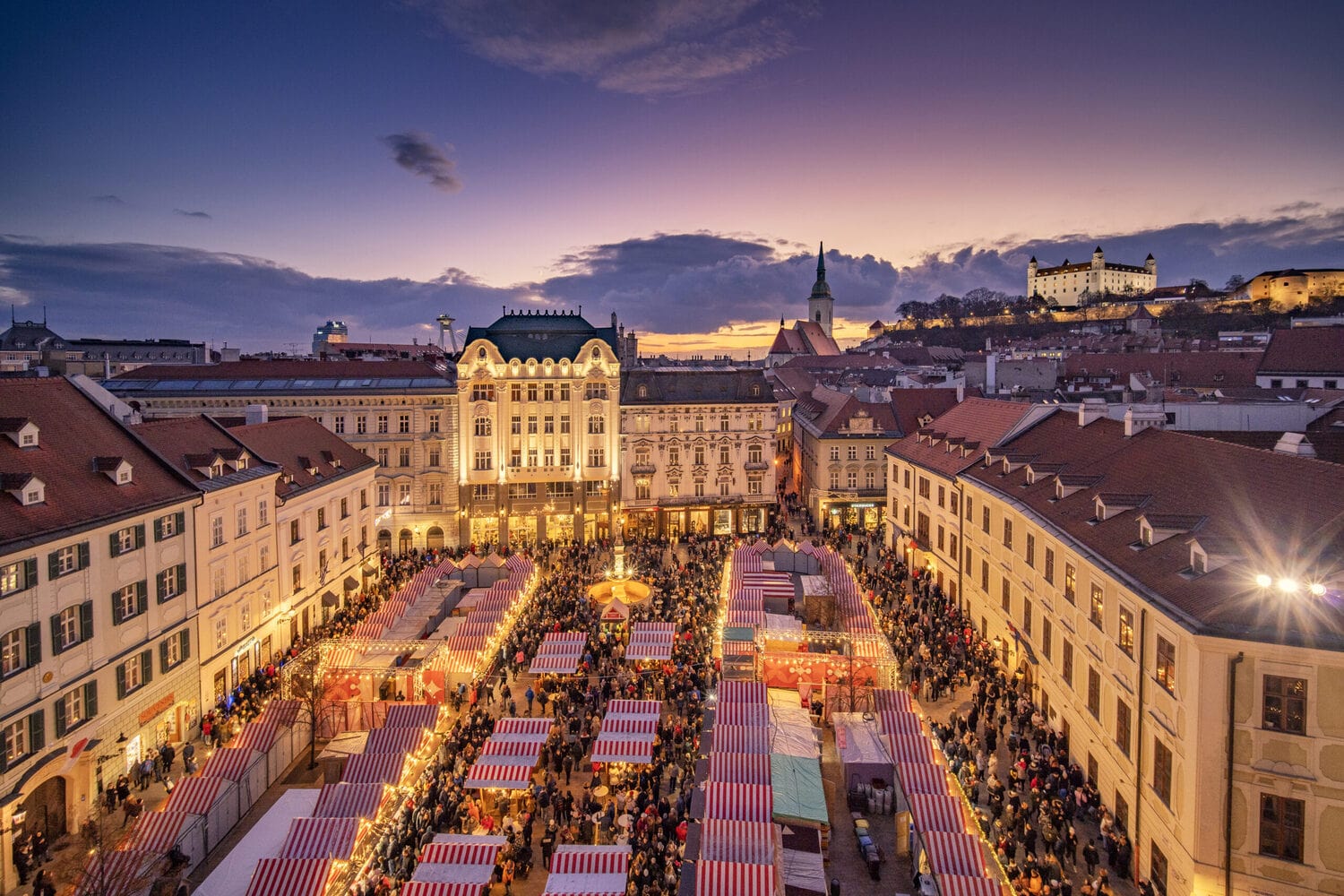
Bratislava is a remarkable European city that blends rich history, modern culture and a distinctive atmosphere. It is a capital where the medieval spirit has been preserved, and where picturesque architecture harmonises with the vibrant rhythm of contemporary urban life. Walking through the city, one can notice traces of various eras, nations and traditions that have shaped its character over centuries. You might not know that Bratislava holds many unusual geographical, cultural and historical features. These interesting facts help reveal the unique identity of Slovakia’s capital.
- Bratislava is the only capital city in the world that borders two different countries at once. It lies directly next to Austria and Hungary, which gives it an important position in international cooperation. This location encourages cultural exchange and attracts many travellers. Visitors can explore several countries within a very short time.
- The history of Bratislava stretches back thousands of years, and archaeologists have found evidence of Neolithic settlements in the area. During the Middle Ages the city became an important part of the Kingdom of Hungary and even served as its capital. Many Hungarian monarchs were crowned here. This historical background greatly influenced the cultural heritage of the city.
- Bratislava Castle is one of the most recognisable landmarks of the city. Standing proudly above the Danube, it has a distinctive rectangular shape with four corner towers. The castle has been rebuilt many times after fires and wars, yet it continues to reflect the city’s long history. Today it houses a museum and remains one of the most visited attractions.
- The Danube River plays a vital role in the life of Bratislava, flowing directly through its centre. It is one of Europe’s major waterways, linking the capital with numerous other cities and regions. Along the river there are promenades, cycling paths and recreational zones. This makes Bratislava appealing for those who enjoy outdoor activities.
- The Old Town has preserved its narrow streets, medieval buildings and authentic historic atmosphere. Numerous cafés, museums and cultural sites can be found in this district. Tourists appreciate its quiet charm and distinctive ambience. The Old Town blends beautifully with the more modern parts of the city.
- One of the city’s most unusual landmarks is the Čumil statue, depicting a worker peeking out of a manhole. It has become a beloved symbol of Bratislava and a popular spot for photographs. Installed in the 1990s, it quickly gained the affection of both locals and visitors. The name Čumil can be translated as someone who watches or peeks.
- Bratislava has a rich winemaking tradition that dates back to the Roman era. The surrounding region is known for growing high-quality grape varieties, and Slovak wines are appreciated throughout Europe. The city often hosts wine festivals and tasting events. This makes Bratislava an appealing destination for enthusiasts of culinary and wine tourism.
- Bratislava is one of the few European capitals without a metro system. Its public transport relies on trams, buses and trolleybuses. Despite the lack of an underground network, the transport system is efficient and well organised. Residents value its ecological approach and overall convenience.
- The city is also an important academic centre, with several universities and research institutions. The oldest university in Slovakia was founded here in the fourteenth century. Today students from all over the world come to study in Bratislava. This creates a multicultural environment and encourages the exchange of ideas.
- Michael’s Gate is one of the oldest existing structures in the city. It is the only preserved part of the former medieval fortifications. Inside, there is a museum dedicated to historical weaponry. From the top, visitors can enjoy a panoramic view of the Old Town.
- St Martin’s Cathedral is one of the most significant religious buildings in Bratislava. It was the coronation site of Hungarian kings and played a major role in the region’s spiritual life. The cathedral combines Gothic and Baroque architectural elements. It remains one of Slovakia’s most treasured sacred monuments.
- One of the city’s most distinctive architectural features is the UFO observation deck on the SNP Bridge. Its shape resembles a flying saucer, which has made it a famous tourist attraction. The platform offers a wide panorama of the entire city. It is especially popular during evening hours.
- Bratislava regularly hosts festivals, concerts and cultural events. The city actively supports contemporary art, theatre and music. Visitors can enjoy performances, exhibitions and street shows. This cultural richness makes Bratislava a lively artistic hub of the region.
- The natural surroundings of the city are ideal for those who enjoy outdoor recreation. Within Bratislava lies a large forest park with numerous walking and cycling routes. Nearby are the Little Carpathians, a popular hiking destination. Nature plays an important role in the daily life of the city’s residents.
These interesting and captivating facts about Bratislava show that it is a city of historical depth, modern energy and natural beauty. You might not have known how many hidden details and cultural treasures the Slovak capital holds. Bratislava can amaze even experienced travellers with its diversity and character. It stands out as one of Europe’s most memorable and distinctive capitals.


