
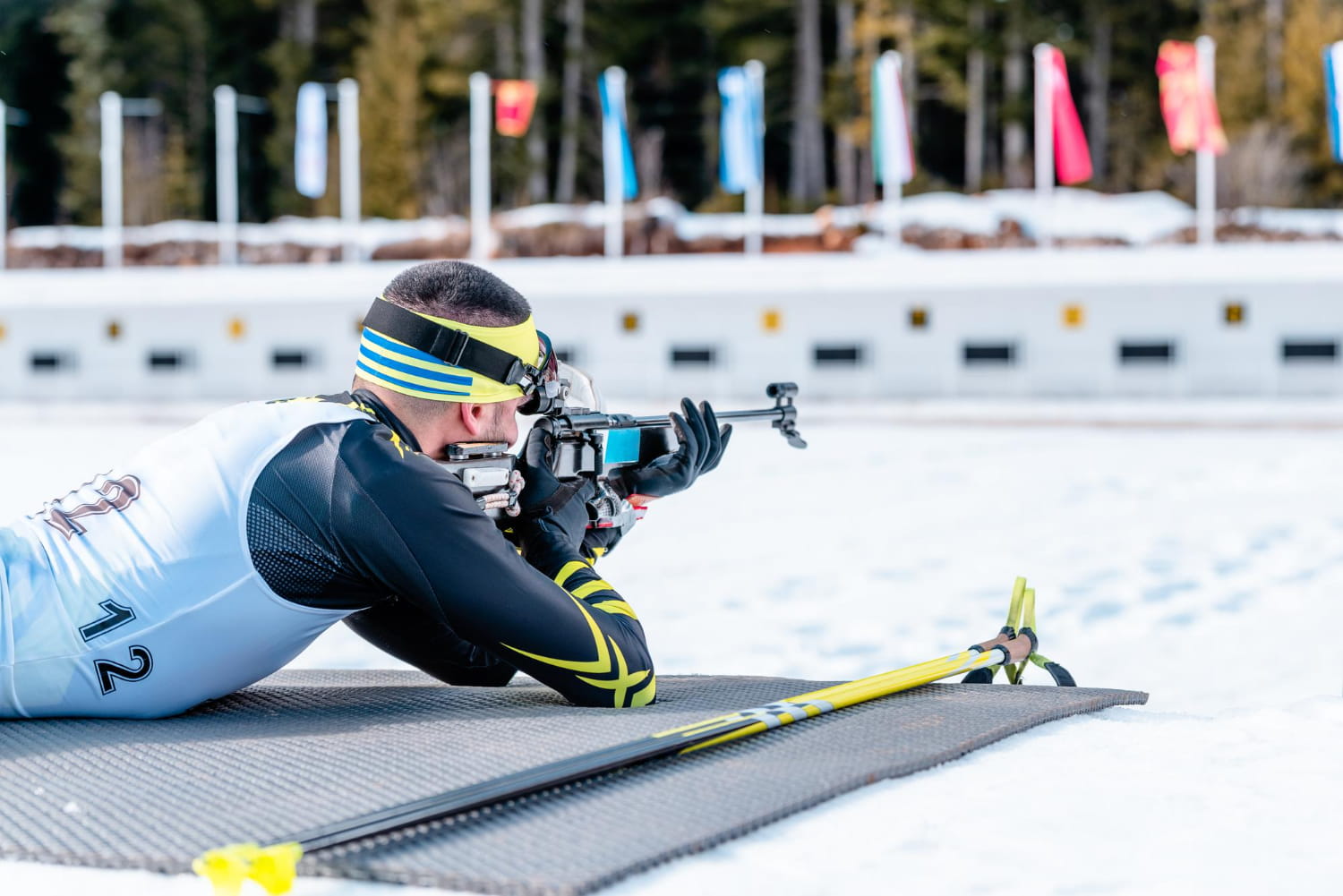
Biathlon uniquely combines two seemingly incompatible disciplines, cross-country skiing and rifle shooting, into one demanding winter sport. This challenging pursuit requires athletes to possess not only exceptional physical conditioning but also remarkable mental fortitude and the ability to instantly transition between intense cardiovascular exertion and absolute stillness. From its origins in Scandinavian military training exercises to today’s thrilling Olympic competitions, biathlon has evolved into one of the most captivating winter sports watched worldwide. We invite you to discover incredible facts about biathlon, many of which you might not have known until now.
- Biathlon has military origins dating back to nineteenth century Scandinavia, where it developed as a method for training soldiers to patrol in harsh winter conditions. The earliest competitions resembling modern biathlon took place in Norway during the seventeenth century among border guards, who needed both skiing endurance and marksmanship skills. The International Biathlon Union was not established until nineteen twenty four, when standardized competition rules were finally created for this unique sport.
- Modern biathlon rifles weigh no less than three kilograms and fire specialized five point three millimeter caliber ammunition designed specifically for the sport. These cartridges produce reduced recoil compared to standard ammunition, allowing athletes to regain stability more quickly after firing. Competitors carry their rifles on their backs during skiing segments, then smoothly transition them to shooting position when approaching the range.
- During prone shooting, biathletes must control their heart rate to approximately one hundred ten beats per minute to accurately hit targets measuring just forty five millimeters in diameter from fifty meters away. Standing position targets are considerably larger, at one hundred ten millimeters in diameter, because shooting while upright is significantly more challenging due to increased body movement. Even elite athletes frequently miss targets when their heart rates exceed one hundred fifty beats per minute following intense skiing efforts.
- Each missed target during shooting requires athletes to ski a penalty loop measuring one hundred fifty meters or receive a one minute time penalty, depending on the competition format. These penalty loops substantially increase the total race distance and often determine the final standings in tightly contested competitions. A single missed shot can cost an athlete not only a medal but even placement within the top ten finishers.
- The most decorated biathlete in history is Norwegian athlete Ole Einar Bjørndalen, who earned thirteen Olympic medals, including eight gold medals, throughout his extraordinary career. He also holds the record for most World Cup victories, with ninety five wins accumulated over decades of international competition. Bjørndalen competed in six consecutive Winter Olympics from nineteen ninety eight through two thousand fourteen, demonstrating remarkable longevity in this demanding sport.
- Women’s biathlon was not included in the Olympic program until nineteen ninety two at the Albertville Games, despite men’s competitions being held since nineteen sixty four. French athlete Anne Briand-Bruyère became the first Olympic champion in women’s biathlon at those historic Albertville Games. This twenty eight year delay reflected conservative attitudes toward women’s participation in physically demanding sports during that era.
- Race course temperatures during competitions can plummet to minus thirty five degrees Celsius, creating extremely challenging conditions for athletes. At such frigid temperatures, metal rifle components can actually freeze to exposed skin, while exhaled breath instantly crystallizes in the air. Competitors wear specialized face masks covering the lower portion of their faces to prevent frostbite during these extreme conditions.
- Biathletes employ a shooting technique called firing on the exhale, where the shot is released at the precise moment of complete exhalation to maximize stability. This method temporarily reduces body movement, allowing for more accurate aiming even when the athlete’s cardiovascular system is highly activated. Even experienced competitors spend years perfecting this technique to automate the process during high pressure competition moments.
- The youngest Olympic biathlon champion is German athlete Michael Greis, who won gold in nineteen eighty four at just nineteen years and four months of age. He triumphed in the sprint event at the Sarajevo Olympics with a finishing time three seconds faster than the silver medalist. This youth record has remained unbroken for decades despite numerous talented young athletes entering the sport.
- Biathlon features a unique discipline called the mass start, where only the top twenty four athletes of the season compete simultaneously on the starting line. This race format is considered the most prestigious because it brings together only the current World Cup leaders in direct competition. The mass start event was not added to the Olympic program until two thousand six at the Turin Winter Games.
- Biathlon skis differ from standard cross-country skis by being slightly shorter and wider to provide better stability while carrying and maneuvering with a rifle. Binding placement is also positioned slightly closer to the ski tip to facilitate easier turning and course navigation while bearing the additional weight of the rifle. Each athlete carefully selects ski length based on personal height, body weight, and individual skiing technique preferences.
- During shooting sequences, athletes frequently utilize a technique called elbow-supported shooting, where the left elbow rests against the hip for additional stability. This method proves especially crucial during standing position shooting, when the body naturally experiences greater movement and instability. Even a millimeter of barrel deviation can result in a missed target at the standard fifty meter shooting distance.
- Norway stands as the most dominant nation in biathlon history, having earned more than two hundred medals at world championships and Olympic Games combined. Norwegian athletes benefit from a unique training system that integrates intensive preparation with the natural terrain of Scandinavian mountains and forests. Many Norwegian biathletes begin practicing the sport during childhood as part of their cultural heritage and outdoor lifestyle.
- Biathlon demands extraordinary ability to rapidly regulate breathing and heart rate between skiing and shooting sequences. Some competitors employ specialized breathing techniques that can reduce heart rate by twenty to thirty beats per minute within just fifteen to twenty seconds. This physiological control often becomes the decisive factor separating medal winners from those finishing just off the podium.
- The biathlon relay features a distinctive rule where each team member completes three laps and two shooting rounds, with three spare cartridges available for each shooting bout. These spare rounds must be manually loaded by the athlete if needed during the shooting sequence. Even after using all spare ammunition, any remaining missed targets still require the athlete to ski penalty loops before continuing the race.
- The first Biathlon World Championships for women were not held until nineteen eighty four, despite men’s championships dating back to nineteen fifty nine. This delay stemmed from concerns about physical demands on female athletes, although subsequent research has thoroughly demonstrated the safety of biathlon training and competition for women. Today women’s biathlon features competition intensity and athletic excellence equal to the men’s discipline.
- Biathlon targets utilize a mechanical system that instantly flips from white to black upon bullet impact, providing immediate visual confirmation of each shot’s result. This innovation allows both athletes and spectators to see shooting outcomes without delay or uncertainty during fast paced competitions. Earlier competitions relied on human range officers with binoculars to verify hits, often leading to scoring disputes and delays.
- The longest biathlon race format is the individual competition covering twenty kilometers for men and fifteen kilometers for women, where each missed target adds one full minute to the athlete’s total time. This discipline is considered the most strategically complex, as athletes must carefully balance skiing speed against shooting accuracy throughout the entire race. Victory often goes not to the fastest skier but to the athlete who best manages this critical balance.
- Elite biathletes dedicate more than two hundred days annually to training and cover up to five thousand kilometers on skis during a single competitive season. Beyond skiing workouts, they devote substantial time to strength conditioning, extensive shooting practice, and psychological preparation techniques. Many top competitors train across diverse climate zones to adapt to any weather conditions they might encounter during international competitions.
- Biathlon maintains a distinctive rule prohibiting optical sights on rifles to preserve the sport’s purity and ensure equal conditions for all competitors. Athletes shoot exclusively with open iron sights, significantly increasing the discipline’s difficulty compared to sight assisted shooting sports. This fundamental rule has remained unchanged since biathlon’s inclusion in the Olympic program.
Fascinating facts about biathlon convincingly demonstrate how this winter sport masterfully blends physical power with mental precision in ways few other athletic pursuits can match. From its historical military roots to cutting edge training methodologies, biathlon continues captivating audiences with its unique combination of endurance and accuracy challenges. We hope this collection of interesting facts enhances your appreciation for biathletes’ extraordinary abilities during your next viewing of these compelling winter competitions.


