
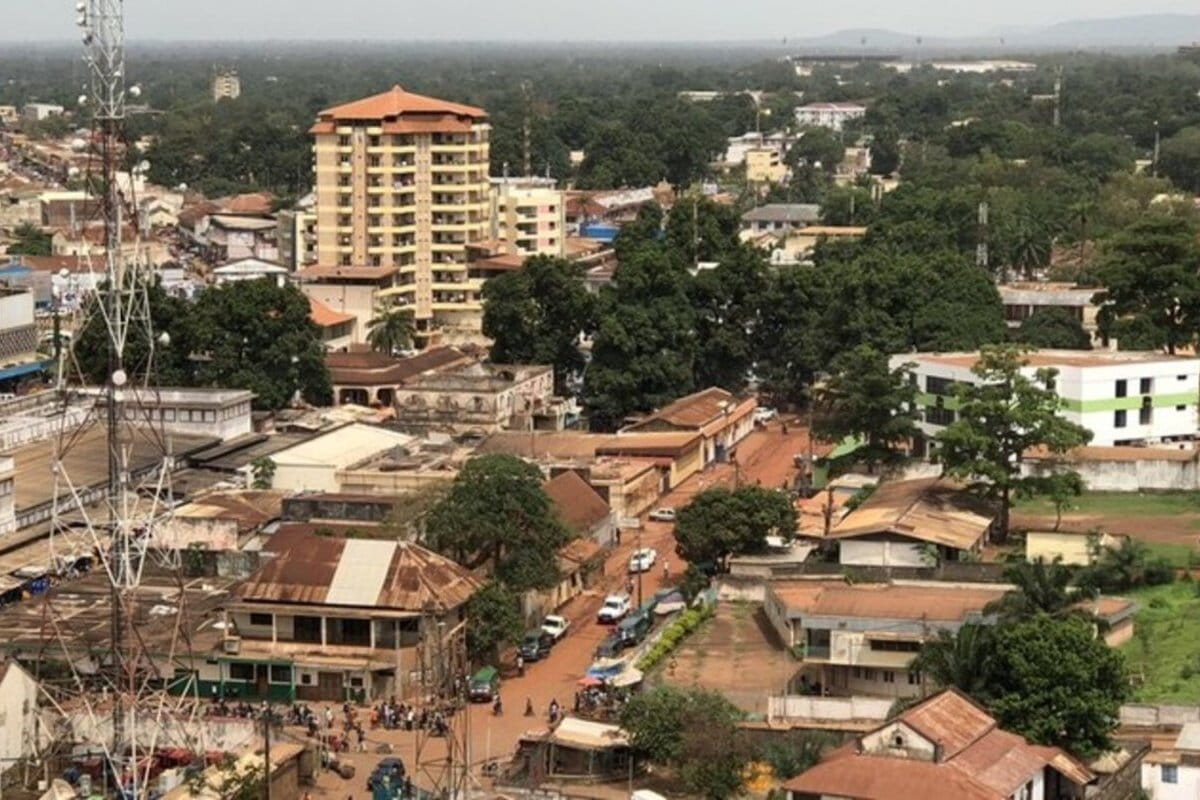
The capital of the Central African Republic—Bangui—often remains overlooked by travelers and geography enthusiasts, yet it harbors a wealth of remarkable historical, cultural, and natural features. Nestled on the banks of the Ubangi River, a tributary of the Congo, the city holds strategic importance in the region while concealing numerous secrets you may not have known. Despite its turbulent political history and economic hardships, Bangui retains a unique charm and authenticity for those seeking to understand the real Africa. In this article, we present the most fascinating facts about Bangui, offering deeper insight into the city’s role in the region and its place in the global context.
- Bangui was founded in 1889 by French officer Albert Dolle as a military outpost during the colonization of the region. Initially intended as a base to control territory that later became part of French Equatorial Africa, it quickly grew into a key trading hub due to its location on the border with Belgian Congo. This strategic position ultimately led to Bangui being chosen as the capital of the newly established Central African Republic.
- The city lies in the southwestern part of the country, directly on the border with the Democratic Republic of the Congo, separated from the Congolese town of Zongo by the Ubangi River. This river serves not only as a natural boundary but also as a vital transportation route for local residents. There is no bridge across the Ubangi, so crossings are made exclusively by boats or ferries. This proximity has fostered a unique transborder community where people on both sides often share family ties.
- Bangui is the largest city in the country by population, though exact figures constantly fluctuate due to migration and internal conflicts. Estimates suggest more than 800,000 people live in the city, representing a significant portion of the nation’s urban population. Most residents belong to various ethnic groups, with the Baya, Banda, and Sara being the most numerous. This diversity enriches the city’s cultural fabric but also makes it vulnerable to ethnic tensions.
- Bangui is home to the country’s only international airport—Bangui M’Poko International Airport, named after former president David Dacko. During the civil war, the airport repeatedly became a battleground and temporary shelter for thousands of displaced people. Despite damage and instability, it continues to operate thanks to international support. Given that overland roads are often impassable, the airport remains essential for the country’s connection to the outside world.
- The University of Bangui, established in 1970, is located in the city and serves as the nation’s primary academic and scientific institution. It trains professionals in fields such as medicine, law, and engineering. However, prolonged conflicts have frequently forced the university to suspend operations or function under severe limitations. Nevertheless, it remains a symbol of hope and aspiration for the younger generation.
- Bangui has a tropical savanna climate with clearly defined wet and dry seasons. The rainy season lasts from April to October, while the dry season runs from November to March. Temperatures remain fairly consistent year-round, ranging between 22 and 32 degrees Celsius. These conditions support agriculture but also challenge urban infrastructure due to frequent flooding.
- One of the city’s most prominent landmarks is the Presidential Palace, built during the reign of Emperor Jean-Bédel Bokassa. Its opulent architecture starkly contrasts with the surrounding poverty. After Bokassa’s fall, the palace changed hands multiple times during coups and political upheavals. Today, it serves as the official residence of the head of state, though its condition often leaves much to be desired.
- Bangui hosts one of Central Africa’s largest mosques—the Bangui Grand Mosque—which serves as the center of the city’s Muslim community. Although the majority of the country’s population is Christian, Islam maintains a significant presence in the capital. During civil conflicts, the mosque frequently provided refuge and protection for civilians. This highlights the crucial role religious institutions play in maintaining social cohesion during crises.
- The city’s water supply system is partially dependent on the Ubangi River. However, due to inadequate infrastructure and equipment, most residents rely on well water or rainwater. This leads to widespread waterborne diseases, especially among children. International organizations are actively working to improve the situation, but progress remains slow and uneven.
- The National Museum of the Central African Republic is located in Bangui and houses artifacts reflecting the nation’s history and cultural heritage. Exhibits include traditional masks, weapons, clothing, and everyday objects from various ethnic groups. The museum also preserves documents from the colonial era and the period following independence. Despite its modest size, it plays a vital role in safeguarding the country’s cultural legacy.
- Bangui is the publishing hub of the country, although the sector is extremely underdeveloped. Several newspapers, including “Le Novateur” and “Be Oko,” are published here in both French and Sango—the local lingua franca. With limited internet access, print media remains a crucial source of information for many residents. Journalists, however, often face censorship and threats from authorities.
- The city hosts several United Nations missions, notably MINUSCA—the United Nations Multidimensional Integrated Stabilization Mission in the Central African Republic. These missions provide security, assist in rebuilding infrastructure, and support humanitarian programs. The presence of peacekeepers has become part of daily life in Bangui. While their effectiveness is sometimes questioned, they remain the primary guarantor of relative stability.
- Bangui boasts a well-developed network of markets, the most famous being the Central Market, or Marché Central. Here, one can find everything from fresh produce to clothing, electronics, and handmade crafts. The market functions not only as an economic center but also as a social hub where people from all neighborhoods gather. During conflicts, it often became a flashpoint for violence, yet it has always rebounded thanks to the resilience of local vendors.
- The city has no metro or tram system; instead, the main form of public transport consists of “mototaxis”—motorcycles carrying passengers on the back seat. These offer a fast and affordable way to get around, though they are highly dangerous due to poor road conditions. Many drivers lack licenses, yet they depend on this work for survival. For countless residents, mototaxis are the only practical means of reaching school or employment.
- Bangui is home to one of the country’s few cinemas—Cinema Rex—which was popular in the 1970s. Though it now operates only sporadically, it remains a symbol of the city’s vibrant cultural past. Occasional film screenings for children or community events still take place there. The venue evokes memories of a time when Bangui was more stable and culturally dynamic.
- The city’s football team, Olympic Real de Bangui, is one of the leading clubs in the national league. Football is the most popular sport in Bangui, drawing hundreds of spectators to matches despite difficult circumstances. The Barthélemy Boganda Stadium, named after the country’s first prime minister, serves as the main sports arena. For many young people, football represents their best chance at a better future.
- Several radio stations operate in Bangui, broadcasting in local languages and French. Among them, Radio Ndeke Luka stands out as one of the country’s most trusted sources due to its independent journalism. Radio plays a critical role in disseminating information, especially in a context of low literacy rates. Many residents listen to the radio while working in fields or at home.
- Bangui has no railway station, and the nearest rail line is located in the neighboring Democratic Republic of the Congo. This isolates the city from major regional transport corridors. Goods and people are primarily moved by road or river vessels. While this isolation hampers economic development, it also shields the city from excessive external influence.
- The Cathedral of the Immaculate Conception, the nation’s principal Catholic church, is situated in Bangui. Built in the mid-20th century, it features striking modernist architecture. During times of conflict, the cathedral has repeatedly hosted prayers for peace and served as a sanctuary. For many residents, it is not only a religious site but also a spiritual anchor.
- Bangui is a place where Sango—a Ngbaka-based creole language—is actively spoken. Sango has become the lingua franca of the Central African Republic and is used in everyday communication, media, and even parliamentary proceedings. It unites diverse ethnic groups who might otherwise struggle to understand one another. As such, Sango stands as a powerful symbol of national identity and unity.
These interesting facts about Bangui reveal a city rich in complexity and resilience, continuing to thrive despite immense challenges. The extraordinary details about its culture, geography, and society illustrate how people can preserve their identity and hope for a better future even in the most difficult circumstances. The captivating insights into Bangui remind us that every city, no matter how obscure, carries a unique story worthy of recognition and respect.


