The Baltic Sea is a unique body of water in northern Europe that has played an enormous role in the history and culture of many nations. This sea washes the shores of nine countries and is one of the youngest seas on our planet. Its waters hold many secrets, from ancient sunken ships to unique natural phenomena. Fascinating facts about the Baltic Sea reveal the amazing world of this northern body of water. You may not have known many incredible features of this sea that connects Scandinavia with continental Europe.
- The Baltic Sea is one of the youngest seas in the world, being approximately 10-15 thousand years old. It formed after the retreat of glaciers from the last ice age. Before this, a freshwater glacial lake existed in its place. The geological youth of the sea explains many of its unique characteristics.
- The Baltic Sea has extremely low salinity compared to other seas of the world. The average salinity is only 7-8 parts per thousand, while in the World Ocean this indicator reaches 35 parts per thousand. This is explained by the large inflow of fresh water from numerous rivers. The low salinity makes the Baltic a unique ecosystem.
- The name Baltic Sea comes from the Latin word “balteus,” which means belt. This is connected to the fact that the sea seems to encircle the northern European lands. Another version links the name to the Lithuanian word “baltas,” which means white. The white color was associated with the sandy shores and light waters of the sea.
- The Baltic Sea washes the shores of nine European countries. These include Sweden, Finland, Russia, Estonia, Latvia, Lithuania, Poland, Germany, and Denmark. This makes it one of the most international seas in the world. Each country has its own unique maritime culture and traditions.
- The average depth of the Baltic Sea is only 55 meters, making it one of the shallowest seas in the world. The maximum depth reaches 459 meters in the Landsort Deep off the coast of Sweden. The shallowness promotes rapid warming of the water in summer. However, this also makes the sea vulnerable to pollution.
- The Baltic Sea connects to the World Ocean only through the narrow Danish Straits. These straits limit water exchange between the Baltic and the North Sea. Complete water renewal in the Baltic Sea takes approximately 30 years. This is the longest period among all seas of Europe.
- On the bottom of the Baltic Sea, there are more than 100 thousand sunken objects. Among them are ancient Viking ships, medieval merchant vessels, and warships from various eras. The cold water and low salt content promote excellent preservation of wooden structures. The Baltic is a true museum of maritime history.
- The Baltic Sea is famous for its deposits of amber, which is called the gold of the Baltic. The largest deposits are found on the coast of the Kaliningrad region and Poland. Amber formed from the resin of coniferous trees millions of years ago. The extraction and processing of amber is an important tradition of the region.
- In winter, a significant part of the Baltic Sea becomes covered with ice. In severe winters, the ice cover can reach 45 percent of the sea’s area. The Gulf of Bothnia in the north freezes almost every year. Ice navigation requires the use of special icebreakers.
- The Baltic Sea is home to a unique population of the Baltic ringed seal. This subspecies of seals has adapted to life in fresh waters. The seal population significantly decreased in the 20th century due to pollution and hunting. Currently, these animals are under protection.
- The Baltic Sea is inhabited by one of the smallest populations of harbor porpoises in the world. These small cetaceans are endangered. Their numbers are estimated at only a few hundred individuals. Protection of this species is a priority for all Baltic countries.
- The Baltic Sea was the center of trade for the Hanseatic League in the Middle Ages. Hanseatic merchants controlled trade between Eastern and Western Europe. The cities of Lubeck, Gdansk, Riga, and Tallinn were important Hanseatic ports. The legacy of the Hansa is still felt in the architecture and culture of the region.
- The area of the Baltic Sea is approximately 415 thousand square kilometers. This makes it one of the largest inland seas of Europe. The length of the coastline exceeds 8 thousand kilometers. The shores of the sea are extremely diverse, from rocky fjords to sandy beaches.
- The Baltic Sea suffers from a serious ecological problem of eutrophication. Excessive input of nutrients leads to algal blooms. In summer, huge areas of the sea become covered with blue-green algae. This phenomenon creates dead zones with oxygen deficiency at the bottom.
- Several important gas pipelines and cables have been laid on the bottom of the Baltic Sea. The most famous of them is the Nord Stream gas pipeline connecting Russia and Germany. The total length of underwater communications reaches thousands of kilometers. The laying of these objects required complex engineering solutions.
- The Baltic Sea has an extremely rich archaeological heritage from the Stone Age. On its bottom are found submerged settlements from the Mesolithic and Neolithic periods. The rise in sea level after the ice age flooded ancient human habitation sites. Archaeologists find tools, animal bones, and remains of dwellings.
- The largest island of the Baltic Sea is the Swedish island of Gotland with an area of more than 3 thousand square kilometers. The island is known for its medieval churches and the fortified town of Visby. Gotland was an important trading center in the era of the Vikings and the Hansa. Today it is a popular tourist destination.
- The Baltic Sea has a unique phenomenon called a halocline, where layers of water with different salinity do not mix. More saline water from the North Sea sinks to the bottom, while fresher water remains on top. This creates special conditions for marine life. The halocline affects the distribution of oxygen and nutrients.
- The Gulf of Finland of the Baltic Sea is one of the most navigated waters in the world. Routes to the ports of Saint Petersburg and Helsinki pass through it. Every year, tens of thousands of vessels pass through the gulf. Intensive traffic requires strict navigation rules.
- The Baltic Sea was an arena for numerous naval battles throughout history. Battles took place here between Swedes, Danes, Russians, Germans, and Poles. One of the most famous battles is the Battle of Gangut in 1714, where the Russian fleet achieved its first major victory. The seabed holds the remains of many warships.
- The water temperature in the Baltic Sea ranges from near zero in winter to 20-25 degrees Celsius in summer. Southern regions warm up faster than northern ones. Summer temperatures make the sea suitable for beach recreation. However, even in summer, the water remains cooler than at Mediterranean resorts.
- The Baltic Sea is an important stopover site for millions of migratory birds. Birds use the coastline as an intermediate point during migration. Particularly large numbers of birds gather in the area of the Curonian Spit. Ornithological stations in the region have been monitoring migrations for over a century.
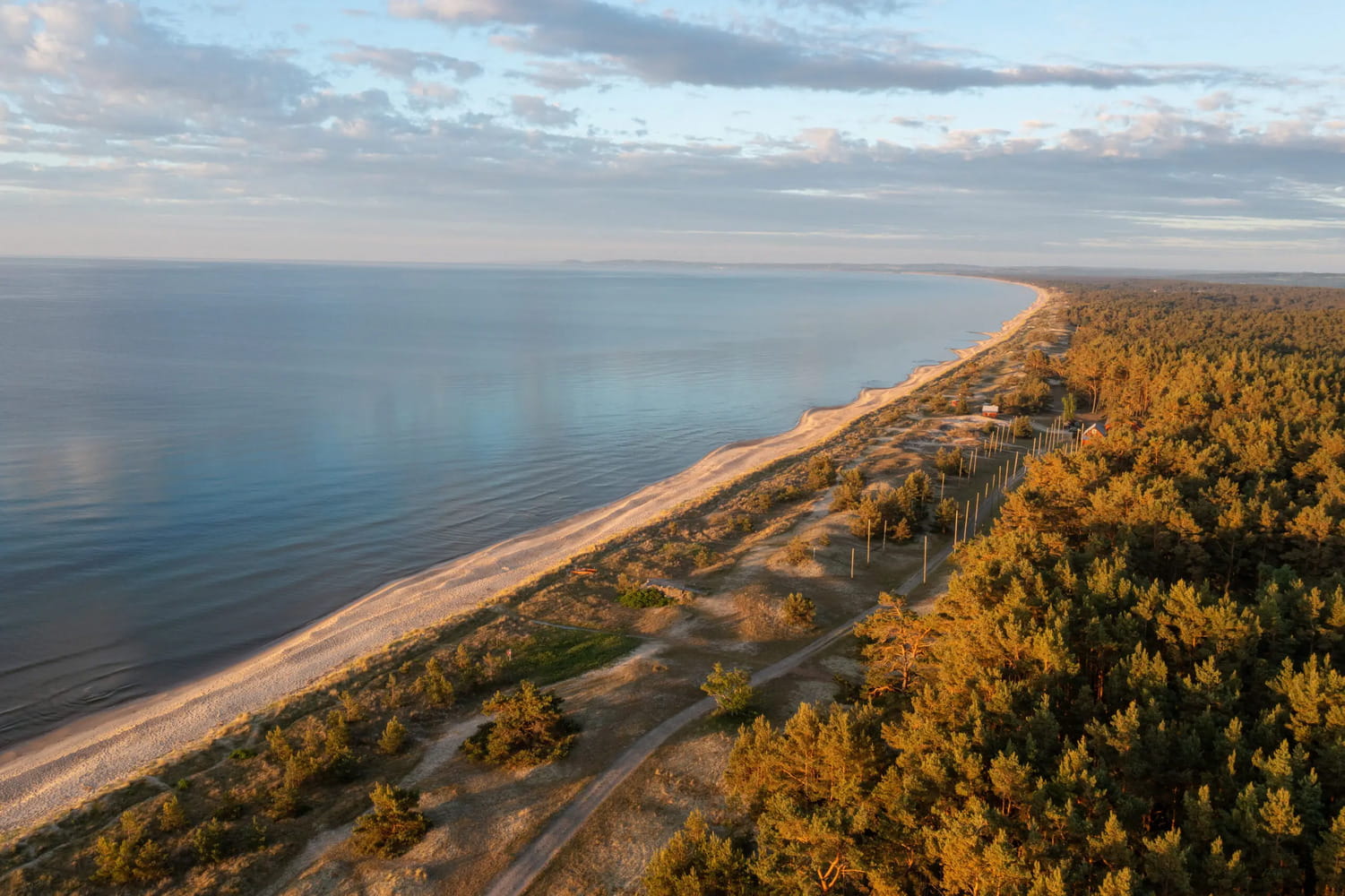
- The Curonian Spit on the southern coast of the Baltic is a unique natural formation. This narrow sandy strip stretches for almost 100 kilometers. The spit separates the Curonian Lagoon from the open sea. It is inscribed on the UNESCO World Heritage List as a unique landscape.
Incredible facts about the Baltic Sea demonstrate the uniqueness of this northern European body of water. From ancient history to modern ecological challenges, the Baltic remains extremely important for millions of people. This sea connects peoples and cultures while preserving its distinctive nature. Getting to know the Baltic Sea opens up a fascinating world where history, geography, and ecology intertwine.


