
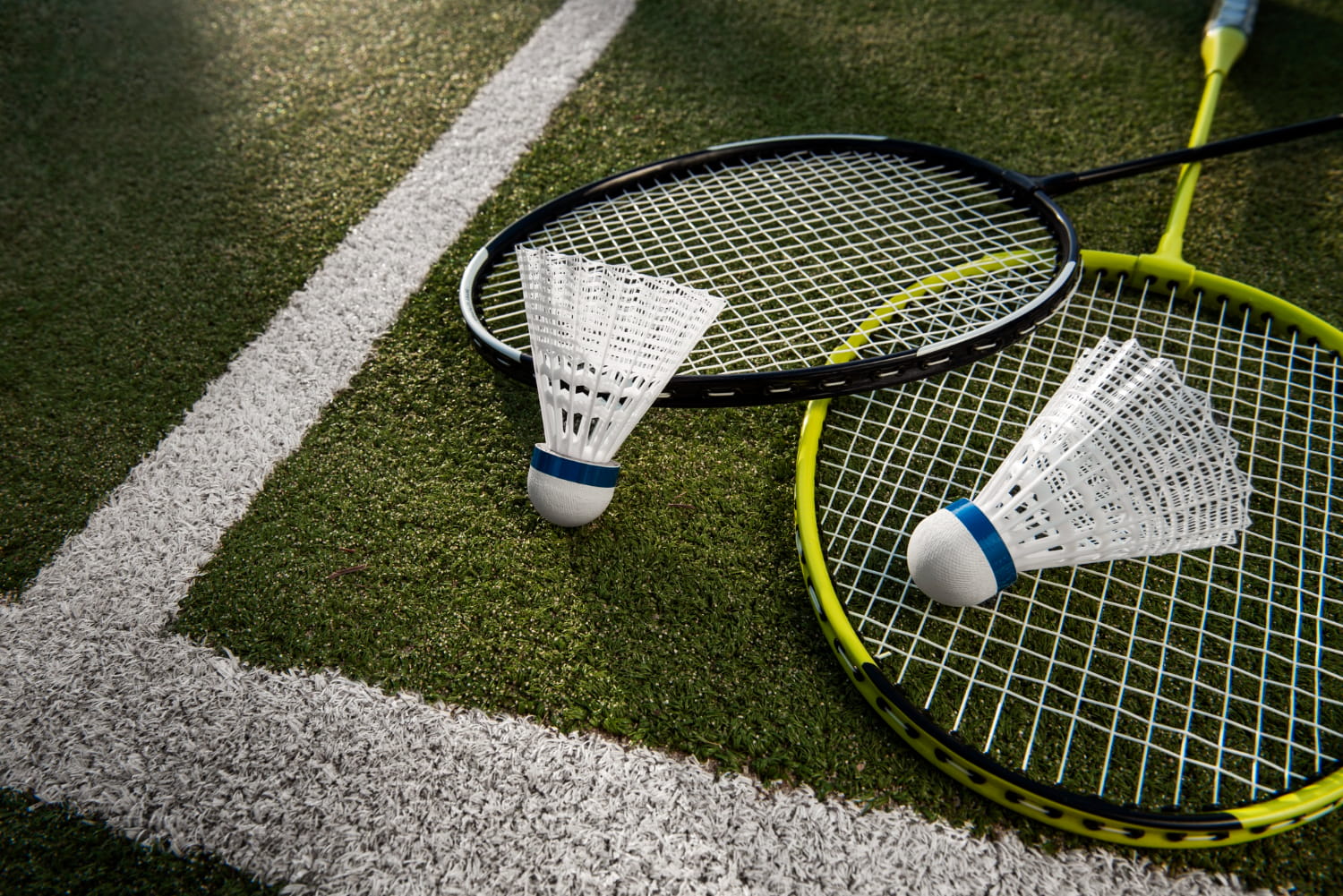
Badminton is often perceived as a simple recreational game played on the beach or in the backyard among friends during summer holidays. In reality it is one of the fastest and most technically demanding sports in the entire modern world. Many people do not even suspect what a complex history lies behind these light shuttlecocks and special rackets. In this collection we will examine incredible facts that will change your perception of this dynamic discipline. You might not know that the flight speed of the shuttle here exceeds the indicators of many other popular games.
- Professional players can accelerate the shuttlecock to speeds exceeding four hundred kilometers per hour during a powerful smash. This indicator makes badminton the record holder among ball or shuttle games for projectile flight speed. Even modern racing cars cannot always compete with such an instantly accelerated flight trajectory. This creates unique game conditions where the athlete reaction must be instantaneous.
- The game received its name from the estate of the Duke of Beaufort in England which was called Badminton House. It was there in the nineteenth century that the rules of the game were finally standardized for mass use. Before that moment a similar pastime was known in India under the name poona and had slightly different rules. The history of the name origin is closely connected with the British aristocracy of that time.
- For the manufacture of professional shuttlecocks feathers are used only from the left wing of a goose. This is necessary to ensure the correct rotation of the projectile during flight through the air stream. If feathers from the right wing are used the trajectory will be unstable and the game will become unpredictable for athletes. Manufacturers carefully sort the raw materials before starting the production process.
- Badminton became an official Olympic sport only at the games in Barcelona in nineteen ninety two. Before that it was demonstrated many times at the Olympics as an exhibition sport for spectators. For a long time the international federation sought recognition to include the discipline in the main program of competitions. This became a major event for all fans of this game around the world.
- During an intense match the heart rate of a professional athlete can reach two hundred beats per minute. This indicates that the physical load on the body is extremely high compared to other racket sports. Players are constantly in motion and make sharp jumps and lunges throughout the entire match without stopping. Such a rhythm requires excellent cardiovascular fitness from each participant.
- Each professional shuttlecock must have exactly sixteen feathers which are fixed in the cork base of the projectile. Any difference in the number or weight of a feather can significantly affect the aerodynamic properties of flight. Masters carefully check each specimen before allowing its use at official high level tournaments. Violation of this norm leads to disqualification of the projectile from official competitions.
- The dimensions of the court for singles play differ from the dimensions of the court for doubles competitions between athletes. In doubles the court is wider since players have more space for maneuvering during the rally. This creates additional tactical opportunities for team play and distribution of responsibility zones on the court. Referees closely monitor that players do not go beyond their zone during the serve.
- The weight of a standard shuttlecock is approximately five grams which makes it an extremely light sports projectile. Despite such a small weight it is able to withstand powerful racket hits without instant destruction of the structure. Engineers are constantly working on improving materials to increase the durability of this fragile game element. The lightness of the shuttlecock allows it to sharply change the direction of flight after contact with the strings.
- The longest recorded rally in the history of professional badminton lasted more than seventy minutes without a break for rest. The participants of this match demonstrated incredible endurance and the ability to concentrate for a long time. Such a record is difficult to beat since modern rules limit the duration of games to preserve the health of players. This case entered history as an example of the highest sports fortitude.
- In Asian countries this sport enjoys the same popularity as football in Europe or hockey in North America. Children start training at an early age and dream of becoming world champions in their national teams. Major tournaments gather millions of viewers in front of television screens who passionately cheer for their favorites. The infrastructure for playing badminton is developed there at a very high level.
- String tension on a racket can reach very high pressure indicators to ensure maximum hitting power. Professionals often change strings before each important match to avoid unpleasant surprises during the game. The quality of tension directly affects the control of shuttlecock flight and the accuracy of hitting a specific court zone. Incorrect tension can lead to hand injury of the player due to vibration.
- Air temperature affects the flight speed of the shuttlecock so testing of projectiles is always carried out before the game. In a cold room the shuttlecock flies slower and in a hot environment its speed increases significantly due to air rarefaction. Referees have the right to replace a batch of shuttlecocks if game conditions have changed during the competition. This ensures fairness of the struggle regardless of weather conditions in the hall.
- Service rules require that the hit on the shuttlecock be made below the waist level of the player serving. This restriction was introduced to prevent excessively aggressive serves that would make reception impossible for the opponent. Violation of this rule is recorded by the referee and the point is automatically awarded to the opposite side without continuing the rally. Compliance with this norm is critically important for the fairness of the match.
- There is an opinion that badminton promotes the development of human reaction more than any other type of sports activity. The player has fractions of a second to decide where to direct the shuttlecock after the opponents hit. Such training of the nervous system is useful not only for athletes but also for ordinary people in everyday life. Regular classes improve movement coordination and overall body agility.
- The cork base of the shuttlecock is often covered with a thin layer of special leather for better contact with the racket strings. This material must be strong enough to withstand thousands of hits during one training cycle. Manufacturers are constantly experimenting with synthetic analogues of cork to reduce the cost of producing projectiles for the mass consumer. The quality of the base determines the stability of the shuttlecock flight during the game.
- Modern rackets are made of carbon fiber which makes them very light and durable at the same time. Previously wood or metal was used for production which significantly limited the swing speed of the player. Technologies allow creating individual racket parameters for the playing style of a specific athlete. The weight of the racket can differ by several grams which affects the feeling of control.
- The height of the net in the center of the court must be strictly fifty one centimeters from the floor surface. This ensures uniform sagging of the net under its own weight and creates standard conditions for all teams. Referees necessarily check this parameter with a special measuring device before the start of the match. Any deviation from the norm can become a reason for moving the game to another court.
- Professional shuttlecocks wear out quickly so during tournaments they are replaced after each game or even more often. A damaged feather changes the aerodynamics and can lead to a players mistake not through his fault. Competition organizers provide a large supply of new projectiles for the uninterrupted conduct of matches. Saving on shuttlecocks in professional sports is unacceptable due to the high price of error.
These fascinating facts demonstrate how deep and multifaceted the world of this dynamic sport is for all age categories. You might not know about so many technical nuances and historical details that surround the usual game with a shuttlecock on the court. We hope this information will inspire you to look at badminton in a new way or even try playing yourself in the near future. This sport opens new horizons for physical development and gaining pleasure from activity.


