
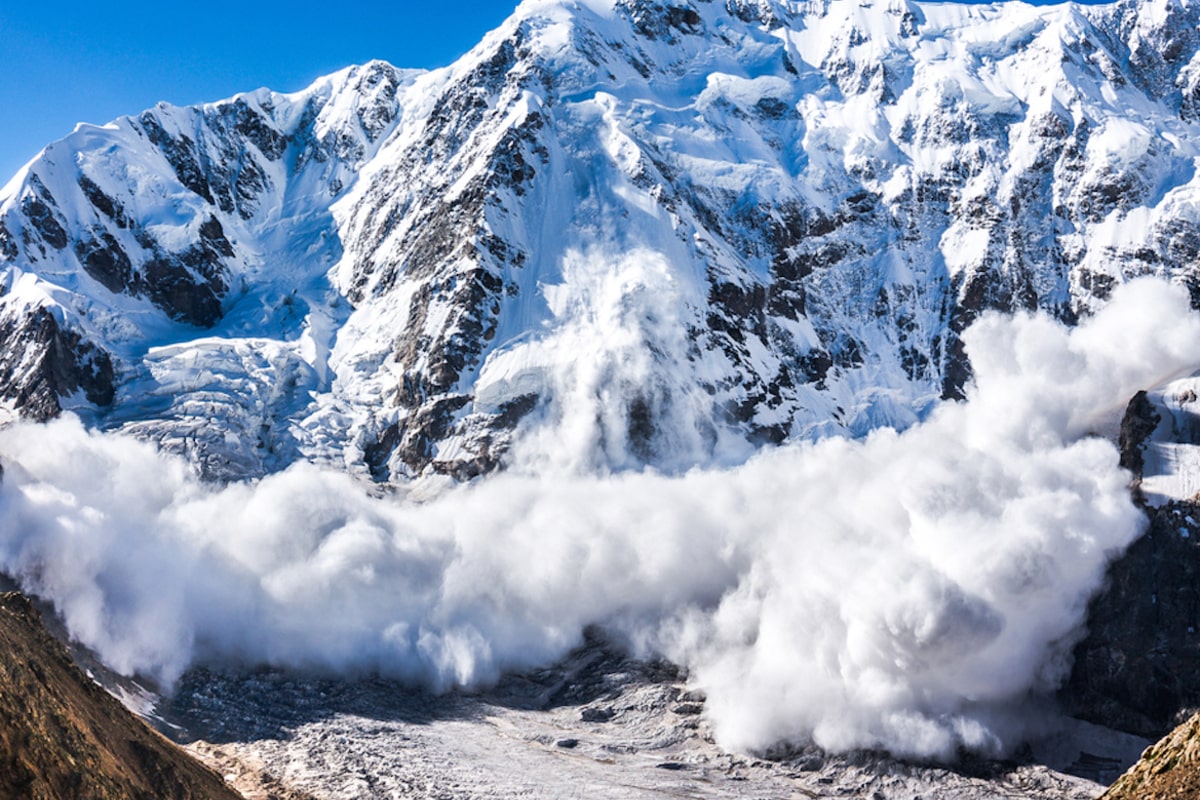
Mountain regions have always attracted people with their beauty and sense of freedom, yet they also conceal serious natural dangers. Avalanches are often discussed only in general terms, without a deeper understanding of how complex this phenomenon really is. In reality, there are many interesting facts and incredible facts that reveal avalanches from an unexpected perspective. You may not know that they follow strict laws of physics, climate, and terrain. It is these fascinating facts that help explain why massive amounts of snow suddenly rush down mountain slopes.
- An avalanche can reach speeds of over 300 kilometers per hour on steep and exposed slopes. At such velocity, a person has virtually no chance to escape or react in time. Even highly trained athletes are helpless in such conditions. This makes avalanches one of the most dangerous natural threats in mountainous areas.
- There are several main types of avalanches, including dry, wet, and slab avalanches. Dry avalanches consist of loose snow and move extremely fast. Wet avalanches are slower but much heavier and more destructive. Slab avalanches are considered the most treacherous because large sections of snow break loose suddenly.
- The mass of a single large avalanche can reach millions of tons. Such enormous weight creates immense pressure capable of destroying buildings and uprooting forests. Even strong engineering structures may fail under such force. For this reason, avalanches are classified as natural disasters.
- The air blast that precedes an avalanche can be deadly even without direct contact with snow. It can knock people off their feet and snap trees. In some cases, this air wave is the actual cause of death. This is one of the incredible facts many people are unaware of.
- Avalanches do not occur only in winter but also in spring and summer at high elevations. Melting snow and sudden temperature changes destabilize the snowpack. During warmer seasons, wet avalanches are more common. Although they move more slowly, they remain extremely dangerous.
- Human activity is responsible for a significant number of avalanches in popular mountain regions. Skiing, snowboarding, or even loud noises can trigger the collapse of unstable snow layers. Statistics show that most avalanche accidents are linked to human actions. This highlights the importance of responsible behavior in the mountains.
- Snow within an avalanche behaves not like a liquid but like a dense granular mass. As it moves, it quickly compacts and hardens. A person trapped inside often cannot move their arms or legs. This property greatly reduces the chances of self-rescue.
- In many countries, avalanches are deliberately triggered in a controlled manner. Special explosives are used to release unstable snow safely. It is better to cause a small, controlled slide than to wait for an unpredictable catastrophe. This practice is widely used at ski resorts.
- Avalanches are capable of carrying people and objects over long distances and even lifting them higher than the point of release. There have been cases where victims were found dozens of meters above their starting location. This is explained by complex air currents within the moving snow mass. Such fascinating facts surprise even experts.
- Not every avalanche begins loudly or dramatically. Some descend almost silently, especially during snowfall or fog. This makes it much harder to notice the danger in time. That is why avalanche forecasting is critically important.
- Snow temperature has a direct impact on avalanche behavior. Cold snow is lighter and more mobile, while warm snow becomes heavy and sticky. Even daily temperature fluctuations can significantly alter slope conditions. This factor is always taken into account by specialists.
- Natural barriers can reduce the power of avalanches. Forests, uneven terrain, and natural terraces slow down the movement of snow. Deforestation in mountain areas greatly increases the risk of disasters. Nature itself provides protective mechanisms that should be preserved.
- A person buried under an avalanche has a very limited supply of air. In most cases, it lasts only a few minutes. Survival depends directly on the speed of rescue operations. This is why specialized equipment plays a crucial role.
- In the history of many cultures, avalanches were given symbolic meanings. They were often seen as the anger of the mountains or punishment for broken taboos. Modern science explains these processes rationally, yet fear remains. Such historical facts show how human perception of nature has evolved.
Avalanches clearly demonstrate how powerful and complex natural processes can be. Interesting facts and incredible facts about them not only expand knowledge but also encourage respect for nature. You may not have known many of these details, yet awareness is what saves lives. Understanding avalanches helps people move through mountainous environments more safely and responsibly.


