
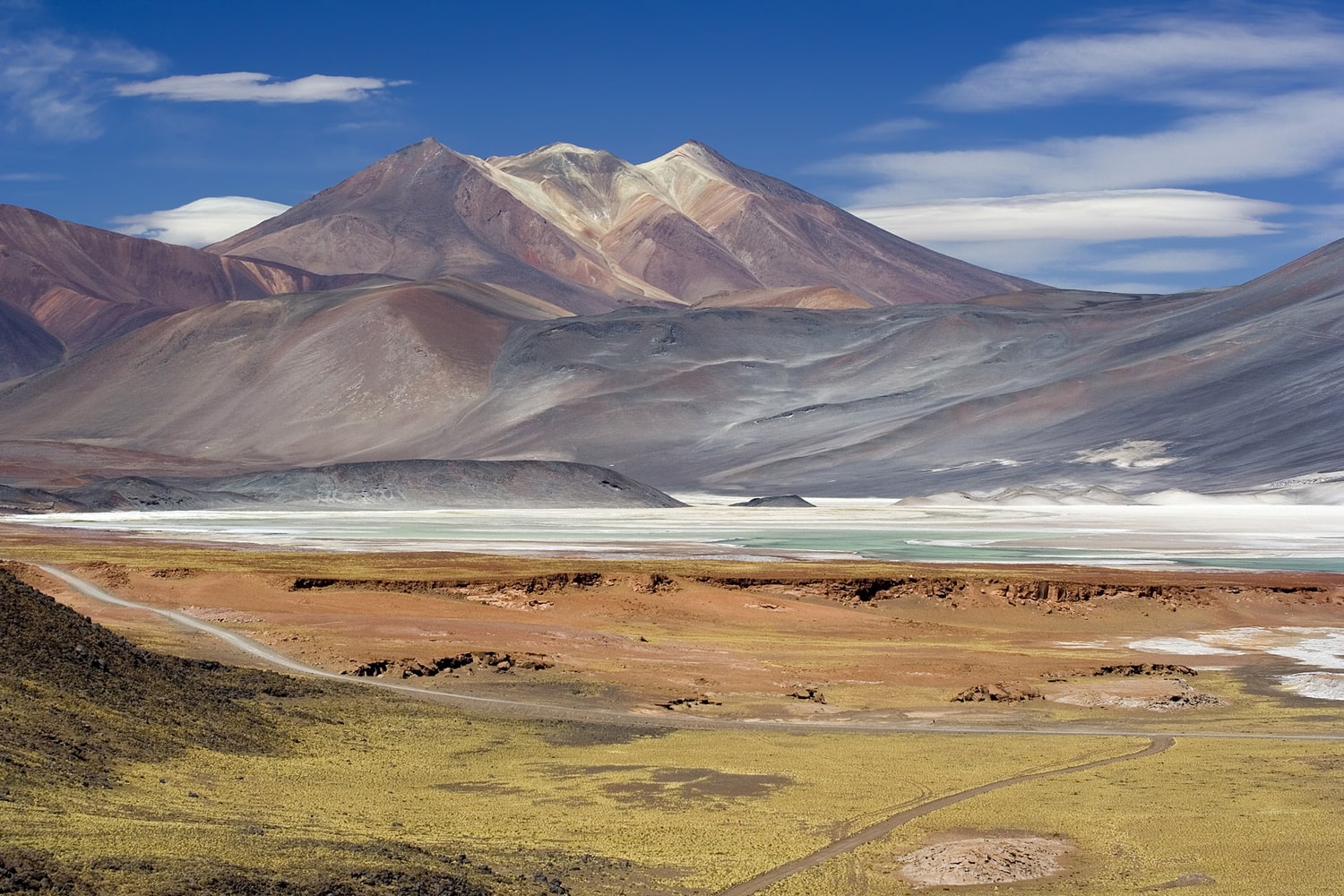
The Atacama Desert has long fascinated researchers and travellers because it combines the striking harshness of nature with landscapes found nowhere else on Earth. It is considered one of the driest places on the planet, yet it preserves traces of ancient civilizations and hides rare natural phenomena. Many people imagine deserts as empty and monotonous, but the Atacama can surprise with phenomena you might not have known about. It is a place where geological, astronomical and archaeological discoveries intertwine, creating a remarkable tapestry of knowledge. This collection presents captivating facts that allow you to see the Atacama from an entirely new perspective.
- The Atacama is regarded as the driest desert in the world, and some of its regions have recorded no rainfall for several centuries. Even during wetter periods rain may occur only once in a decade and often evaporates before reaching the ground. This extreme aridity results from the influence of a cold ocean current combined with mountain barriers that block moisture. These conditions make the region an exceptional natural laboratory for climate research.
- The surface of the Atacama is so dry and barren in many areas that it closely resembles the landscape of Mars. Scientists use it as an analogue for extraterrestrial environments, testing instruments designed for Martian exploration. Several tools later sent aboard Mars rovers were first trialled in this desert. Thus the Atacama has become a natural testing ground for interplanetary technologies.
- Despite the severity of the environment, life does exist in the Atacama thanks to organisms capable of surviving with minimal moisture. Certain bacteria and algae inhabit salt rocks, absorbing tiny amounts of water vapour from the air. These microorganisms display extraordinary adaptation to extreme conditions. Their study helps scientists understand what forms of life might endure in other parts of the universe.
- The desert contains vast nitrate deposits that became strategically important in the nineteenth century. Nitrates were used in the production of fertilizers and explosives, making the region crucial for the economies of several countries. Competition for control of these resources led to the War of the Pacific, which reshaped the political map of South America. Today nitrates remain a valuable component of the Atacama’s mineral wealth.
- The Atacama is home to salt lakes with astonishing colours and unusually high mineral concentrations. Some lakes appear turquoise or pink due to unique chemical compounds dissolved in the water. These extreme environments host specialized ecosystems composed of microorganisms perfectly adapted to the conditions. Such sites attract biologists from across the world.
- The desert features geysers and thermal springs that form striking landscapes in contrast to the surrounding dryness. The most famous area is El Tatio, located high in the Andes. At dawn columns of steam rise dramatically from the ground, creating a scene reminiscent of another planet. This region is a major destination for both tourists and scientific expeditions.
- The Atacama offers some of the clearest and most transparent night skies on Earth, making it a prime location for astronomical observatories. The ALMA observatory complex operates here, enabling scientists to observe distant galaxies and nebulae with exceptional precision. High altitude, dry air and minimal light pollution provide ideal conditions for astronomy. For this reason the desert plays a significant role in modern space research.
- The desert preserves giant geoglyphs created by ancient peoples long before the development of written language. The most famous of these is the Atacama Giant, considered one of the largest geoglyphs in the world. Its purpose remains a mystery, with theories ranging from ritual uses to astronomical alignment. The dry climate has allowed these figures to remain intact for hundreds of years.
- Although often viewed as lifeless, the Atacama can transform dramatically after rare rainfall events when the desert bursts into bloom. This phenomenon, known as the flowering desert, occurs when long-dormant seeds receive enough moisture to sprout. Dozens of species bloom simultaneously, covering the landscape with vivid colours. This spectacle draws tourists and biologists who study the resilience of desert ecosystems.
- The Atacama contains abandoned mining towns that serve as reminders of the nitrate boom era. Many of these settlements appear frozen in time, as if their inhabitants left abruptly. Their buildings and machinery reflect the lifestyle and industrial practices of past generations. These ghost towns remain important historical landmarks.
- In several regions of the desert one can find unusual rock formations shaped by erosion and persistent winds. They resemble fantastic figures or ancient sculptures, giving the landscape a surreal quality. Geologists examine these formations to understand the natural processes behind their creation. These structures often become notable subjects for photography and research.
- The desert is known for its unique salt flats, which reflect sunlight so intensely that the surface resembles a giant mirror. These salt plains preserve significant mineral deposits and produce captivating geometric patterns. Their natural crystalline structures help scientists study geological processes related to mineral formation. They are also among the most iconic visual features of the Atacama.
- Numerous meteorites have been discovered in the Atacama, many of them remarkably well preserved thanks to the absence of moisture. Dry air slows the erosion of extraterrestrial rocks, making the desert an ideal location for meteorite searches. These finds provide essential information about the origins and evolution of the Solar System. This makes the Atacama one of the most valuable regions for meteorite expeditions.
The Atacama impresses with its contrasts and shows how diverse nature can be even in the harshest environments. All these interesting facts reveal the desert as a place full of scientific wonders and extraordinary natural events. Its landscapes inspire explorers and researchers who seek to understand its mysteries. And each time you think of this unique region, you may recall the remarkable facts that make the Atacama one of the most exceptional places on Earth.


