
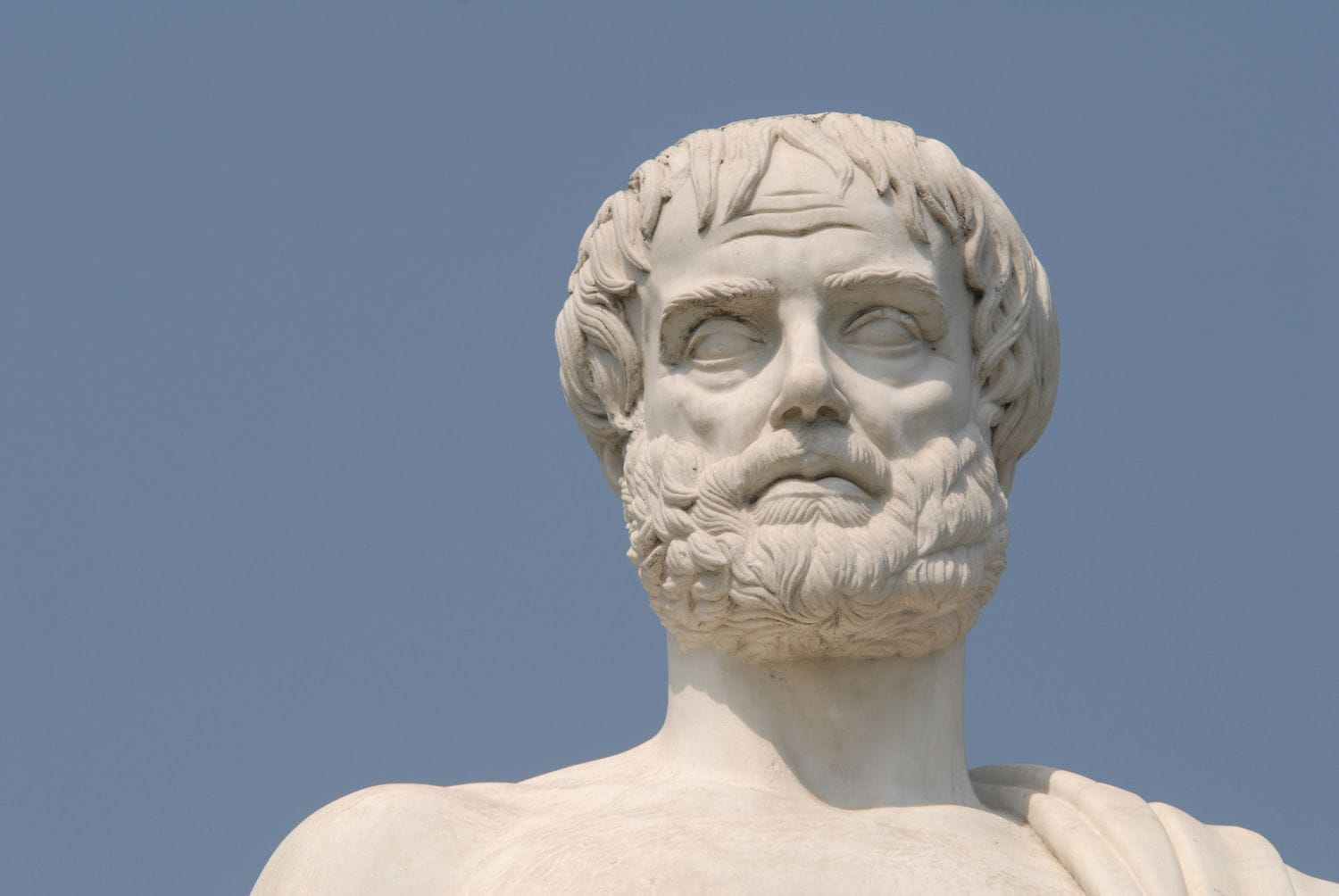
Aristotle stands as one of the most influential figures in the history of human thought, whose legacy laid the foundations for Western philosophy, science, and logic. His ideas shaped not only the ancient world but also medieval theology, the Renaissance, and modern scientific inquiry. Despite more than two millennia having passed since his lifetime, his works continue to be studied across the globe. Interesting facts about Aristotle reveal not only his intellectual brilliance but also the deeply human dimensions of this great thinker. You might not have known just how multifaceted this ancient Greek scholar truly was—here are some astonishing details worth discovering.
- Aristotle was born in 384 BCE in Stagira, a city located in northeastern Greece in the region of Chalkidiki. His father, Nicomachus, served as the personal physician to King Amyntas II of Macedon, which granted young Aristotle access to the highest circles of power. This family connection to the Macedonian court later played a pivotal role in his life. It was precisely because of this link that he became the tutor of Alexander the Great.
- At the age of seventeen, Aristotle enrolled in Plato’s Academy in Athens, where he remained for the next twenty years. He quickly emerged as one of Plato’s most gifted students, though he frequently challenged his teacher’s ideas—especially the Theory of Forms. Plato reportedly called him “the mind of the school,” yet profound philosophical disagreements existed between them. Aristotle believed that knowledge must be grounded in observation of the real world, not in abstract ideals.
- After Plato’s death in 347 BCE, Aristotle left the Academy because its new head was Speusippus, Plato’s nephew, who continued his uncle’s teachings. Aristotle traveled to Asia Minor, spending several years in Assos and later on the island of Lesbos. It was there that he conducted intensive biological research, collecting marine animals and analyzing their anatomy. These observations became the foundation for his pioneering works in zoology and embryology.
- Aristotle served as the private tutor to the young Alexander the Great for three years, beginning in 343 BCE. He instructed the future conqueror in philosophy, politics, ethics, and literature, with special emphasis on Homer’s epic poem the Iliad. Although Alexander later became a powerful ruler, their relationship gradually deteriorated due to political tensions. Nevertheless, Aristotle’s influence on Alexander’s education significantly contributed to the spread of Greek culture throughout the East.
- In 335 BCE, Aristotle returned to Athens and founded his own school, the Lyceum, named after the temple of Apollo Lyceus. Unlike Plato’s Academy, which emphasized theoretical debate, the Lyceum focused heavily on empirical research and systematic data collection. Students at the Lyceum often walked while discussing ideas, earning them the name “Peripatetics” from the Greek word peripateo, meaning “to walk.” The school became a leading center of scientific thought for decades.
- Aristotle authored over 200 works, but only about one-third have survived to the present day. Most of his early dialogues—written in a Platonic style—have been lost; the extant texts are largely lecture notes or summaries intended for his students. Among his most famous surviving works are Metaphysics, Nicomachean Ethics, Politics, On the Soul, and Rhetoric. His systematic approach to classifying knowledge laid the groundwork for disciplines such as logic, biology, physics, and psychology.
- Aristotle is widely regarded as the father of formal logic due to his development of the syllogism—a method of deductive reasoning. He demonstrated how specific conclusions could be drawn from general premises, establishing a framework for rational thought that endured for centuries. His logical writings, especially the Organon, were used as standard textbooks well into the 19th century. This system profoundly influenced the development of mathematics, law, and the scientific method.
- In his biological studies, Aristotle described approximately 500 animal species, conducting detailed anatomical analyses of about 100 of them. He distinguished between vertebrates and invertebrates, identified principles of embryonic development, and proposed the first hierarchical classification of living beings—the “Great Chain of Being.” Although some of his conclusions were incorrect, his empirical approach was revolutionary for his time. He firmly believed that observation was the cornerstone of scientific knowledge.
- Aristotle held that the ultimate goal of human life is eudaimonia, often translated as “happiness” but more accurately understood as “flourishing” or “living well.” He argued that true fulfillment arises from cultivating virtues and engaging in rational activity. In contrast to hedonism—which prioritizes sensory pleasure—Aristotle championed moderation and moral maturity. His ethical framework remains one of the most enduring and respected in the history of philosophy.
- Following the death of Alexander the Great in 323 BCE, anti-Macedonian sentiment surged in Athens, placing Aristotle—who was closely tied to the Macedonian court—in grave danger. To avoid suffering the same fate as Socrates, who had been sentenced to death, Aristotle fled to Chalcis on the island of Euboea. There he spent the final months of his life and died in 322 BCE at the age of 62. According to one of his students, the cause of death was a stomach illness.
- Aristotle married twice. His first wife, Pythias, was the daughter of a ruler in Assos, where he lived after leaving the Academy. They had a daughter, also named Pythias. After his first wife’s death, he formed a relationship with Herpyllis, with whom he had a son named Nicomachus—the namesake of his renowned ethical treatise. His family life significantly shaped both his personal outlook and philosophical perspectives.
- Aristotle played a crucial role in shaping the scientific method by insisting on the importance of observation, classification, and causal explanation of phenomena. He introduced four types of causes—material, formal, efficient, and final—to provide a deeper understanding of the nature of things. This approach marked a decisive break from mythological thinking and laid the groundwork for natural science. His concept of causality later influenced thinkers such as Galileo and Newton.
- For centuries, Aristotle’s works were nearly forgotten in Western Europe but were preserved and studied by Arab scholars like Averroes and Al-Farabi. In the Middle Ages, his ideas were integrated into Christian theology by Thomas Aquinas, earning Aristotle the title “the Philosopher” within the Church. His logic and metaphysics became central to scholasticism. It was only during the Enlightenment that his authority began to wane in favor of emerging scientific paradigms.
- Aristotle believed that a just society must be anchored in a strong middle class, as it provides stability and moderation. He criticized both extreme oligarchy and radical democracy, viewing them as sources of social unrest. His analysis of different forms of government in Politics remains one of the earliest examples of political science. He also maintained that the purpose of the state is to enable its citizens to live virtuous lives.
Fascinating facts about Aristotle illustrate just how deeply he probed the nature of humanity, the cosmos, and knowledge itself. Remarkable insights into his life, scientific endeavors, and philosophical vision remind us that true genius unites a passion for truth, keen observation, and intellectual courage. You may not have realized that many foundational principles of modern science trace their roots back to the ideas of this ancient Greek thinker. Interesting facts about Aristotle not only broaden our understanding but also inspire a deeper quest for wisdom in today’s world.


