
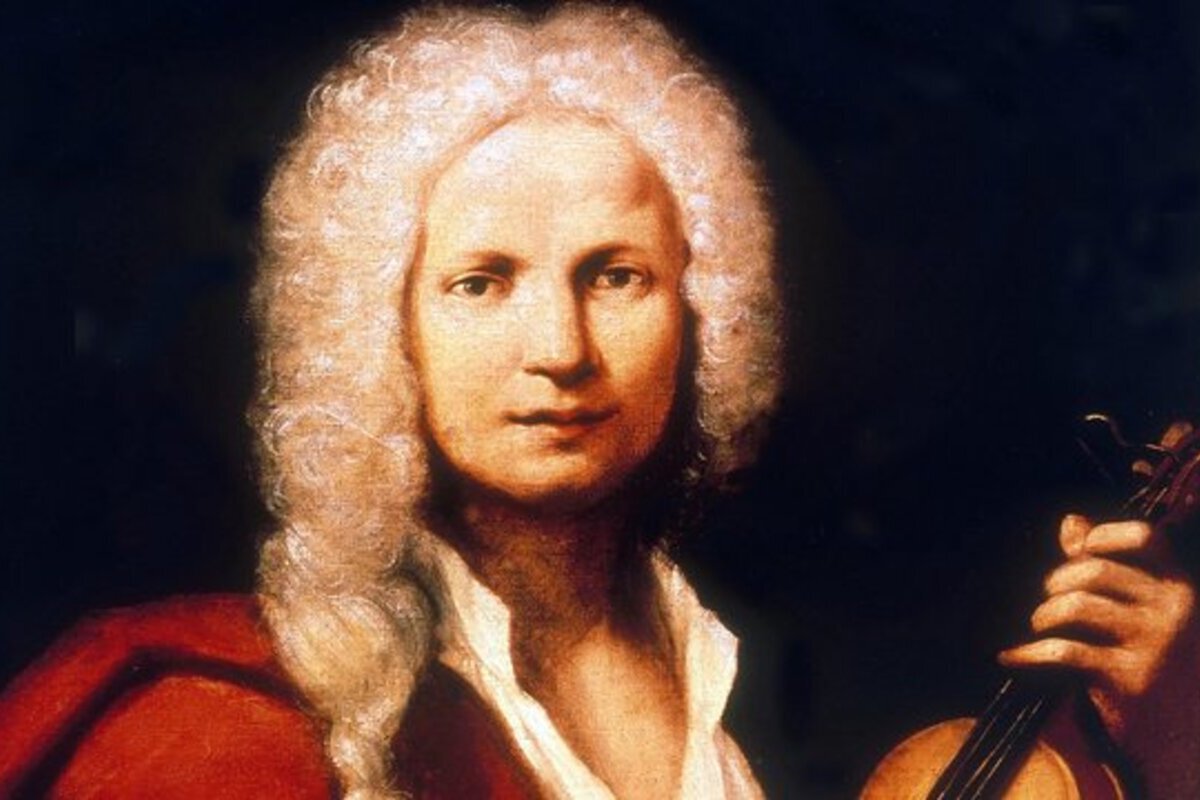
Antonio Vivaldi is one of the greatest composers of the Baroque era, whose music has continued to captivate audiences around the world for more than three centuries. This Venetian genius gifted humanity hundreds of remarkable works, among which the famous Four Seasons have become a true symbol of classical music. His life was filled with creative triumphs, unexpected turns of fate, and mysteries that still intrigue scholars today. Below are fascinating facts about the life and work of this legendary composer that you may not have known.
- Antonio Lucio Vivaldi was born on March 4, 1678, in Venice, into the family of a professional violinist. His father, Giovanni Battista Vivaldi, was a violinist in the chapel of St. Mark’s Basilica and one of the founders of the Venetian orchestra. It was his father who became Antonio’s first music teacher and instilled in him a love for the violin. Interestingly, Vivaldi’s birthday coincided with a strong earthquake in Venice.
- Vivaldi had distinctive red hair, which earned him the nickname “the Red Priest.” This hair color was quite rare in Italy at the time and made the composer easily recognizable. The nickname followed him throughout his life and was often used in official documents. Even theater posters sometimes referred to him simply as the Red Priest.
- In 1703, Vivaldi was ordained as a Catholic priest, but he served Mass only for a short period. According to legend, he stopped officiating because asthma attacks prevented him from completing religious services. Some historians believe the true reason was his greater passion for music than for clerical duties. Eventually, church authorities allowed him to focus entirely on his work as a composer.
- Vivaldi suffered from a chronic condition that he described as a “tightness in the chest,” which was most likely bronchial asthma. This illness affected him from childhood and significantly influenced his daily life and work. The composer could not walk long distances and often traveled in a special chair or by gondola. Despite his illness, he lived a relatively long life for his era and remained creatively active until his final days.
- Vivaldi spent most of his career at the Venetian orphanage for girls known as the Ospedale della Pietà. This institution was one of four Venetian charitable establishments famous for their exceptional music programs. Vivaldi initially worked there as a violin teacher and later became the musical director. Concerts performed by the orphaned girls attracted audiences from all over Europe.
- Under Vivaldi’s leadership, the girls of the Ospedale della Pietà achieved such a high level of musicianship that their orchestra was considered one of the finest in Europe. The young women played all kinds of instruments, including those traditionally regarded as masculine, such as the trumpet and the horn. Their concerts were attended by monarchs, aristocrats, and notable figures from various countries. Performances at the orphanage became one of Venice’s main cultural attractions.
- Throughout his life, Vivaldi composed more than 500 concertos, making him one of the most prolific composers in history. About 230 of these were written for the violin, his favorite instrument. He also composed numerous concertos for flute, oboe, bassoon, cello, and other instruments. Many of these works remain part of the repertoire of leading musicians today.
- The famous Four Seasons, written around 1720, consist of four violin concertos, each representing one season of the year. They are among the earliest examples of program music, in which sounds imitate natural phenomena such as birdsong, thunderstorms, and howling winds. Vivaldi accompanied each concerto with a sonnet explaining its musical content. Today, Four Seasons are among the most frequently performed works in classical music.
- Vivaldi wrote around 50 operas, although only about 20 have survived to the present day. In his time, he was an extremely popular opera composer, and his works were staged in theaters throughout Italy. Opera brought him both fame and substantial income. Unfortunately, many of his operatic scores were lost due to fires, wars, and simple neglect.
- In addition to instrumental and operatic music, Vivaldi composed a large body of sacred music. His Gloria in D major is one of the most famous choral works of the Baroque period. He also wrote numerous cantatas, motets, psalms, and oratorios. Vivaldi’s sacred music combines deep spirituality with the virtuosity and melodic richness characteristic of his style.
- Vivaldi was not only a composer but also a virtuoso violinist who amazed audiences with his technical skill. Contemporary accounts describe his playing as incredibly fast and technically flawless. He significantly expanded the technical possibilities of the violin by introducing new playing techniques. His violin concertos are still regarded as benchmarks of virtuosity and technical difficulty.
- During his lifetime, Vivaldi traveled extensively across Europe, visiting cities such as Vienna, Prague, and Amsterdam. In 1723–1724, he spent a season in Rome, where his operas achieved great success. His music was particularly popular in the Netherlands, where collections of his works were published. These travels helped spread his fame throughout the continent.
- Vivaldi maintained a close relationship with the contralto Anna Girò, who was his student and the principal performer of leading roles in his operas. Anna and her sister Paolina accompanied the composer on his travels for many years. The nature of their relationship gave rise to rumors and scandals, although Vivaldi always insisted on their innocence. Church authorities even banned him from entering Ferrara because of these accusations.
- Johann Sebastian Bach held Vivaldi’s music in high regard and transcribed several of his concertos for harpsichord and organ. These transcriptions helped preserve and popularize Vivaldi’s work in Germany. Bach studied Vivaldi’s scores to refine his own compositional techniques. The influence of the Italian master can be traced in many of Bach’s works.
- In his concertos, Vivaldi established the standard three-movement structure of fast–slow–fast, which became the norm for the concerto genre. This form influenced all later composers, including Mozart and Beethoven. He also developed the principle of contrast between soloist and orchestra. His innovations in form and structure shaped the development of the concerto for centuries.
- Vivaldi was a skilled entrepreneur who actively managed the publication and sale of his music. He personally supervised the printing of his works in leading publishing houses in Amsterdam. He also earned money by selling manuscript copies of his concertos directly to wealthy patrons. His business acumen allowed him to maintain a comfortable standard of living for much of his career.
- By the late 1730s, Vivaldi’s popularity began to decline as musical tastes in Europe changed. The new galant style gradually replaced Baroque aesthetics, and Vivaldi’s works came to be seen as outdated. This forced him to seek new opportunities outside Venice. He decided to move to Vienna, hoping for the patronage of Emperor Charles VI.
- In 1740, Vivaldi arrived in Vienna, but his hopes for imperial support were soon dashed. Shortly after his arrival, Emperor Charles VI died, and all theaters were closed during the period of mourning. Deprived of income and support, Vivaldi found himself in severe financial difficulty. He died in poverty on July 28, 1741, and was buried in a simple grave.
- Vivaldi’s funeral took place at the cemetery of the Vienna hospital and was conducted at the lowest possible level. Only a few people attended, among them the young Joseph Haydn, who reportedly sang in the funeral choir. The exact location of Vivaldi’s grave was later lost and remains unknown. Today, the Vienna University of Technology stands on the site of the former cemetery.
- After Vivaldi’s death, his music was almost completely forgotten for nearly two centuries. His works were rarely performed and were considered little more than historical curiosities. His name appeared mainly in music history books rather than in active performance repertoires. This period of neglect was typical for many Baroque composers whose music fell out of fashion.
- A true revival of interest in Vivaldi’s music began in the 1920s thanks to the efforts of the Italian musicologist Alberto Gentili. He discovered a vast collection of Vivaldi’s manuscripts in the library of a monastery in Piedmont. This collection included hundreds of previously unknown works, such as operas, concertos, and sacred compositions. The discovery caused a major sensation in the musical world.
- Today, the National Library of Turin houses the largest collection of Vivaldi’s manuscripts in the world. It contains more than 450 autograph scores by the composer and is an invaluable resource for researchers. Many works from this collection are still awaiting their first modern performances. Cataloging and scholarly study of these manuscripts continue to this day.
- Vivaldi’s works were systematically cataloged in the 1970s by the German musicologist Peter Ryom. This is why the composer’s pieces are identified by RV numbers. The Ryom catalog includes more than 800 works and is regularly updated as new discoveries are made. This system greatly facilitated the study and performance of Vivaldi’s music.
- Vivaldi’s music is widely used in modern popular culture, film, and advertising. Four Seasons can be heard in countless movies, television series, and commercials. His compositions also inspire contemporary musicians across various genres, from rock to electronic music. This versatility testifies to the timeless appeal of his musical genius.
- Venice, Vivaldi’s native city, continues to honor the memory of its great son in many ways. Festivals dedicated to his music are held there, and the church where he was baptized has become a place of pilgrimage for admirers. A commemorative plaque marks the site of the former Ospedale della Pietà. Streets, hotels, and cultural institutions throughout Italy bear the name of Vivaldi.
These remarkable facts reveal the multifaceted personality of Antonio Vivaldi, who was not only a brilliant composer but also a virtuoso performer, a savvy entrepreneur, and a man of complex destiny. His music survived centuries of obscurity and returned triumphantly to the world’s concert halls, becoming an integral part of global cultural heritage. Vivaldi’s work remains a living testament to the enduring power of art and continues to inspire new generations of musicians and listeners.


