
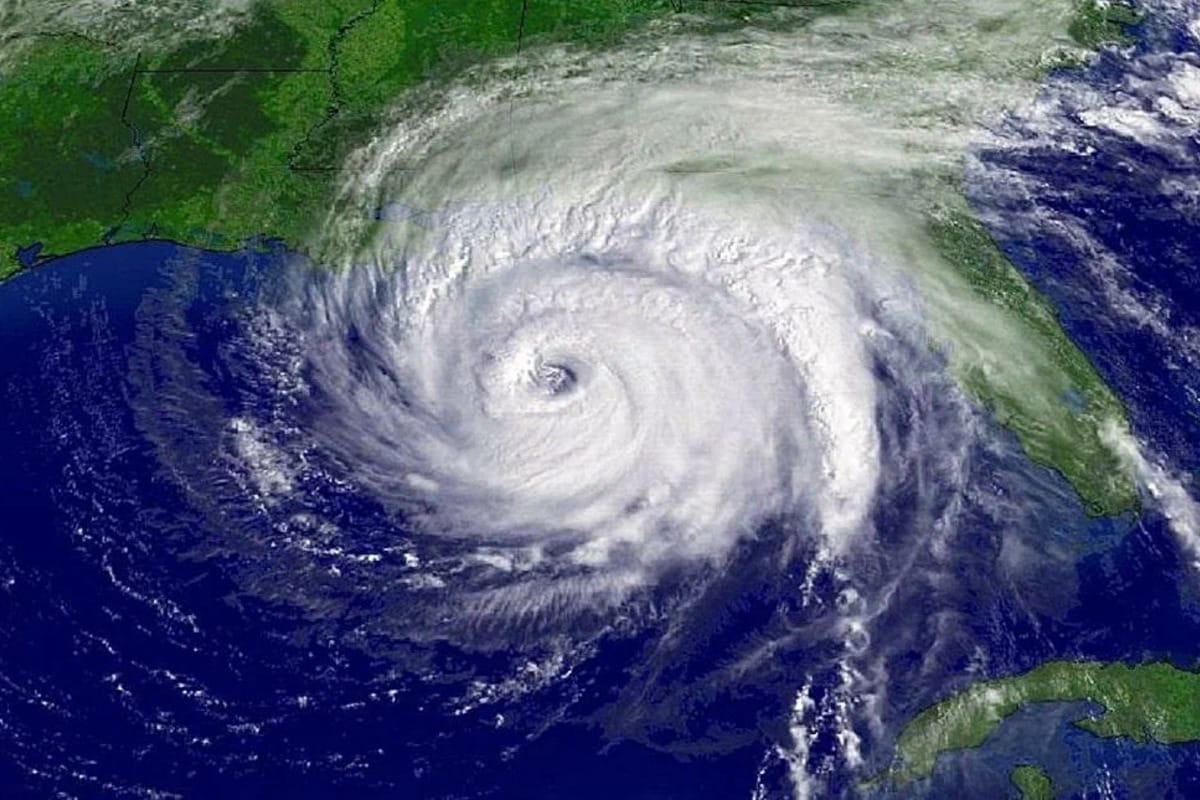
The weather we experience every day is shaped by complex atmospheric processes, and anticyclones play one of the most important roles in this. These magnificent high-pressure systems are capable of determining the climate of entire regions weeks in advance. Interesting facts about anticyclones will surprise even those who consider themselves experts in meteorology. Most people have heard this word in weather forecasts, but few have ever stopped to think about what enormous force is concealed behind this term. Incredible facts about these atmospheric formations reveal a completely different side of the sky we are so familiar with.
- An anticyclone is an area of elevated atmospheric pressure in which pressure is at its maximum in the centre and gradually decreases towards the edges. Air within an anticyclone moves from the centre outward to the periphery and is deflected in the process under the influence of the Coriolis force. In the Northern Hemisphere this movement occurs clockwise, while in the Southern Hemisphere it occurs in the opposite direction. This is precisely why anticyclones in different hemispheres rotate in opposing directions.
- The sheer size of anticyclones is staggering — their diameter can reach several thousand kilometres. Some stationary anticyclones cover an area that exceeds the surface of an entire continent. The Azores anticyclone over the Atlantic Ocean, for instance, stretches for thousands of kilometres and influences the weather across Europe for nearly the whole year. Compared to cyclones, anticyclones are generally larger in size, though considerably calmer in nature.
- Within an anticyclone, air descends from above downward — a process known as subsidence. As the air sinks, it is compressed and warmed, which prevents the formation of clouds and precipitation. This is precisely why anticyclones are associated with clear, sunny weather in summer and frosty, cloudless weather in winter. The absence of cloud cover means that the surface heats up strongly during the day and cools down rapidly at night.
- Anticyclones are divided into mobile and stationary, or blocking, types. Blocking anticyclones can remain in one place for weeks or even months, disrupting the normal movement of atmospheric fronts. They are responsible for prolonged droughts, abnormal heatwaves, and extended periods of frost. The blocking anticyclone over Russia in the summer of 2010 caused record-breaking heat and widespread forest fires.
- Anticyclonic weather in winter is frequently accompanied by the phenomenon of temperature inversion. Under normal circumstances, temperature decreases with altitude, but in an anticyclone the descending air creates a warm layer above the cold surface layer. This blocks the vertical mixing of the atmosphere and encourages the accumulation of pollutants, fog, and smog over urban areas. This is why a deterioration in air quality is so often recorded in cities on frosty, clear days.
- The Antarctic anticyclone above Antarctica is one of the most powerful and persistent on the planet. It forms as a result of the intense radiative cooling of the ice sheet and exists for practically the entire year. This anticyclone generates strong katabatic winds that flow down from the continent towards the coast and can reach hurricane-force speeds. It is one of the primary factors shaping the most severe climate found anywhere on Earth.
- The speed at which mobile anticyclones travel is relatively low — typically between 30 and 40 kilometres per hour. They move considerably more slowly than cyclones, which explains why settled weather tends to last for such an extended period during their influence. Sometimes an anticyclone slows down so much that it effectively comes to a halt and transforms into a blocking anticyclone. This kind of behaviour is among the most challenging phenomena to forecast in the field of meteorology.
- Subtropical anticyclones form over the oceans in zones between 25 and 35 degrees of latitude and are extraordinarily stable atmospheric formations. They arise as a result of the general circulation of the atmosphere, when air that has risen at the equator descends in the subtropics. It is under their influence that the world’s largest deserts are formed — the Sahara, the Arabian Desert, and the Australian Desert. These anticyclones are, in effect, factories of arid climate for vast regions of the planet.
- The anticyclone over Siberia, known as the Asian High or the Siberian High, is the most powerful winter anticyclone on land. It forms as a result of the extreme cooling of continental air during winter and distributes cold air masses across enormous distances. Under its influence, temperatures in Yakutia drop below minus 60 degrees Celsius. This anticyclone is also one of the reasons for the dry and bitterly cold winters experienced across a significant part of Asia.
- At the centre of an anticyclone, winds are typically very weak or entirely absent, since the horizontal pressure gradient there is at its minimum. This zone of calm within oceanic anticyclones posed a genuine danger to sailing vessels in the past. Sailors could be left stranded without movement in the middle of the ocean for weeks at a time, waiting for the wind to return. It is from this very experience that legends arose about the dead zones of the ocean, where ships could be trapped for long periods.
- Atmospheric pressure at the centre of a powerful anticyclone can exceed 1,040–1,060 hectopascals, whereas the standard pressure at sea level is approximately 1,013 hectopascals. The record surface pressure of 1,083.8 hectopascals was recorded in December 1968 in Agata, Russia, precisely under the conditions of a powerful anticyclone. Such extreme values are exceptionally rare and require the simultaneous occurrence of several favourable conditions. The high density of cold air is one of the key factors that makes the achievement of such records possible.
- Anticyclones play an important role in the formation of what are known as heatwaves. When a powerful anticyclone blocks the movement of cooler air masses, the temperature in the affected region can rise day after day with no relief whatsoever. The European heatwave of 2003, which claimed tens of thousands of lives, was directly linked to a powerful blocking anticyclone. As the climate continues to change, such events are becoming increasingly intense and more frequent.
- Anticyclones have not only a surface-level expression but also an upper-atmospheric one, in the form of so-called ridges in the upper troposphere. The interaction between surface-level and upper-level anticyclonic structures determines the stability of the entire system and the duration of its existence. Meteorologists monitor both levels in order to forecast the behaviour of an anticyclone more accurately. The more closely aligned the lower and upper levels are, the more stable and long-lasting the anticyclone proves to be.
Fascinating facts about anticyclones remind us that even an everyday weather forecast conceals behind it a complex and magnificent world of atmospheric science. These gigantic systems shape not only tomorrow’s weather but also the climate of entire regions for years to come. What you might not have known about anticyclones demonstrates just how profound and varied the influence of atmospheric processes is on our daily lives. To study nature is to better understand the world in which we live.


