
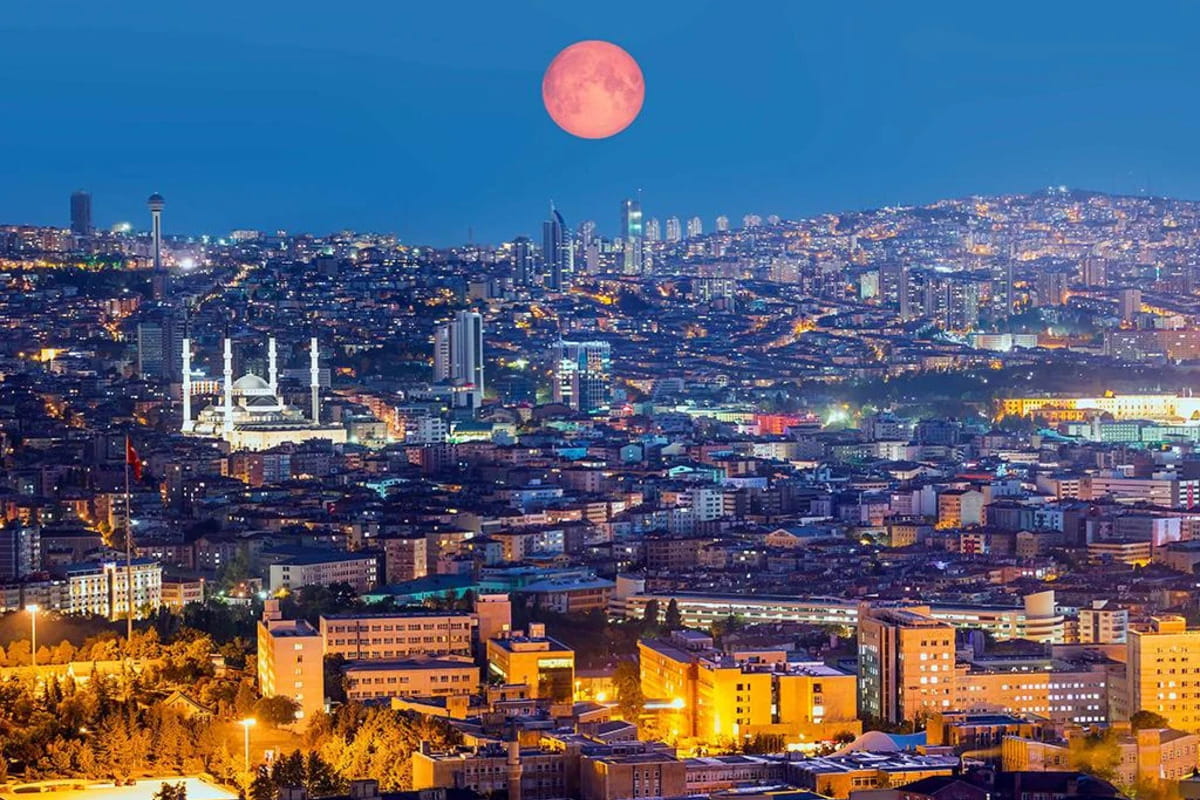
Turkey’s capital Ankara often remains in the shadow of the more famous Istanbul, yet this city with its extraordinarily rich history and unique character deserves special attention. Nestled in the heart of the Anatolian Plateau, Ankara has witnessed the rise and fall of great empires throughout millennia. Amazing facts about Ankara reveal a city where ancient ruins peacefully coexist with contemporary architecture, and traditions seamlessly blend with innovation. You might not know that this city became the capital only in the twentieth century, despite its history stretching back thousands of years into antiquity. Fascinating facts about Ankara will help you discover this underrated corner of Turkey from an entirely fresh perspective.
- Ankara became the capital of Turkey in 1923 following Mustafa Kemal Atatürk’s decision after the War of Independence concluded. He deliberately chose this city over Istanbul due to its strategic central location within the country and its symbolic significance as the heart of the national liberation movement. This choice carried profound political meaning since Istanbul remained associated with the Ottoman Empire and foreign influence. Relocating the capital formed an essential part of the broader modernization program and Western orientation of the new Turkish republic.
- In ancient times the city bore the name Ancyra and served as an important center for the Galatians a Celtic tribe that settled in central Anatolia during the third century BCE. These Celts gave the city its original name connected to the word for anchor reflecting its significance as a commercial hub along trade routes. Later Ancyra became a provincial capital of the Roman Empire renowned for its Temple of Augustus and high quality woolen textiles. Traces of Celtic presence survive in archaeological discoveries and in the city’s very name which evolved into Ankara.
- The mausoleum of Atatürk known as Anıtkabir stands as one of the city’s most significant monuments and the burial place of modern Turkey’s founder. This magnificent complex took fifteen years to construct and opened in 1953 on the tenth anniversary of Atatürk’s death. Its architecture uniquely blends elements of traditional Turkish and Hittite styles with contemporary forms symbolizing the connection between the nation’s past and future. Thousands of visitors arrive daily to pay respects to the national hero and witness the impressive ceremonial changing of the guard.
- Ankara ranks among the world’s highest capital cities situated approximately nine hundred meters above sea level on the Anatolian Plateau. This elevated position creates a sharply continental climate characterized by cold snowy winters and intensely hot summers. Winter temperatures frequently drop below freezing while summer heat can soar to forty degrees Celsius or higher. This challenging climate significantly influenced the city’s architectural development with buildings designed to provide protection against extreme weather conditions.
- The city gained fame for its distinctive animals particularly Angora goats which produce the valuable mohair fiber prized worldwide. These goats with their long silky coats were introduced to Europe specifically from Ankara becoming a living symbol of the city’s heritage. Additionally the region became known for Angora rabbits with exceptionally soft wool and Angora cats distinguished by their characteristic long white fur. These animals held not only commercial importance but also became integral to the cultural identity of the region.
- Rising on a hill in central Ankara stands an ancient citadel with origins dating back to the Roman period though most visible structures belong to the Seljuk and Ottoman eras. From the fortress summit visitors enjoy breathtaking panoramic views across the modern cityscape and surrounding foothills of the plateau. Within the protective walls historic houses survive where artisans continue crafting traditional Turkish souvenirs and linen products using time honored techniques. This area represents a genuine treasure for those seeking to experience the authentic spirit of old Ankara.
- Ankara functions as a major educational center of Turkey hosting more than ten universities including the prestigious Hacettepe University founded as early as 1866. These institutions attract tens of thousands of students not only from across Turkey but also from other nations particularly Central Asia and the Middle East. The substantial student population infuses the city with youthful energy and an intellectual atmosphere visible in its vibrant cultural life. Many university campuses nestle among green parks making academic life here especially pleasant and conducive to learning.
- The city houses one of the world’s finest archaeological museums the Museum of Anatolian Civilizations located within a restored Ottoman caravanserai and bathhouse from the sixteenth century. The museum’s exhibitions span from the Paleolithic era through the Roman period featuring extraordinary artifacts from the Hittite capital Hattusa. Among its most precious items are golden jewelry from royal tombs at Alacahöyük and cuneiform tablets preserving Hittite archival records. The museum has received multiple awards as Europe’s best museum thanks to its exceptional and comprehensive collection.
- Ankara maintains a well developed public transportation system featuring a modern metro network with multiple expanding lines. The first metro line opened in 1996 and today the system reaches most city districts providing rapid transit for millions of passengers daily. Beyond the metro the city operates an extensive bus network and funicular railways that help residents navigate significant elevation changes across the urban landscape. An integrated electronic payment system further simplifies travel for both tourists and local residents throughout the transportation network.
- The city hosts one of Turkey’s largest and most modern airports Esenboğa International which serves both domestic and international flights efficiently. This airport developed into a crucial transportation hub owing to its strategic central location within the country. Following comprehensive renovations it now accommodates nearly thirty million passengers annually making it one of the region’s key aviation centers. Direct railway connections provide convenient access between the airport and the city center for arriving travelers.
- Ankara serves as the center of Turkey’s defense industry with headquarters of numerous military units and defense enterprises located throughout the city. The Turkish Ministry of National Defense maintains its primary offices here alongside many military academies and research institutions. This concentration stems from the city’s historical role as the headquarters of the national liberation movement during the War of Independence. The presence of military installations grants Ankara a distinctive status among Turkish cities reflecting its ongoing strategic importance.
- The city lies surrounded by fertile agricultural lands where farmers cultivate wheat barley and other cereal crops making the region an important agricultural center. Large farms on Ankara’s outskirts specialize in growing vegetables and fruits to supply the capital’s metropolitan area with fresh produce. Local varieties of apples and cherries enjoy particular renown considered among the most flavorful in all of Turkey. Historically this agricultural productivity ensured the city’s food security even during prolonged sieges in earlier centuries.
- Ankara features several expansive parks with Gençlik Parkı being the most famous situated in the city center on the site of a former military base. This park has become a beloved recreational space where residents relax on grassy areas play table tennis or paddle boats across its central lake. The park also contains a memorial dedicated to victims of the Armenian Genocide reflecting the region’s complex historical narrative. Green spaces hold special value for residents seeking relief from the city’s hot summer temperatures.
- Ankara possesses a distinctive culinary tradition where flavors of central Anatolia blend with influences from other Turkish regions. Local specialties include Ankara kebab prepared with beef and aromatic spices as well as traditional köfte meatballs made from lamb. Particularly popular are honey and nut based desserts prepared according to recipes passed down through generations of local families. The city also produces high quality wool from which warm garments essential for cold winters are skillfully crafted.
- The city underwent dramatic transformation during the twentieth century evolving from a provincial Ottoman town into a modern capital. In the 1920s Ankara counted merely several tens of thousands of inhabitants but rapid urbanization followed its designation as the capital. Contemporary architecture harmoniously combines modernist elements with traditional Turkish motifs creating a unique visual identity across the urban landscape. Despite extensive modern development historic buildings survive in older neighborhoods preserving tangible connections to the city’s layered past.
Fascinating facts about Ankara convince us that this city represents a genuine treasury of history and culture awaiting discovery by curious travelers. Behind its contemporary capital facade lies a multilayered heritage narrating the stories of entire civilizations that succeeded one another on this ancient land. Ankara reminds us that a city’s true greatness depends not merely on its size but on the depth of its roots in time and human experience. Every corner of this remarkable city tells its own story contributing to an enthralling mosaic of human civilization across millennia.


