
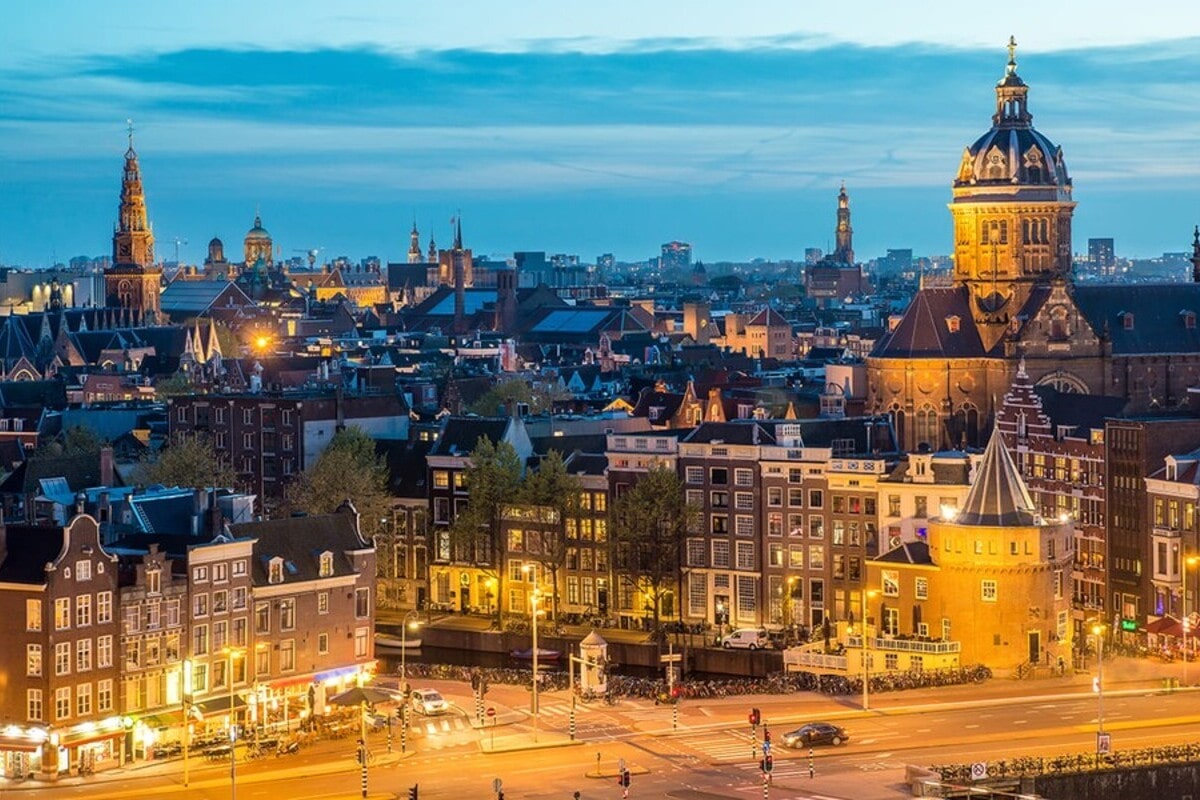
Amsterdam is often associated with canals, bicycles, and a sense of freedom, yet behind these familiar images lies a much deeper and more complex history. The city developed over centuries by combining engineering ingenuity, commercial skill, and a distinctive social mindset. Interesting facts about Amsterdam reveal it as a place of constant experimentation, adaptation, and bold decision-making. Here, fascinating facts relate not only to architecture and culture, but also to how everyday urban life is organized. You may not have known that Amsterdam is a striking example of how people learned to live in challenging natural conditions and turned them into an advantage.
- A significant part of Amsterdam lies below sea level. For centuries, the city has been protected by dams, canals, and pumping systems. Without continuous water management, many districts would face serious flooding risks. The ongoing struggle with water has shaped the character and thinking of the city’s inhabitants.
- Amsterdam’s canal system is considered one of the most complex in the world. It was designed not only for transportation, but also for flood control. The canals played a key role in regulating and storing water. Their layout still defines the structure and appearance of the city today.
- Most historic buildings in Amsterdam stand on wooden piles. These piles were driven deep into the ground to reach stable layers of soil. Some buildings rest on thousands of such supports. This technique made it possible for the city to exist on soft and water-saturated land.
- Many houses in the historic center appear noticeably tilted. This is the result of uneven ground settlement over long periods of time. Some buildings were even constructed with a slight forward lean from the beginning. This made it easier to lift goods using pulleys attached to the roofs.
- Amsterdam has one of the highest concentrations of museums in the world. The city offers a wide range of art, history, and specialized collections. Museums play a central role in the cultural life of Amsterdam. Every year, they attract millions of visitors from around the globe.
- Historically, Amsterdam was a major center of trade. During its golden age, the city became one of Europe’s leading financial hubs. Stock exchanges and international commerce flourished here. This legacy laid the foundation for the city’s modern economic culture.
- Amsterdam is known for its long tradition of religious and cultural tolerance. For centuries, people from different countries and backgrounds settled here. They found relative freedom of belief and expression. This openness contributed to the city’s diverse and multicultural character.
- Bicycles are an essential part of everyday life in Amsterdam. The number of bicycles in the city exceeds the number of residents. An extensive cycling infrastructure supports this way of life. This approach reduces traffic congestion and environmental impact.
- The city has very few wide central squares. Historical development followed canals and narrow streets rather than open plazas. This creates a more intimate and interconnected urban atmosphere. Such a layout strongly influences daily social interaction.
- Amsterdam actively uses water as a transportation space. Boats and water trams are common means of travel. Canals serve as practical alternatives to road traffic. This makes the city highly flexible in terms of mobility.
- Traditional Amsterdam houses feature large and open windows. This custom is linked to historical tax regulations and local cultural habits. Transparency became part of the city’s identity. It is often seen as a symbol of openness and honesty.
- Amsterdam has a rich tradition of music and theater. Concerts and festivals are held regularly throughout the year. Culture is accessible and deeply integrated into everyday life. Artistic expression remains a vital part of the city’s rhythm.
- The city places strong emphasis on environmental responsibility. Energy-efficient technologies are actively implemented. Parks and green spaces play an important role in urban planning. Amsterdam aims to reduce its ecological footprint.
- Amsterdam’s architecture reflects a blend of different historical periods. Medieval buildings stand alongside modern architectural projects. This contrast creates a unique visual identity. The city continues to evolve while preserving its historical foundations.
- Amsterdam played an important role in the development of freedom of speech and printing. At various times, books banned elsewhere were published here. The city became a refuge for thinkers and publishers. This tradition influenced the intellectual climate of Europe.
- Daily life in Amsterdam is based on a balance between order and personal freedom. Clear rules coexist with respect for individuality. Residents are accustomed to dialogue and compromise. This has shaped a distinctive culture of mutual respect.
Amsterdam appears as a city where engineering, culture, and freedom are seamlessly intertwined. Its captivating facts show how difficult conditions can become a source of progress. You may not have known many of these details, yet they help reveal the true character of the city. Interesting facts about Amsterdam remind us that genuine uniqueness grows from harmony between history, space, and people.


