
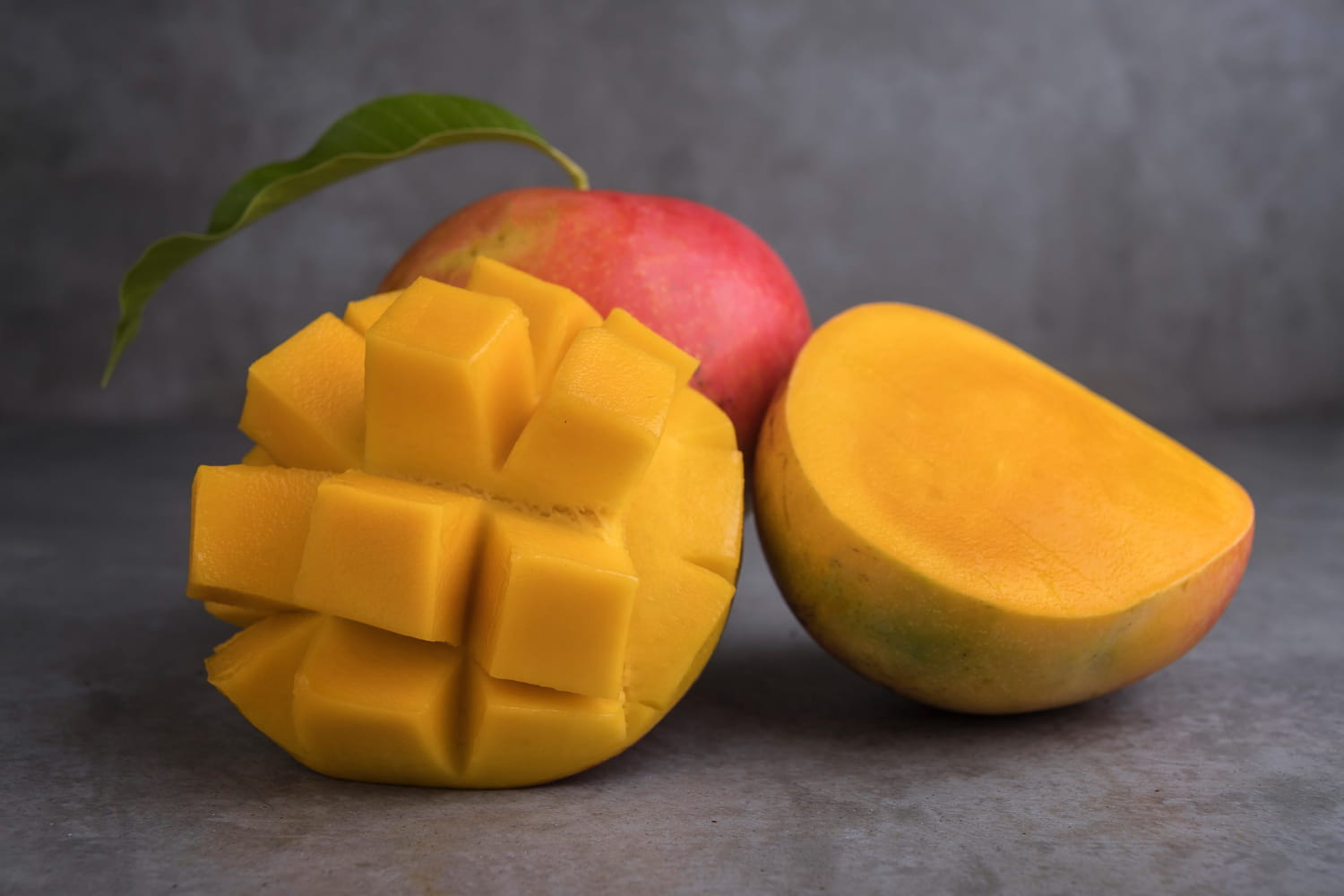
Mango is considered one of the oldest and most beloved fruits of humanity, combining unparalleled taste with tremendous health benefits. This tropical fruit is wrapped in legends, has a centuries-old cultivation history, and holds a special place in the cultures of many peoples around the world. Despite mango’s widespread popularity, there are numerous interesting facts about this fruit that can amaze even experienced gourmets. From symbolic significance in religious traditions to unique botanical features, mango conceals many secrets you may not have known. We invite you to discover fascinating facts about the royal fruit of the tropics that will change your perception of this exotic delicacy.
- Mango belongs to the same botanical family as cashews, pistachios, and poison ivy. This family is called Anacardiaceae, which is why some people may experience an allergic reaction to mango skin similar to the reaction from touching poison ivy. The juice and resin from the skin contain urushiol, the very substance that causes skin irritation upon contact with poison ivy. However, the flesh of mango is completely safe for consumption even for people with such sensitivity.
- The history of mango cultivation spans over 4,000 years and began in the territories of modern-day India and Myanmar. Archaeological excavations confirm that mango was cultivated in South Asia as early as the Neolithic era. This fruit is mentioned in ancient Sanskrit texts, Hindu legends, and Buddhist scriptures. From India, mango spread throughout Asia thanks to Buddhist monks and traders, and later Portuguese sailors brought it to Africa and South America in the 15th-16th centuries.
- In India, mango is considered the national fruit and a symbol of love, fertility, and prosperity. According to legend, the god Shiva grew mango for his beloved Parvati to demonstrate the strength of his love. Mango tree leaves are used in religious ceremonies, weddings, and festivals as a symbol of happiness and blessing. Even the paisley architectural ornament, popular in Indian art, actually depicts a stylized mango fruit.
- There are over 1,000 varieties of mango in the world that differ in size, shape, color, taste, and aroma. The smallest varieties can weigh just 150 grams, while the largest reach weights of over 2 kilograms. Skin color varies from green and yellow to orange, red, and even purple, with color not always indicating the degree of ripeness. Some varieties, like Indian Alphonso or Philippine Carabao, are considered true delicacies and cost significantly more than ordinary varieties due to their unique taste and texture.
- Mango is the most popular fruit in the world by consumption volume, surpassing even apples and bananas. Annually, over 50 million tons of mango are produced worldwide, with approximately 40 percent of the global harvest coming from India. China, Thailand, Indonesia, and Mexico also rank among the top five largest producers. Interestingly, most mangoes are consumed in the countries where they are grown, so only a small portion reaches the international market.
- Mango trees are record-holding longevity champions among fruit crops and can bear fruit for 300 years. Some trees in India, according to local residents’ testimonies, are over 400 years old and still produce harvests. Trees reach heights of 30-40 meters and have dense crowns that provide excellent shade in the hot tropical climate. The mango root system penetrates the soil to depths of up to 6 meters, making the tree extremely drought-resistant.
- Mango tree leaves contain toxic compounds and can be dangerous to animals when consumed in large quantities. Cows and other herbivorous animals that eat significant amounts of young leaves can become poisoned. At the same time, in traditional medicine, mango leaves are used to prepare decoctions for various ailments, but only in very small doses and after special processing. Interestingly, in some cultures, powder from dried leaves is added to toothpaste to strengthen gums.
- A single mango tree can produce up to 100,000 flowers during the flowering season, but only about 1-2 percent of them turn into fruit. Flowers appear in large panicle inflorescences up to 40 centimeters long and have a specific aroma that attracts pollinating insects. The period from flowering to full fruit ripening ranges from 3 to 6 months depending on variety and climatic conditions. Interestingly, most flowers fall off naturally, and the tree itself regulates the number of fruits it can grow to full maturity.
- Mango is an exceptionally rich source of vitamin A, as one medium fruit contains nearly 25 percent of the daily requirement for this important nutrient. Mango also contains over 20 different vitamins and minerals, including vitamin C, B-group vitamins, potassium, magnesium, and copper. The fruit contains a unique antioxidant called mangiferin, which has anti-inflammatory, anti-cancer, and neuroprotective properties. Regular consumption of mango promotes improved vision, strengthened immune system, and skin health.
- In some Southeast Asian countries, unripe green mangoes are considered a separate product and used completely differently than ripe fruits. Green mangoes have a sour taste and crunchy texture, are sliced and consumed with salt, chili, sugar, or fish sauce as a snack. In Thai cuisine, green mangoes are added to salads, while in Vietnamese cuisine, they are used to make spring rolls and pickled for winter storage. This consumption method allows using the harvest before full ripeness arrives and expands the culinary possibilities of this versatile fruit.
- The most expensive mango in the world was sold at auction in Japan for a price of over 3,000 dollars per pair of fruits. These were fruits of a special variety called Taiyo no Tamago, which translates as Eggs of the Sun, grown on Kyushu Island. These mangoes have a perfect shape, rich red color, sugar content over 15 percent, and weigh at least 350 grams each. Japanese farmers grow these fruits with extreme caution, each fruit is individually supported by a special net to avoid damage, and is harvested only after achieving absolute perfection.
- Mango seed can constitute up to 20 percent of the entire fruit’s weight and is theoretically edible after special processing. In some developing countries, mango seeds are dried, ground into flour, and used as an additional food product during crop failure years or famine. The seed contains starch, fats, and protein, but also has an astringent taste due to high tannin content. In traditional medicine, powder from seeds is used to treat diarrhea and dysentery due to its antimicrobial properties.
- Mango played an important role in spreading Buddhism throughout Asia, as Buddhist monks traditionally planted mango trees along trade routes. According to legend, Buddha himself meditated under a mango tree, and was gifted a mango grove where he could rest and preach. Monks took mango seeds with them on their wanderings and planted them near monasteries and on pilgrim paths. Thanks to this, mango spread from India to China, Thailand, Cambodia, and other countries in the region long before active trade began.
- Mango peel contains natural compounds that may help combat obesity and type 2 diabetes, as modern research shows. Scientists have discovered that extracts from mango peel are capable of suppressing fat cell formation and improving glucose metabolism. Phytochemical substances in the peel, such as quercetin, norathyriol, and mangiferin, demonstrate powerful antioxidant and anti-inflammatory properties. Despite this, the peel is usually not consumed due to unpleasant taste and possible allergic reactions, but its extracts are being studied for creating dietary supplements.
- In some cultures, mango is used for weather prediction by observing tree flowering. In India, farmers traditionally believe that if mango trees bloom abundantly, the monsoon season will be favorable for crops. This method has certain scientific justification, since mango flowering indeed depends on temperature, humidity, and other climatic factors that also affect monsoon formation. Although modern meteorology uses more accurate forecasting methods, these traditional observations are passed down from generation to generation.
- Amchur, or powder from dried green mangoes, is an important spice in Indian cuisine and used as a natural souring agent. This powder has a sour taste with light fruity notes and is added to curry, chutney, marinades, and vegetable dishes to give them piquancy. Amchur production helps utilize mangoes that fell from the tree before ripening or have an imperfect appearance for sale as fresh fruit. This product is rich in vitamin C, iron, and antioxidants, and also has a longer shelf life compared to fresh fruits.
- Mango is capable of ripening after harvest, which makes it convenient for long-distance transportation. Fruits are usually collected when they reach physiological maturity but still remain firm and green, after which they gradually soften and gain sweetness during storage. The ripening process can be accelerated by placing mango in a paper bag together with apples or bananas, which release ethylene, a gas that stimulates ripening. However, mangoes that ripened on the tree usually have more intense flavor and aroma compared to those harvested green.
- In the 18th-19th centuries in Europe, mango was such a rare and expensive fruit that it was served only at royal banquets. English colonists in India tried to deliver mango to Great Britain, but most fruits spoiled during the long sea voyage. The first successful attempts at preserving mango led to the creation of chutney, a spicy sauce that became popular in British cuisine. Fresh mangoes became more accessible in Europe only with the development of fast air transportation in the mid-20th century.
- Some mango varieties can change their taste depending on the soil in which they are grown, similar to how terroir affects wine taste. Mango grown on volcanic soils may have a more intense flavor with light mineral notes, while fruits from sandy coastal areas often have a sweeter and softer profile. Climatic conditions, rainfall amount, and even elevation above sea level affect the texture, juiciness, and sugar-to-acid ratio in the fruit. That is why certain regions, like Indian Alphonso or Mexican Ataulfo, are famous for their unique mango varieties.
- Mango fibers can get stuck between teeth due to the unique structure of the fruit’s flesh, which contains numerous long cellulose fibers. These fibers stretch from the seed to the skin and are especially noticeable in some old or fibrous mango varieties. Breeders have worked for centuries on developing fiber-free varieties with smooth creamy texture that are more pleasant for consumption. However, even in modern commercial varieties, some fibers can be found, especially if the fruit is overripe or improperly stored.
Fascinating facts about mango demonstrate how multifaceted and unique this tropical fruit is, which is much more than just a delicious treat. From ancient cultural traditions to modern scientific research, mango continues to reveal new facets of its significance for humanity. The incredible properties of this royal fruit, its influence on culture, economy, and health of millions of people make it a true treasure of nature. Now that you have learned so much new information about mango, each bite of this exotic fruit will acquire special meaning and taste for you.


