
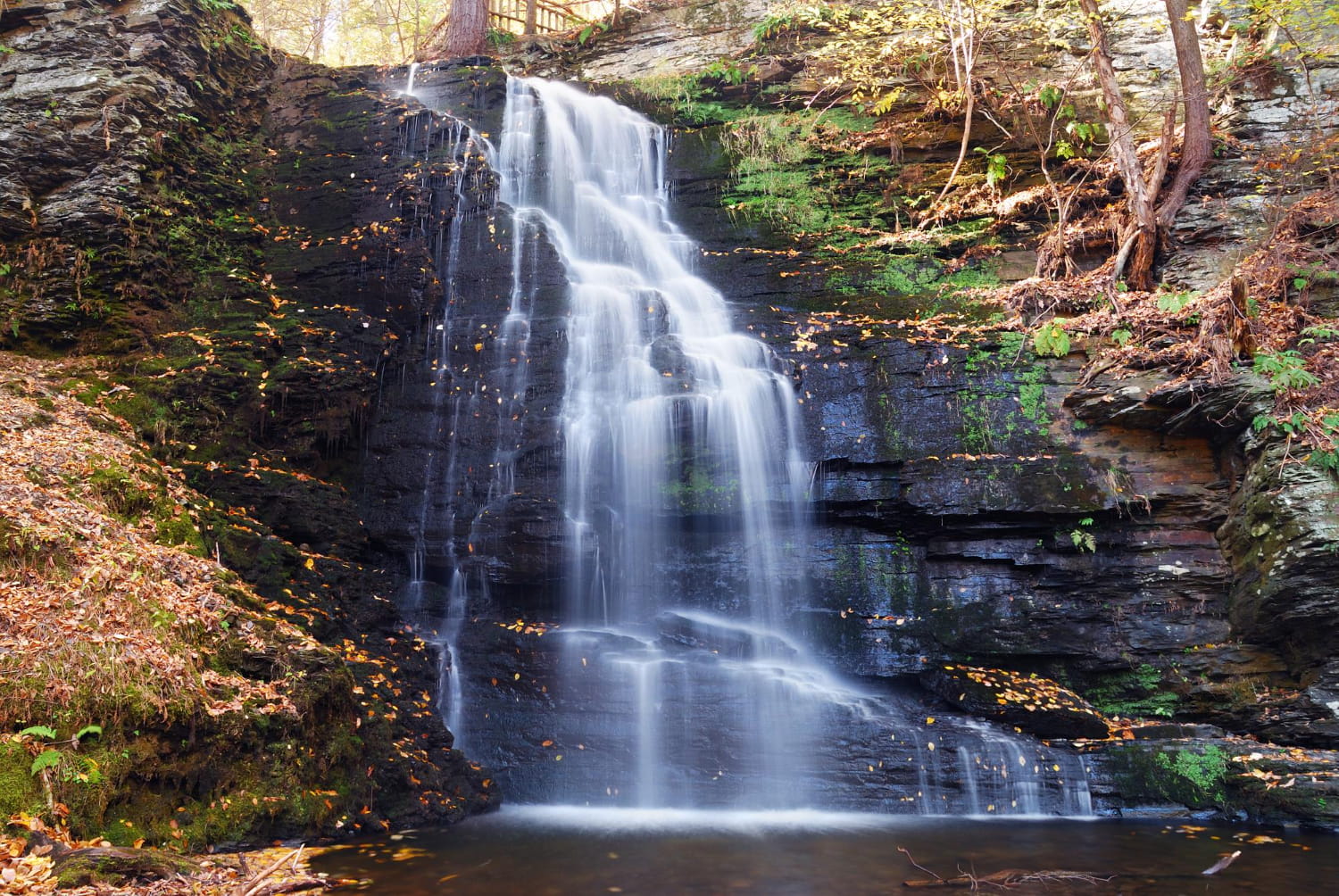
Waterfalls stand as true gems of our planet where water dances eternally in a captivating ballet of power and grace transforming stone into living sculptures. They mesmerize us with their raw force creating places where time seems to stand still and the soul fills with tranquility beneath the thunder of mighty cascades. Amazing facts about waterfalls reveal a world where water has shaped landscapes across millions of years crafting unique ecosystems and inspiring human imagination throughout history. You might not know that certain waterfalls can temporarily vanish or even appear to flow upward when powerful winds intervene. Fascinating facts about waterfalls help us understand how these natural wonders become living witnesses to our planet’s geological evolution.
- Angel Falls in Venezuela holds the distinction of being the world’s tallest waterfall with a total height of nine hundred seventy nine meters nearly sixteen times higher than the famous Statue of Liberty. It was named after American aviator Jimmie Angel who first discovered it from the air during the twentieth century. Water plunges from the summit of Auyán-tepui mountain part of an ancient geological formation called tepui that emerged more than two billion years ago. Due to its tremendous height water often atomizes into mist before reaching the bottom creating a visible vapor curtain observable from many kilometers away.
- Victoria Falls situated on the border between Zambia and Zimbabwe ranks as the world’s widest waterfall featuring one of the most impressive single curtains of falling water spanning over one kilometer in width and one hundred seven meters in height. Local inhabitants call it Mosi-oa-Tunya meaning the smoke that thunders referring to the characteristic roar and perpetual mist rising above the cascade. David Livingstone became the first European to witness the falls in eighteen fifty five naming them after Queen Victoria. During flood season water volume here can surge to five hundred thousand cubic meters per second generating truly phenomenal power.
- Some waterfalls are actually temporary appearing only during seasonal rains or snowmelt completely disappearing during dry periods. These seasonal cascades frequently form along rocky cliffs where no permanent water source exists and flow occurs only when excess water spills over the edge. In California Horsetail Fall transforms into a firefall during February sunsets when sunlight strikes the descending water at precisely the right angle creating an illusion of liquid fire. This phenomenon lasts merely minutes each day for several days annually requiring perfect weather conditions and precise timing.
- Submarine waterfalls exist within the world’s oceans where cold salty water cascades downward along the seafloor slope due to density differences with less saline water above. The most famous example occurs near Mauritius island where an optical illusion creates the appearance of a waterfall plunging into the ocean though it actually represents sand and silt being transported downslope. This phenomenon results from powerful ocean currents carrying sediment from shallow shelves into deep underwater canyons. Such submarine waterfalls play crucial roles in ocean circulation patterns and nutrient distribution throughout marine ecosystems.
- Waterfalls can migrate upstream through erosion processes as water gradually wears away softer rock layers beneath a harder capstone. This phenomenon known as headward erosion may shift a waterfall several meters upstream each century. For instance Niagara Falls has traveled more than eleven kilometers upstream over the past twelve thousand years moving toward Lake Erie. Migration speed depends on rock composition and water flow intensity potentially accelerating significantly during flood events when erosive forces intensify.
- Certain waterfalls possess the remarkable ability to freeze during winter transforming into icy sculptures that preserve the shape of flowing water. Waterfalls within Yellowstone National Park frequently freeze creating fantastic ice formations around thermal features. In Norway Stegufossen waterfall freezes almost completely forming an ice arch that adventurous skiers sometimes use for sliding. This phenomenon occurs when temperatures drop below minus twenty degrees Celsius and water flow remains sufficiently slow for ice crystals to form and accumulate.
- Waterfalls generate their own microclimates through constant water atomization which significantly increases local humidity levels. This elevated moisture supports unique species of mosses lichens and ferns that cannot survive elsewhere in the region. Large waterfalls frequently produce permanent rainbows through sunlight interacting with suspended water droplets in the air. Many cascades also generate negatively charged ions believed to provide therapeutic benefits for human health and psychological wellbeing reducing stress and improving mood.
- Some waterfalls do not descend vertically but instead flow at angles or even horizontally when powerful winds deflect the water stream sideways. On Hawaii’s islands Manawaiopuna Falls during intense winds may flow completely horizontally or appear to rise upward against gravity. This phenomenon becomes especially dramatic during winter storms when wind speeds exceed one hundred kilometers per hour. Such waterfalls demonstrate nature’s extraordinary power capable of temporarily overcoming gravitational forces through atmospheric dynamics.
- Waterfalls play essential roles in cave formation particularly in limestone regions where constant water flow dissolves rock creating underground chambers and passages. Raglan Falls in Slovenia resides entirely within a massive cavern where water drops fifteen meters into an underground lake. These subterranean waterfalls often harbor unique ecosystems with species specially adapted to complete darkness and constant high humidity. Many such cascades remain accessible only to experienced spelunkers due to complex underground passage systems and navigation challenges.
- Certain waterfalls produce natural sounds resembling music due to the unique shapes of surrounding rock formations. Waterfalls within Colorado Plateau National Park create organ like humming when wind passes through natural openings in sandstone cliffs. Local Native American tribes historically considered these waterfalls sacred places where earth communicates with the heavens. Modern research indicates these natural harmonics may produce therapeutic effects on human psychology reducing anxiety and promoting mental relaxation.
- Waterfalls can be seasonal not only due to rainfall patterns but also through glacial melt creating powerful ice fed cascades during summer months. In Norway Vettisfossen waterfall derives its entire flow from melting glaciers reaching maximum volume in July when solar radiation peaks. Such waterfalls serve as sensitive indicators of climate change since their flow rates directly correlate with atmospheric temperatures. Glacial retreat across numerous regions has caused some ice fed waterfalls to diminish significantly or disappear entirely within recent decades.
- Some waterfalls originate not from surface rivers but from underground springs emerging through fissures in bedrock. Plum Tree Cascade in Washington state forms from three separate underground springs surfacing at different elevations along a cliff face. These spring fed waterfalls often maintain consistent flow even during drought periods since groundwater sources experience less seasonal variation than surface waters. Water from such cascades typically possesses exceptional purity having undergone natural filtration through multiple layers of sedimentary and volcanic rock.
- Certain waterfalls exist at such extreme elevations that their water freezes before reaching the ground transforming into ice mist suspended in air. Himalayan waterfalls above four thousand meters frequently demonstrate this phenomenon when air temperatures remain below freezing even during daylight hours. This ice mist accumulates at the waterfall’s base forming unique crystalline structures that may persist throughout summer months. Such high altitude cascades present significant hazards to mountaineers due to equipment icing risks and unpredictable ice fall events.
- Waterfalls can form part of geothermal systems where heated water rises from Earth’s interior creating unique warm or hot waterfalls. In Iceland Gvitarfoss waterfall exemplifies this phenomenon with water temperatures around forty degrees Celsius due to proximity to volcanic heat sources. These thermal waterfalls create specialized habitats for thermophilic microorganisms capable of thriving in elevated temperature conditions. Hot waterfalls also attract tourists seeking opportunities to bathe in naturally warmed waters even during winter months.
- Many waterfalls hold profound cultural significance for indigenous peoples and are regarded as sacred sites where rituals and ceremonies take place. Iguazu Falls on the Brazil Argentina border is considered sacred by the Guarani people who view it as the dwelling place of deities. According to legend a god desired to marry a beautiful maiden but her lover killed her to save her from the god and their tears formed the waterfall. Numerous other waterfalls worldwide feature prominently in local legends and mythologies underscoring their importance within humanity’s cultural heritage and spiritual traditions.
Fascinating facts about waterfalls convince us that these natural wonders serve as living chronicles of our planet’s continuous transformation. They remind us of water’s dual nature capable of patiently sculpting stone across millennia while simultaneously creating breathtaking beauty in every moment. Studying waterfalls provides valuable lessons about nature’s persistence and its extraordinary ability to transform even the most resistant materials into works of art. Each waterfall tells a unique story of water rock and time interacting across millions of years a narrative that continues unfolding with every drop that falls.


