
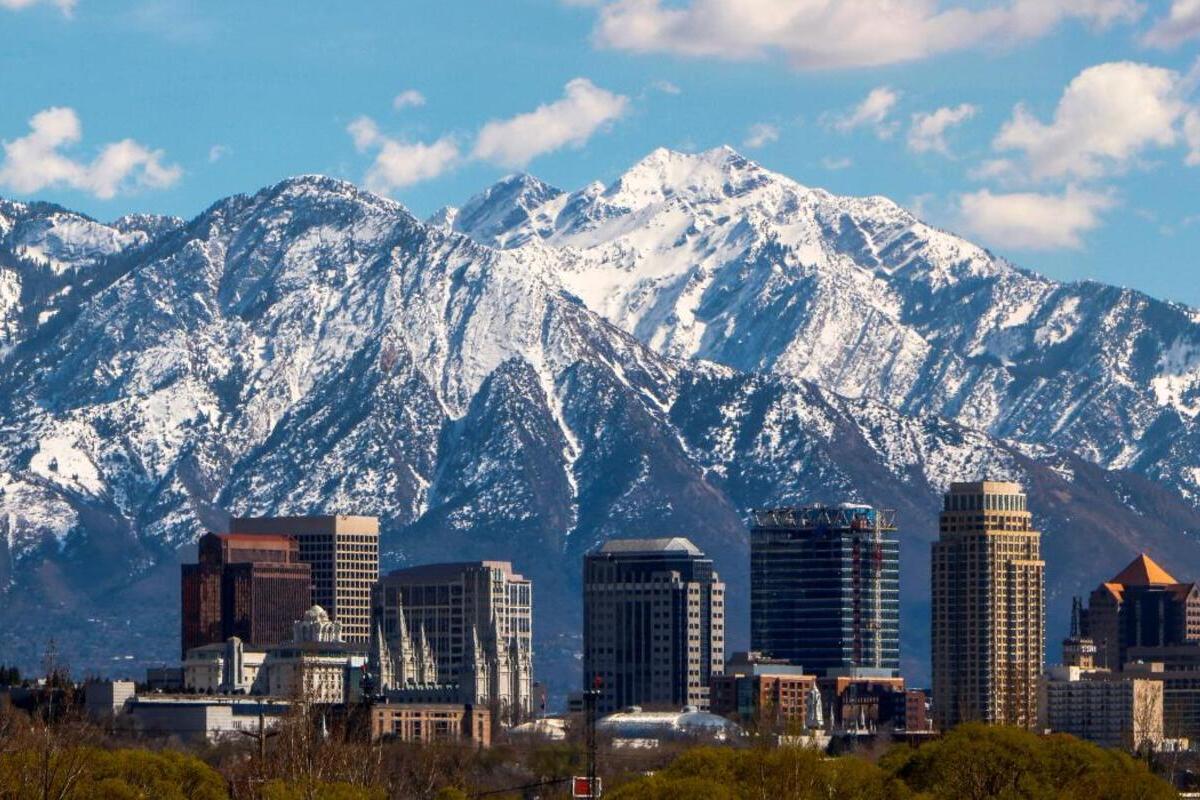
Utah stands as a true treasure of the American West where majestic canyons crimson cliffs and endless deserts weave together landscapes that steal the breath with their primordial beauty. This remarkable region masterfully blends extraordinary natural diversity ranging from snow-capped peaks of the Rocky Mountains to otherworldly desert plateaus resembling the surface of Mars. Amazing facts about Utah reveal a state where cutting edge technological innovation peacefully coexists with profound religious traditions while every stone preserves a story spanning millions of years of geological evolution. You might not know that this is precisely where Earth’s most spectacular national parks reside drawing millions of visitors annually from every corner of the globe. Fascinating facts about Utah will help uncover this unique region where nature displays the full magnitude of its creative power.
- Utah proudly bears the distinction of hosting five magnificent national parks collectively known as the Mighty Five including Arches Zion Bryce Canyon Canyonlands and Capitol Reef. Each park possesses its own geological narrative and distinctive rock formations making Utah a paradise for adventure seekers and nature photographers alike. Arches National Park contains over two thousand natural sandstone arches while Zion astonishes visitors with its sheer canyon walls soaring nearly two thousand meters skyward. These protected areas welcome more than ten million visitors annually securing their status among the world’s most celebrated natural attractions.
- The state derived its name from the Ute Native American tribe who inhabited these lands centuries before European settlers arrived during the nineteenth century. The word Utah translates to people of the mountains perfectly capturing the region’s dramatic geography surrounded by imposing mountain ranges. Interestingly the territory was originally intended to be named Deseret meaning honeybee hive in Mormon tradition but the United States Congress officially approved the current name when granting statehood in 1896. This naming history reflects the region’s complex journey from indigenous lands to modern American statehood.
- The Great Salt Lake represents a remnant of prehistoric Lake Bonneville which existed during the last ice age more than fourteen thousand years ago. Today it stands as the largest saltwater lake in the Western Hemisphere with salinity nearly four times greater than the ocean making it inhospitable for most aquatic life forms. Nevertheless the lake supports a unique ecosystem hosting millions of migratory birds particularly American avocets and phalaropes that feed on brine shrimp thriving in the hypersaline environment. The extreme salinity allows swimmers to float effortlessly on the surface similar to the Dead Sea creating a popular recreational attraction for visitors.
- Utah has earned recognition as the global epicenter of mountain biking especially around the town of Moab surrounded by red rock formations and meticulously designed trails ranging from beginner to expert difficulty. The annual Kokopelli Trail race attracts thousands of professional and amateur cyclists from across the planet testing their skills on challenging terrain. The renowned Slickrock Trail offers an otherworldly riding experience across petrified sand dunes with panoramic views of the Colorado River canyon below. This sporting culture has significantly boosted the regional economy generating thousands of jobs in tourism hospitality and outdoor recreation industries.
- Utah maintains the highest population growth rate among all American states during recent decades fueled by a robust economy favorable tax policies and exceptional quality of life. Most newcomers settle along the Wasatch Front urban corridor stretching from Provo through Salt Lake City to Ogden creating one of the nation’s fastest expanding metropolitan regions. This demographic surge has accelerated infrastructure development spurred residential construction and expanded transportation networks including light rail systems. However rapid expansion presents challenges including air quality concerns particularly winter inversions and increasing pressure on limited water resources in an arid climate.
- Utah serves as headquarters for The Church of Jesus Christ of Latter day Saints commonly known as the Mormon Church which has profoundly shaped the state’s cultural identity and social fabric. More than sixty percent of Utah’s residents belong to this faith making it uniquely homogeneous religiously compared to America’s typical diversity. The church’s iconic Salt Lake Temple and Tabernacle anchor Temple Square in downtown Salt Lake City attracting millions of visitors annually. Mormon cultural influence extends into state legislation particularly regarding alcohol regulations gambling prohibitions and strong emphasis on family oriented values.
- Utah’s geological record spans more than a billion years making it one of Earth’s most ancient and diverse landscapes in terms of rock formations and stratigraphy. Visitors can observe sedimentary layers representing every geological period including remarkable dinosaur fossils within the Morrison Formation containing some of the world’s best preserved specimens. Dinosaur National Monument straddling the Utah Colorado border displays over fifteen hundred dinosaur bones still embedded in the cliff face available for public viewing. This extraordinary geological diversity transforms Utah into a living open air museum for paleontologists and earth science enthusiasts.
- Utah has emerged as a major technology hub earning the nickname Silicon Slopes due to its concentration of high tech companies particularly along the Wasatch Front. The city of Lehi south of Salt Lake City has become an innovation center hosting headquarters for Adobe Qualtrics Pluralsight and numerous tech startups. The University of Utah contributes significantly through advanced research programs in computer science engineering and medical technology attracting talented graduates to the region. This technological renaissance has diversified Utah’s economy which historically depended primarily on mining agriculture and natural resource extraction.
- Utah possesses some of the darkest night skies in the continental United States owing to low population density and strict lighting ordinances in protected areas. Bryce Canyon National Park holds International Dark Sky Park certification providing exceptional conditions for stargazing and astronomical observation. Annual astronomy festivals draw thousands of enthusiasts to witness meteor showers lunar eclipses and the brilliant Milky Way arching across pristine skies. This celestial clarity has established Utah as North America’s premier destination for astro tourism and amateur astronomy.
- Utah ranks among America’s most arid states with over seventy percent of its territory receiving less than ten inches of annual precipitation creating persistent drought vulnerability. Despite this challenge early Mormon settlers engineered one of history’s most sophisticated irrigation systems during the nineteenth century transforming desert valleys into productive farmland. Modern water infrastructure relies heavily on snowpack melt from the Uinta Wasatch and Rocky Mountains making the region susceptible to climate change impacts. Scientists warn that rising temperatures could significantly reduce water availability threatening both agricultural and urban development in coming decades.
- Utah contains the world’s largest human made excavation the Bingham Canyon Mine also known as Kennecott Copper Mine located southwest of Salt Lake City. This colossal open pit measures approximately four kilometers wide and over one kilometer deep making it visible from space with the naked eye. Copper mining has continued here since 1906 producing substantial quantities of copper gold silver and molybdenum critical for modern electronics and infrastructure. While economically significant the mine’s environmental footprint including air quality impacts and landscape alteration remains a subject of ongoing discussion and mitigation efforts.
- Utah maintains an exceptional education system with high literacy rates and strong academic performance particularly in mathematics and science among elementary students. This achievement stems partly from Mormon cultural values that emphasize learning and intellectual development as spiritual pursuits. The University of Utah founded in 1850 stands as the oldest institution of higher education between the Mississippi River and California renowned for medical research law and engineering programs. Its medical center achieved a historic milestone in 1967 performing the world’s first permanent artificial heart implant a breakthrough that revolutionized cardiac care globally.
- Utah has become a world renowned destination for winter sports featuring some of Earth’s lightest driest snow colloquially called the Greatest Snow on Earth by locals. This meteorological phenomenon occurs because Pacific moisture loses most humidity crossing the Sierra Nevada arriving in Utah as extremely dry air that produces fluffy low density snow crystals. World class resorts including Park City Snowbird Alta and Deer Valley hosted events during the 2002 Winter Olympics and continue hosting international competitions annually. With over a dozen major ski areas Utah consistently ranks among North America’s premier winter tourism destinations drawing visitors from across the globe.
- Utah features one of America’s most scenic highway systems shaped by dramatic geography and settlement history. The historic Mormon Pioneer Trail stretching from Nebraska to Salt Lake City commemorates the 1847 journey of religious refugees seeking refuge in the Great Basin. State Route 12 winding through red rock country between Bryce Canyon and Capitol Reef has been designated an All American Road offering breathtaking vistas of canyons mesas and forested plateaus. The Zion Mount Carmel Tunnel carved through solid sandstone in the 1920s includes innovative windows cut into the tunnel walls providing dramatic glimpses of Zion Canyon to passing motorists.
Fascinating facts about Utah convince us that this state represents a genuine treasure where natural splendor and human ingenuity intertwine in remarkable harmony. It reminds us that true greatness often resides not in sheer scale but in the unique capacity to blend nature’s raw power with thoughtful development and enduring cultural values. Exploring Utah offers profound lessons about humanity’s potential to thrive in challenging environments while maintaining respect for the delicate balance of desert ecosystems. Every corner of this extraordinary state tells a story of geological persistence human resilience and the enduring beauty that emerges when we learn to live in harmony with nature’s rhythms.


