
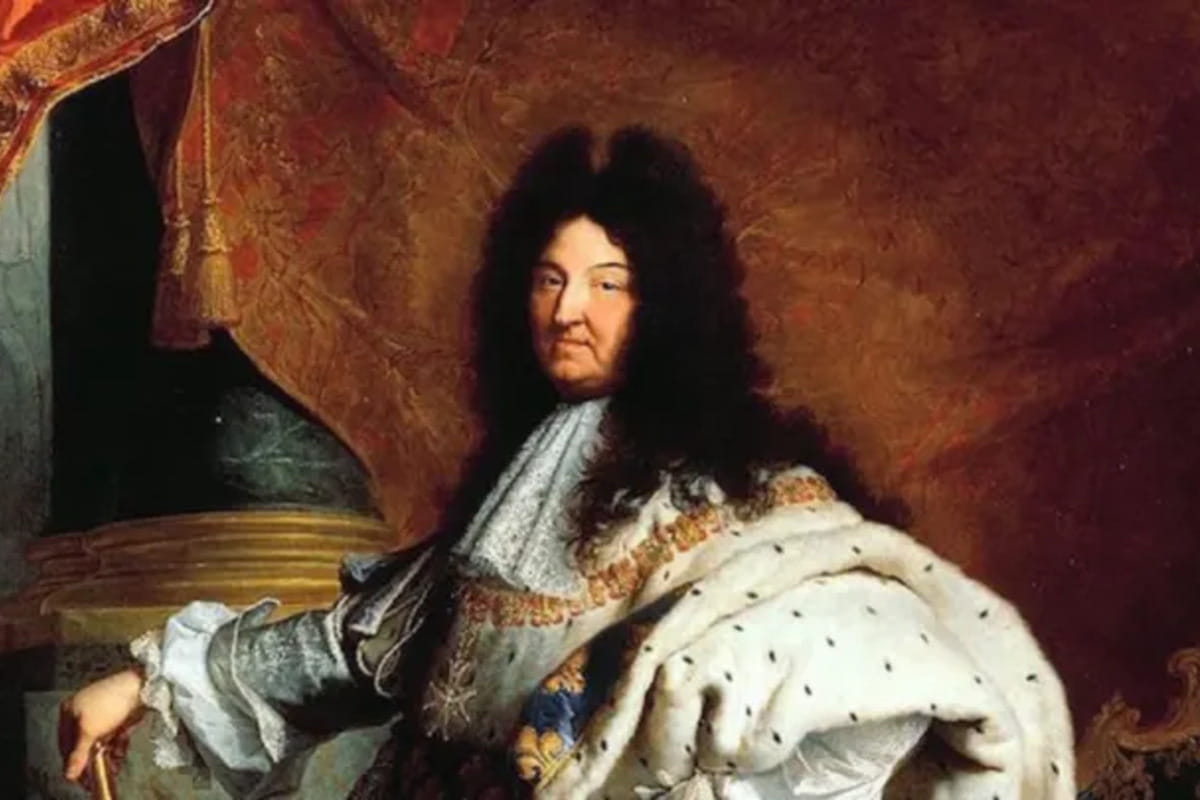
Louis XIV, known as the Sun King, remains one of the most remarkable figures in European history. His reign spanning more than seventy years shaped the face of France and influenced continental politics for centuries to come. During his rule Versailles became the ultimate symbol of absolute monarchy while French culture reached unprecedented heights of refinement and influence. Today we will explore incredible facts about this legendary monarch that reveal new dimensions of his personality and governance. You might not have known just how complex and multifaceted the world of this powerful ruler truly was.
- Louis XIV became king at the age of four following the death of his father Louis XIII in 1643. Since he was still a child his mother Anne of Austria served as regent with the support of Cardinal Mazarin. The Fronde rebellions he witnessed during childhood when Parisians rose against royal authority instilled in him a deep distrust of the nobility and a determination to hold absolute power. These formative experiences fundamentally shaped his entire political philosophy for the rest of his life.
- Louis’s personal rule began only in 1661 after Cardinal Mazarin’s death when the king announced he would personally preside over meetings of his ministers. He refused to appoint a new chief minister declaring himself the sole ruler of the state. This decisive step marked the beginning of the era of absolute monarchy in France. The king devoted several hours each day to state affairs demonstrating extraordinary diligence and attention to governance.
- The nickname Sun King originated from Louis’s participation in the ballet “Ballet de la Nuit” in 1653 where he performed the role of the sun god Apollo. This image became central to the propaganda of his reign symbolizing light order and the life-giving power of the monarch. All official portraits and sculptures depicted him adorned with solar symbols and motifs. The sun itself became the dominant decorative element throughout the Palace of Versailles.
- Louis was exceptionally tall for his era standing approximately one hundred eighty four centimeters. This physical distinction set him apart from those around him and emphasized the majesty of the king. He consciously leveraged this advantage often accentuating it with high heels in his footwear. Even in advanced age he maintained a dignified posture that continued to impress his contemporaries.
- In his youth Louis was a passionate dancer participating in more than eighty court ballets throughout his life. He performed various roles including warriors gods and even female characters which was acceptable in theatrical practice of that time. Dance was considered an essential component of a monarch’s education demonstrating grace and mastery over one’s own body. As his health declined he ceased performing but remained a devoted patron of dance throughout his life.
- Louis suffered from premature balding and began wearing wigs from the age of twenty three which launched a fashion trend across Europe. Initially the wigs were modest in size but gradually they grew larger reaching truly impressive proportions. Courtiers felt compelled to follow this fashion to avoid standing out from the king’s immediate circle. His personal collection eventually included more than forty different wigs for various occasions and ceremonies.
- The king’s teeth remained in poor condition throughout his entire life causing him pain and difficulties with eating. Dental care during his era was primitive so treatments often inflicted more suffering than relief. Despite these challenges Louis continued to attend lavish banquets where food was served as purées or exceptionally soft dishes. This physical limitation never prevented him from maintaining the image of a powerful and commanding ruler.
- Louis secretly married his last favorite Françoise d’Aubigné the Marquise de Maintenon after the death of his legitimate wife Maria Theresa. This marriage was never officially announced because Maintenon did not belong to a royal dynasty. She became the most influential woman at court significantly shaping the king’s religious policies. Her influence grew stronger during Louis’s later years as he became increasingly devout and pious.
- The king revoked the Edict of Nantes in 1685 triggering severe persecution of the Huguenots French Protestants. This decree caused the mass emigration of hundreds of thousands of skilled artisans physicians and merchants. France’s economy suffered serious losses due to the exodus of these specialists to neighboring countries. Historians consider this decision one of the greatest economic mistakes of his entire reign.
- Louis legitimized more than twenty of his illegitimate children born to various mistresses granting them titles and privileges. The most prominent were children from the Marquise de Montespan who received ducal and princely titles. These children were raised alongside legitimate heirs within the court environment. Although this practice caused scandals the king insisted on exercising his royal prerogative without apology.
- Louis’s daily schedule was strictly regulated with his waking and bedtime transformed into public ceremonies. The lever ceremony granted privileged courtiers the honor of assisting the king with dressing which was considered a great distinction. A similar coucher ceremony took place before sleep in the presence of select nobility. These rituals emphasized the divine nature of monarchy while simultaneously keeping the aristocracy under constant surveillance.
- Louis actively promoted the development of the French language supporting the French Academy and commissioning the first official dictionary. He believed language served as a tool for unifying the nation and spreading French culture throughout Europe. During his reign French became the language of diplomacy and aristocracy across the entire continent. This linguistic policy had a lasting impact on France’s cultural hegemony for generations.
- Under Louis’s rule the French navy became one of the most powerful in the world thanks to reforms implemented by his minister Colbert. New shipyards training centers for sailors and standardized shipbuilding techniques were established. The fleet protected colonial possessions and secured vital trade routes across the oceans. These achievements laid the foundation for France’s future maritime power and global influence.
- Louis participated in four major wars that consumed nearly half of his reign. These conflicts exhausted the royal treasury and imposed heavy tax burdens on the common people. Despite territorial gains the wars ultimately undermined France’s economic stability and prosperity. The War of the Spanish Succession the final major conflict concluded only after his death.
- The king died in 1715 at the age of seventy six after seventy two years on the throne. This marked the longest verified reign of any monarch in European history a record that remained unbroken for more than three centuries. The throne passed to his five year old great grandson Louis XV since all older heirs had predeceased him. On his deathbed Louis acknowledged mistakes in his governance and urged his successor to avoid unnecessary wars.
- Louis was a magnificent patron of the arts particularly supporting the playwright Molière and composer Jean Baptiste Lully. He financed the construction of opera houses and theaters within the Palace of Versailles complex. The king personally attended rehearsals offering advice and encouragement to performers. This generous patronage transformed France into the undisputed cultural center of Europe during the seventeenth century.
- To control the nobility Louis required aristocrats to reside permanently at Versailles where they remained under his constant observation. This strategy deprived the nobility of opportunities to organize rebellions in their provincial territories. Courtiers spent enormous fortunes maintaining lavish lifestyles at court making them financially dependent on royal favor. This clever approach effectively neutralized potential threats from the aristocratic class.
- Louis suffered from gout during his final years which severely impaired his ability to walk and perform ceremonial duties. Despite intense pain he continued attending to state affairs until his very last days. The king even inspected military maneuvers being transported in a wheeled chair when necessary. His perseverance in old age commanded respect even from his most vocal critics.
These fascinating facts only partially reveal the complex personality of Louis XIV as statesman patron and human being. His legacy remains a subject of ongoing historical debate as scholars weigh both the achievements and failures of his lengthy reign. Incredible discoveries about the Sun King remind us how profoundly a single ruler’s character can shape the destiny of an entire nation for centuries. Studying his life provides deeper understanding of the age of absolute monarchy and its enduring consequences for our modern world.


