
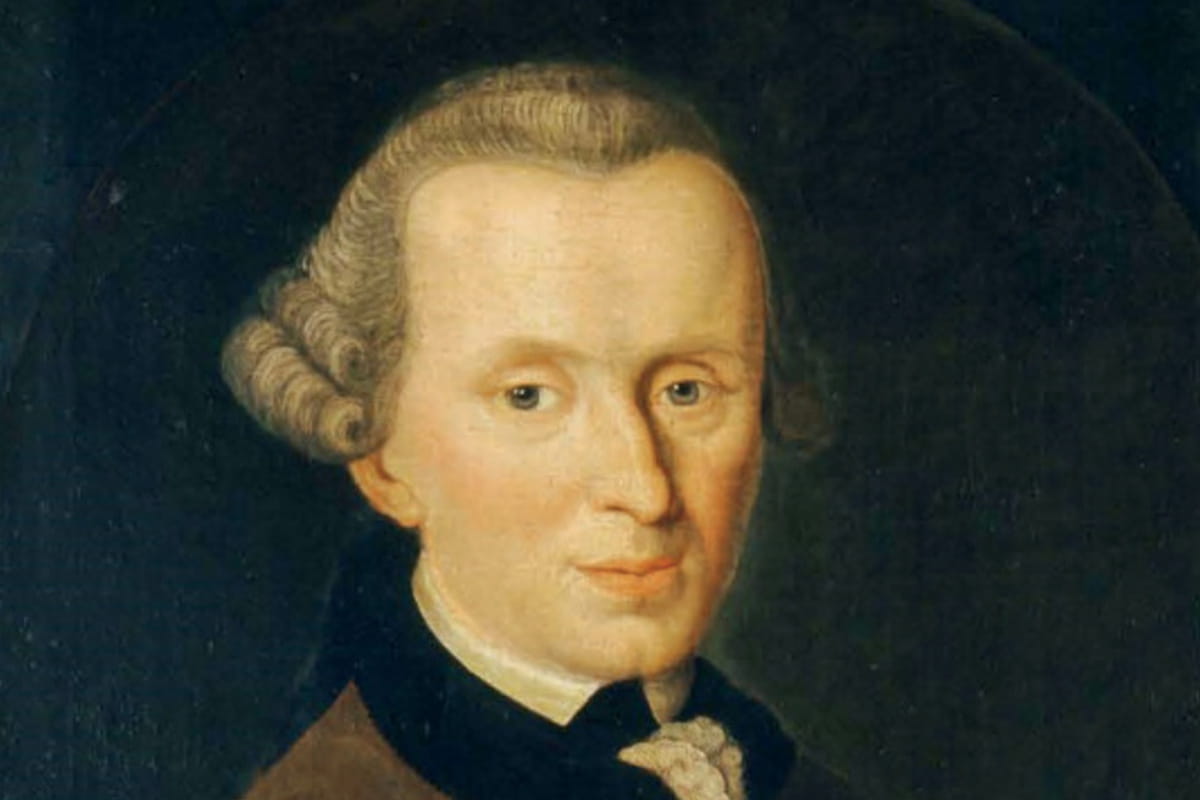
Immanuel Kant is one of the most influential thinkers in the history of philosophy, yet his personality is often perceived only through the lens of his complex theoretical works. Behind the dense language and strict logical structures stood a man whose life was governed by discipline, routine, and careful self-observation. Interesting facts from his biography reveal how his everyday habits, personal limitations, and moral convictions shaped his intellectual legacy. Many fascinating facts and details you may not know help present Kant not as an abstract symbol of philosophy, but as a living individual of his time. Together, these elements allow a deeper understanding of why his ideas continue to influence modern thought.
- Immanuel Kant was born and spent almost his entire life in the city of Königsberg, rarely leaving its surroundings. He believed that intellectual exploration did not depend on physical travel. Remaining in one place allowed him to focus fully on reflection and study. His work proves that universal ideas can emerge from a very localized life.
- Kant came from a modest family background, with his father working as a craftsman. The household valued discipline, honesty, and restraint. These principles were instilled in him from early childhood. They later became visible in his emphasis on duty and moral obligation.
- From a young age, Kant demonstrated exceptional academic ability. He excelled in languages, mathematics, and the natural sciences. His education cultivated precision and logical consistency. These traits later defined the structure of his philosophical system.
- In his early adulthood, Kant worked as a private tutor to support himself financially. This role exposed him to everyday social realities beyond the university. He observed different classes, behaviors, and personal struggles. These experiences grounded his understanding of human nature.
- Kant was famous for his extraordinary punctuality. His daily walks occurred at the exact same time each day. Residents of Königsberg reportedly adjusted their clocks according to his routine. For Kant, control over time reflected inner order and discipline.
- Despite his strict schedule, Kant was socially active and valued conversation. He regularly hosted meals for friends and colleagues. Philosophical debates were deliberately avoided during these gatherings. He considered such moments essential for mental balance.
- Kant’s earliest works were devoted to natural science and cosmology. He proposed a theory explaining the formation of the Solar System from a gaseous nebula. This hypothesis was far ahead of its time. It later gained recognition as scientific knowledge progressed.
- Widespread recognition came to Kant relatively late in life. His most influential philosophical works were published after he turned fifty. Before that, he was mainly known as a respected lecturer. His career shows that intellectual breakthroughs are not limited to youth.
- Kant’s writing style was considered difficult even by his contemporaries. He prioritized precision and conceptual clarity over readability. His texts require slow and careful study. In return, they offer a uniquely rigorous structure of thought.
- Kant never married, although he considered the possibility earlier in life. He believed that marriage required financial stability and moral readiness. He refused to accept responsibilities he felt unable to fulfill. This decision reflected his deep sense of ethical consistency.
- The philosopher paid close attention to his physical health. He followed a strict daily routine regarding meals, sleep, and work. Kant believed that clear thinking depended on bodily well-being. His lifestyle combined philosophy with practical self-discipline.
- As a university lecturer, Kant was highly respected by his students. His lectures were structured, clear, and intellectually demanding. He encouraged independent thinking rather than rote learning. This teaching approach ensured his long-term influence.
- At the core of Kant’s ethical philosophy lies the concept of inner duty. He argued that moral actions must arise from free and conscious choice. External pressure, in his view, could never produce true morality. This idea profoundly shaped modern ethics.
- Kant closely followed political developments of his time. He reflected deeply on justice, law, and social order. One of his central concerns was the possibility of lasting peace between nations. Such ideas were radical in an era marked by frequent wars.
- In old age, Kant experienced a gradual decline in memory and mental strength. This was particularly painful for someone who valued reason above all else. Nevertheless, he faced this stage of life with dignity. His attitude revealed remarkable inner resilience.
- After Kant’s death, his ideas did not fade but gained new life. Philosophers across generations engaged with his work through critique and reinterpretation. Entire philosophical movements emerged in dialogue with his thought. This enduring relevance confirms the depth of his ideas.
- Contemporary accounts describe Kant as polite, attentive, and thoughtful in conversation. He possessed a subtle sense of humor. Beneath his strict exterior was a warm and considerate personality. These traits made him more approachable than his reputation suggests.
- Kant regarded education as the foundation of social progress. He believed enlightenment meant the maturity of human reason. Knowledge, for him, was not mere information but disciplined thinking. This view remains influential today.
- Freedom played a central role in Kant’s philosophy. He did not equate it with unlimited choice. Instead, he defined freedom as responsible action guided by reason. This understanding became the basis of his moral theory.
- Kant’s legacy extends far beyond philosophy. His ideas influenced law, political theory, science, and culture. They continue to shape discussions about morality, responsibility, and human dignity. For this reason, interest in Kant has not diminished.
These interesting facts and fascinating facts reveal Immanuel Kant as more than the author of complex philosophical systems. They show how personal discipline, routine, and moral seriousness shaped a powerful intellectual legacy. Many of these details are things you may not know, yet together they form a coherent and human portrait. Understanding Kant as a person helps make his ideas clearer and more meaningful today.


