
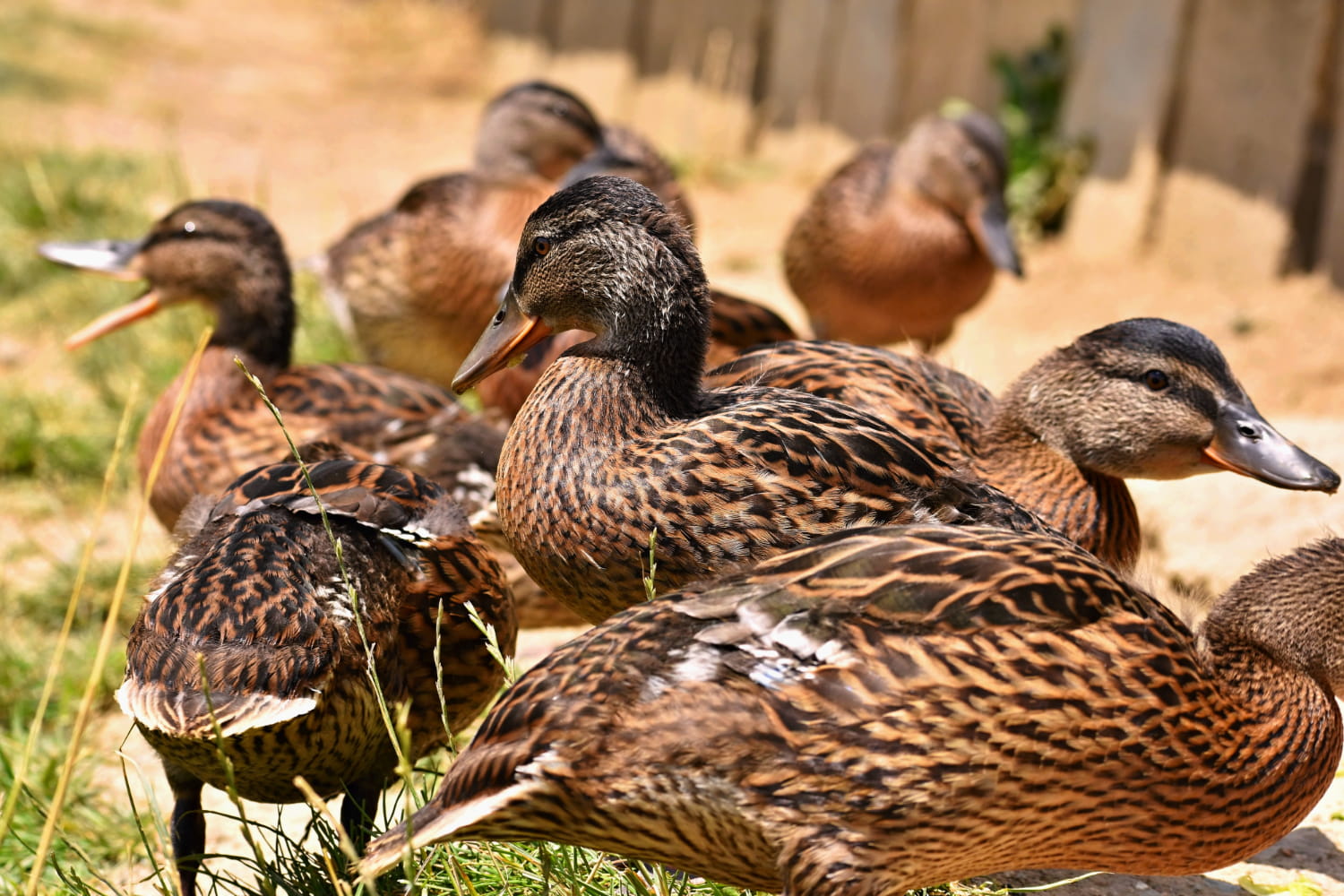
Ducks are among the most widespread and remarkably adaptable waterfowl on our planet. These seemingly ordinary creatures conceal a multitude of astonishing features that can surprise even experienced ornithologists. From extraordinary survival abilities in extreme environments to complex social structures the world of ducks is far richer than it might appear at first glance. We invite you to discover fascinating facts about these charming birds many of which you might not have known until now.
- Ducks possess the unique ability to engage in unihemispheric slow wave sleep where one hemisphere of the brain rests while the other remains active. This mechanism allows them to keep one eye open to monitor for predators during rest periods. This adaptation is particularly crucial for ducks positioned at the edge of a flock where the threat of attack is greatest. Such a survival strategy has become a key factor for many waterfowl species throughout evolution.
- The water repellent quality of duck feathers results from a special uropygial gland that secretes an oily substance. Birds meticulously distribute this secretion across their entire plumage using their beaks during preening sessions. Thanks to this natural mechanism water beads up and rolls off their feathers much like it does on a lotus leaf leaving the duck’s body dry and warm even during prolonged immersion in water.
- Ducks can perceive ultraviolet light which provides them with advantages during foraging and communication. This capability enables them to detect special patterns on other ducks’ feathers that remain invisible to the human eye. Additionally ultraviolet vision helps them locate plankton and other food organisms in water by detecting their subtle fluorescence.
- Certain duck species can cover distances exceeding ten thousand kilometers during their annual migrations. They navigate these routes with astonishing precision utilizing Earth’s magnetic field solar navigation and detailed knowledge of terrain features. Such extensive journeys demand enormous energy reserves which ducks accumulate before migration through intensive feeding and fat deposition.
- Ducks possess an exceptionally efficient thermoregulatory system in their legs that allows them to stand on ice without risk of frostbite. Blood vessels in their legs are arranged according to a counter current heat exchange principle where arterial and venous blood transfer heat between them. This significantly reduces heat loss through their featherless feet which lack insulating plumage.
- Many duck species can drink salty seawater thanks to specialized salt glands located above their eyes. These glands filter excess salt from the bloodstream which is then excreted through the nostrils as a concentrated solution. This remarkable adaptation enables sea ducks to live and feed in oceanic waters where fresh water is unavailable.
- Ducks can rotate their heads nearly three hundred sixty degrees providing them with an almost panoramic view of their surroundings. This ability compensates for the limited mobility of their eyes which are set deep within their skull sockets. Such a wide field of vision proves critical for detecting predators approaching from various directions especially during feeding when the head is submerged in water.
- Duck bills are covered with thousands of sensitive receptors that enable them to detect the slightest movements and vibrations in water. This proves particularly valuable for filter feeding species which can sense plankton and microorganisms even in murky water. The tactile abilities of the bill often play a more important role than vision when searching for food on the bottom of water bodies.
- Ducks possess three eyelids including a transparent nictitating membrane that protects the eye while swimming underwater. This third eyelid functions like natural swimming goggles allowing ducks to see underwater without risking eye damage. During flight this membrane also helps keep the eyeball moist when moving at high speeds.
- Some duck species can reach impressive altitudes during flight exceeding six thousand meters above sea level. At such heights they must withstand extremely low temperatures and atmospheric thinning. Ducks have adapted to these conditions through specialized lung structure and circulatory systems that efficiently transport oxygen throughout their bodies.
- Ducks demonstrate remarkably developed spatial memory enabling them to return to the same nesting locations year after year. They remember not only general landmarks but also specific landscape details such as the arrangement of trees and water bodies. This navigational memory proves critical for successful migration and species survival.
- Many duck species form seasonal pairs though some individuals remain faithful to a single partner throughout their entire lives. Such long term bonds increase reproductive success as partners coordinate their actions more effectively during egg incubation and chick rearing. Social connections among ducks are often far more complex than they initially appear.
- Ducks can remain submerged underwater for up to sixty seconds depending on the species and environmental conditions. During diving they significantly slow their heart rate to conserve oxygen for vital organs like the brain and heart. Some species specialize in deep diving reaching depths of over ten meters while searching for food.
- Duck plumage undergoes a complex molting cycle during which birds temporarily lose their ability to fly. This period lasts several weeks when the birds are particularly vulnerable and therefore hide in dense vegetation near water edges. After feather regeneration ducks regain even better protection against water and cold temperatures.
- Ducks possess a rich vocal repertoire encompassing over two hundred different sounds used for communication. Each sound carries specific meaning related to danger warnings attracting mates or coordinating group activities. Even quiet sounds barely audible to humans play important roles in duck social interactions.
- The shape of a duck’s bill varies significantly depending on its diet and ecological niche. Filter feeding species have broad bills with lamellae for straining plankton while predatory types possess sharp bills for grasping prey. This adaptive diversity allows different duck species to successfully coexist in the same water bodies without excessive competition.
- Ducks can recognize individual human beings and remember their behavior treating friendly and aggressive people differently. Research has shown they can identify individuals even after changes in clothing by relying on other visual characteristics. This cognitive ability indicates a high level of brain development in these birds.
- While swimming ducks often move in single file formation to reduce hydrodynamic resistance for following birds in the column. Each duck utilizes the wave wake created by its predecessor which conserves energy during long distance movement across water. This strategy closely resembles tactics employed by cyclists during competitive races.
- Ducks exhibit extraordinarily quick reaction times to external stimuli enabling them to respond immediately to the appearance of predators. Their nervous system processes sensory information significantly faster than many other animals. This capability often determines survival when mere seconds separate life from death.
- Some duck species demonstrate basic tool using abilities for example employing twigs to extract food from hard to reach places. Although such behavior is observed rarely it indicates high cognitive capabilities in these birds. These observations challenge traditional perceptions of waterfowl intelligence.
- Ducks can alter the intensity of their plumage coloration depending on season health status and social standing. The vibrant plumage of males during breeding season attracts females but after mating they acquire camouflage coloration. This ability to regulate feather color represents an important adaptive mechanism for survival.
Incredible facts about ducks convincingly demonstrate how these everyday birds are actually complex and highly sophisticated creatures. Their adaptations to diverse environments developed cognitive abilities and intricate social structures make ducks among the most interesting subjects for observation in nature. We hope this collection of fascinating facts will help you view these remarkable creatures with fresh eyes during your next lakeside stroll.


