
Paris has long been regarded as a symbol of romance, art, and history, yet behind its familiar image lies far more than first meets the eye. This city was shaped over centuries, evolving alongside major events in European history and accumulating countless details you may not have known. Interesting facts about Paris reveal it from unexpected angles and show not only a tourist destination, but also a living city with its own everyday rhythm. Incredible facts help explain why Paris has had such a powerful influence on culture, fashion, and ways of thinking around the world. Fascinating facts make the French capital feel even more vivid and multi-layered.
- Paris has a history spanning more than two thousand years and originally began as a small settlement of the Celtic tribe known as the Parisii. The modern name of the city comes directly from this tribe. The first settlement was located on the Île de la Cité, which is still considered the historical heart of the city. From this island, Paris gradually expanded along the banks of the Seine.
- The River Seine played a decisive role in the development of Paris and became its main commercial artery and source of life. Craft districts, markets, and ports emerged along its shores. Even today, many of the city’s most important buildings and landmarks stand close to the water. Walking along the riverbanks allows visitors to experience Paris at a calmer and more reflective pace.
- Paris is home to more than thirty-seven bridges, each with its own story and architectural character. Some are richly decorated with sculptures, while others stand out for their simplicity and clean lines. The oldest bridge in the city is called the New Bridge, a name that often surprises visitors. It was built as early as the sixteenth century.
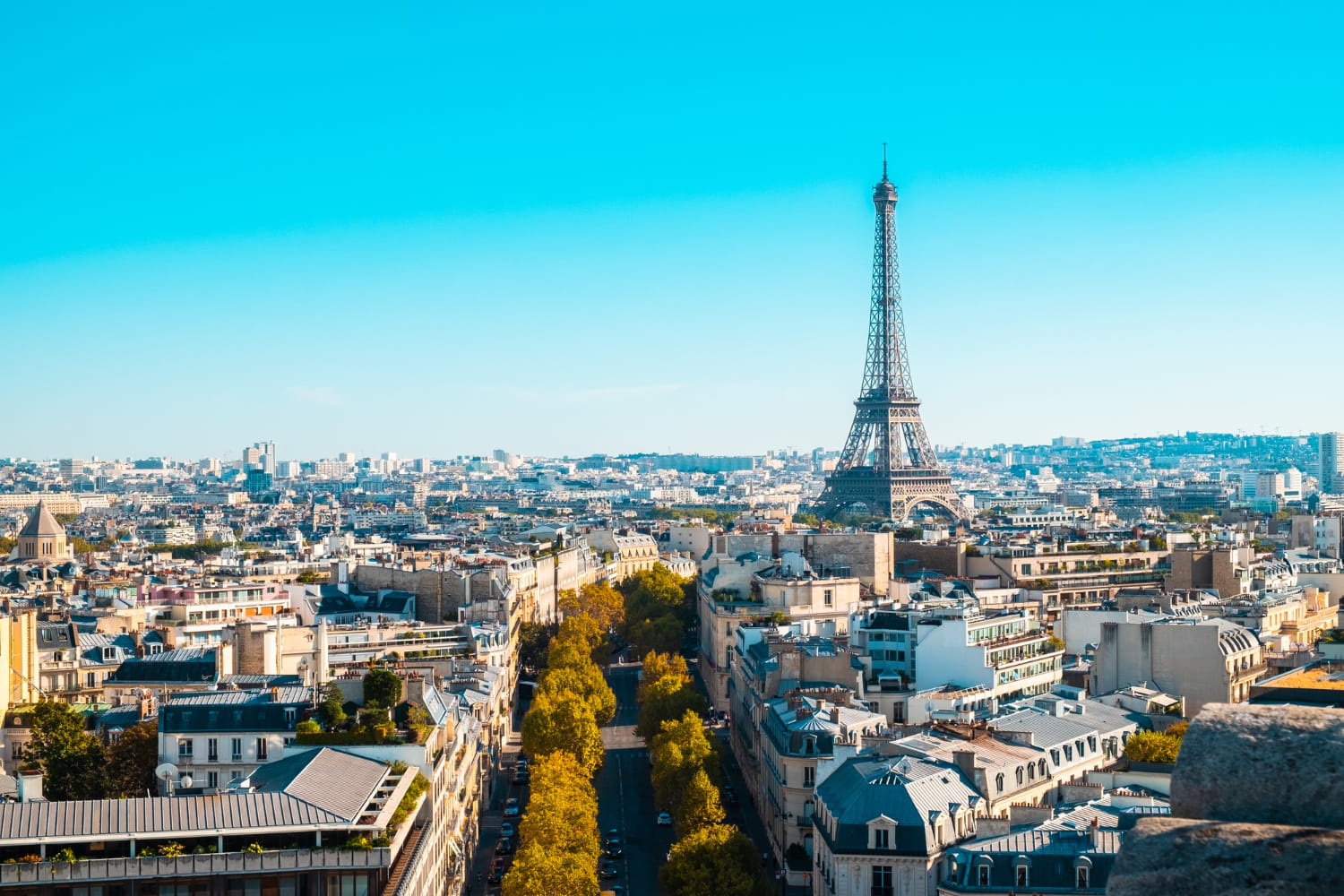
- The Eiffel Tower was originally intended as a temporary structure for a World’s Fair. Many Parisians strongly opposed its construction, believing it would spoil the city’s appearance. Plans were even made to dismantle the tower after the exhibition ended. Over time, however, it became the main symbol of Paris and one of the most recognizable structures in the world.
- Paris has one of the largest metro systems in the world, carrying millions of passengers every day. Many stations are located so close to one another that walking between them can sometimes be faster than taking the train. The ceramic station signs on older platforms have become a distinctive visual feature of the city. The metro remains an essential part of daily life for Parisians.
- Beneath the city lies an extensive network of catacombs stretching for hundreds of kilometers. Parts of these underground tunnels serve as an ossuary, holding human bones transferred from former cemeteries. This solution was adopted to address the problem of overcrowded burial grounds. Today, only a small section of the catacombs is open to the public.
- Paris is renowned for its large number of museums, which exceeds one hundred and thirty. They cover art, science, history, and everyday life from various periods. Many museums are housed in former palaces or industrial buildings. This gives their exhibitions a unique atmosphere and sense of place.
- The Louvre was not always a museum and was originally built as a fortress. It later became a royal palace and was only transformed into a public museum after the French Revolution. Its collections include hundreds of thousands of artifacts. Exploring all of its galleries would take weeks rather than hours.
- Street cafés play an important role in Parisian culture. They serve as places for meeting friends, holding conversations, and observing city life. Parisians often spend hours sitting over a single cup of coffee. This relaxed approach to time has become a defining feature of the city.
- In central Paris, strict regulations limit the height of buildings. These rules were introduced to preserve the historical appearance of the city. As a result, the skyline remains harmonious and instantly recognizable. Modern high-rise buildings are mainly concentrated outside the historic center.
- Notre-Dame de Paris served for centuries not only as a religious site but also as a social and political center. Coronations, official ceremonies, and significant national events took place there. The cathedral has survived wars, revolutions, and devastating fires. Its image is deeply embedded in Europe’s cultural memory.
- Paris is often called the City of Light, and this name goes beyond romantic associations. It was one of the first cities to introduce widespread street lighting. Lamps improved safety and order after dark. Over time, light came to symbolize knowledge, progress, and culture.
- The city contains more than four hundred parks and gardens of various sizes. These green spaces provide places for rest and relaxation amid dense urban development. Many of them have centuries-old histories and distinct designs. Green areas play an essential role in the daily lives of residents.
- Paris became the birthplace of several major artistic movements, including Impressionism. Artists working in the city transformed traditional ideas about painting. The urban environment inspired experiments with light and color. Today, these works are considered masterpieces of world art.
- Street numbering in Paris follows a unique system based on the direction of the Seine. This method makes navigation through the city easier. Knowing the river’s flow helps locate addresses more efficiently. The system developed historically and remains in use today.
- Paris is one of the most visited cities in the world in terms of tourist numbers. Tens of millions of people arrive each year. The city attracts visitors through its combination of history, art, and gastronomy. Tourism has become a major pillar of the capital’s economy.
- French cuisine holds a special status in Paris and is widely regarded as a benchmark of taste. Many classical culinary traditions that spread across the globe originated here. Restaurants offer both refined haute cuisine and simple everyday dishes. Food is an integral part of Parisian identity.
- Paris has repeatedly transformed its appearance through large-scale urban renovations. In the nineteenth century, the city underwent radical modernization with the creation of wide boulevards. These changes reshaped transportation, architecture, and social life. The modern image of Paris is largely the result of this period.
- The city hides countless courtyards and covered passages that often escape the attention of tourists. These places offer a glimpse into the authentic atmosphere of old Paris. They preserve a sense of quiet and intimacy. Such spaces reveal a more personal side of the city.
- Paris has long been a source of inspiration for writers, composers, and filmmakers. Thousands of books, films, and musical works have been created about it. The city is often portrayed as a character in its own right, with a distinct personality. This image continues to shape how Paris is perceived around the world.
This collection highlights only part of what Paris truly represents and shows why interesting facts about it never lose their appeal. Incredible facts make it possible to see beyond familiar symbols and discover a living city with deep historical roots and a unique atmosphere. Fascinating facts remind us that Paris constantly evolves while preserving its distinctive character. You may not have known many of these details, yet it is precisely they that make Paris so captivating and unforgettable.


